Walnuts

Defatted Walnut Protein Powder

Defatted walnut protein ingredients designed for higher-protein and lower-fat formulation goals in nutrition, bakery, beverage, snack, cereal and functional food systems.

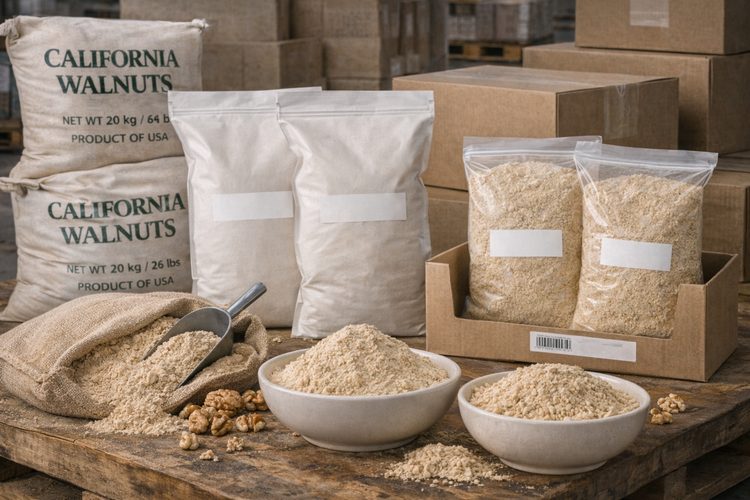
Illustrated placeholder for Defatted Walnut Protein Powder
Product overview

Defatted walnut protein powder from a California commercial workflow

Defatted walnut protein powder is generally considered by formulators that want a walnut-derived ingredient with reduced fat contribution relative to full-fat walnut meal or flour, while still retaining a meaningful nut identity for formulation design. The category can be relevant in protein-enriched foods, powdered blends, bars, bakery systems, dry mixes, cereals, meal-replacement concepts and premium functional products where the balance between protein contribution, flavor, texture and oil load matters.

In practical buying terms, this is not only a protein story. It is also a handling, formulation and processing story. Buyers often look at target protein range, residual oil level, particle size, flowability, moisture, color, flavor cleanliness, hydration behavior and compatibility with their finished product system. A beverage blender may evaluate dispersibility and suspension behavior. A nutrition bar manufacturer may focus on binding performance, moisture migration and density. A bakery customer may care about dough interaction, crumb impact, flavor carry-through and shelf-life behavior.

Atlas Global Trading Co. approaches defatted walnut protein powder as a specialized ingredient conversation rather than a generic commodity inquiry. The most useful commercial briefs define end use, formulation role, packaging format, destination market, timeline and expected buying rhythm. This helps move the discussion from a simple price request to a workable ingredient program.

Technical

Technical buying focus

Buyers typically evaluate defatted walnut protein powder by target protein range, residual fat level, particle size or grind profile, flavor expression, color, moisture, flow, bulk density and performance in the intended formula. Because this ingredient may be used in both dry and hydrated systems, the technical review often includes blend uniformity, clumping tendency, hydration response, mouthfeel, visual appearance and compatibility with other proteins, fibers, sweeteners or functional ingredients.

Product fit depends heavily on application. The same ingredient that works well in a bar matrix may not behave the same way in a beverage or soft-baked system. For that reason, the technical discussion is strongest when the buyer explains how the powder will actually be used on line.

Commercial

Commercial planning focus

Commercial review usually centers on whether the requirement is industrial bulk, contract-manufacturing supply, repack support, private label direction or export distribution. Buyers are often best served by sharing not only required quantity but also expected order rhythm, product launch stage, forecast horizon, pack style, labeling direction and destination market requirements.

Defatted walnut protein powder is a more specialized ingredient than whole walnut kernels, so program clarity matters. A clear brief helps align technical screening, packaging discussion, timeline and the practical steps needed to move toward an executable supply program.

Why formulators use it

Positioning within protein-focused and reduced-fat nut ingredient systems

Defatted walnut protein powder can sit between conventional nut ingredients and broader protein-fortification strategies. It may be considered when a formulator wants nut character, reduced fat contribution and a powder format suited to blending or dry dosing.

Formulation advantage

Reduced oil contribution

Compared with full-fat nut solids, defatted formats may help support formulations that need more controlled fat contribution, improved dry blend behavior or a different texture profile in finished products.

Ingredient strategy

Walnut-derived protein contribution

Buyers may use the ingredient as part of a single-source nut positioning or as one component within a broader plant-protein system, depending on labeling direction and target nutrition architecture.

Process flexibility

Useful in dry and semi-dry systems

Powder format can support dry mix production, premix handling, controlled dosing and incorporation into products where whole or chopped nuts are not the desired delivery format.

Application range

Where defatted walnut protein powder may fit commercially

In nutrition products, buyers may evaluate defatted walnut protein powder for powdered protein blends, premium shake bases, meal-replacement concepts, high-protein snacks and bar systems. In bakery, it may be discussed for protein-enriched cookies, muffins, breads, brownies, cakes, pancake mixes, waffle mixes and other formulated dry systems where the ingredient contributes both solids and nut identity. In cereal and snack manufacturing, it can be considered for granola, cluster systems, coated inclusions, powdered seasoning blends and composite formulas that need a nut-derived powder input.

Beverage applications usually require closer attention to dispersion, sedimentation tendency, flavor compatibility and the final texture target. Bar and bakery applications often focus more on binding, water activity management, softness retention, density, bite and flavor balance. Functional food brands may also evaluate it in blends with cocoa, fibers, seeds, other plant proteins or nut powders where the goal is to create a more differentiated ingredient story than a standard commodity protein base.

Because use cases vary so widely, the most useful product discussions start with the finished application and the target sensory outcome rather than with a single specification line alone.

Technical detail

Specification points buyers often review

Final product specifications depend on the application, market and approved commercial program. The topics below represent the areas most buyers usually define when requesting defatted walnut protein powder.

Composition and physical parameters

  • target protein range or minimum protein expectation
  • residual fat or reduced-oil positioning
  • moisture expectation or acceptable operating range
  • particle size or mesh target
  • bulk density and handling behavior
  • color profile and visual consistency
  • flowability and clump resistance
  • odor and flavor cleanliness

Functional and compliance considerations

  • dispersibility in dry or hydrated systems
  • blend compatibility with other proteins and fibers
  • bake stability or heat-process suitability
  • microbiological expectations appropriate to the end use
  • allergen handling and declaration workflow
  • lot coding, traceability and document support
  • packaging barrier requirements for shelf-life management
  • destination-market labeling or regulatory needs
Formulation notes

Points R&D and procurement teams often consider together

Defatted walnut protein powder buying often involves both technical and commercial stakeholders. Procurement may focus on pack format, lead times and program economics, while R&D focuses on what the ingredient does inside the formula. The most successful sourcing process usually considers both at the same time.

Texture

Particle size and mouthfeel

Finer or coarser powder profiles can affect mouthfeel, visual appearance, hydration rate and how well the ingredient integrates into finished systems. Buyers commonly define this early when beverage or bar texture is critical.

Flavor

Base flavor compatibility

Protein-focused products often have strong flavor systems. Buyers may therefore evaluate how walnut character interacts with cocoa, vanilla, coffee, cinnamon, fruit systems, sweeteners and savory formulations depending on the finished product.

Process

Mixing and production performance

Powder behavior during batching, conveying, blending and filling matters in real production environments. A good ingredient fit is not only nutritionally acceptable but also operationally manageable at scale.

Buyer language

What procurement teams usually define

  • application fit and target formula role
  • protein range and residual fat expectations
  • particle size or mesh preference
  • packaging choice and shelf-life target
  • domestic versus export shipment structure
  • forecast volume, MOQ thinking and order rhythm
  • documentation, labeling and compliance needs
  • approval, sampling or pilot trial workflow
Commercial planning

How ingredient programs are typically structured

Some buyers approach this category as a development-stage ingredient for trials and pilot runs. Others come with a fully commercialized product and need repeat supply. Those are very different quoting environments. Atlas can review requirements more effectively when the buyer explains whether the need is sample-stage, launch-stage, scale-up or an already-established replenishment program.

For ongoing business, it is helpful to state whether the volume is one-time, seasonal, monthly, quarterly or annualized. That context improves packaging, inventory and shipment planning.

Packaging

Packaging formats and handling considerations

Powder ingredients require the right pack format for storage discipline, clean handling and product protection. Commercial fit depends on whether the buyer is using the ingredient directly in manufacturing, warehousing it for staged production, or repacking it for foodservice or consumer programs.

Industrial bulk packaging

Industrial buyers often prefer handling-ready bulk configurations that support receiving, palletized storage, staged line use and internal traceability. Packaging discussions may cover liner style, bag weight, carton or sack format, pallet configuration, label placement and lot-code visibility.

  • bulk ingredient bags or industrial cases
  • protective inner packaging for powder stability
  • warehouse-friendly pallet patterns
  • buyer-specific coding and identification fields

Foodservice, repack and private label direction

Where commercially appropriate, Atlas can discuss foodservice or private label directions that may involve smaller pack sizes, branded presentation, printed labels, repack logistics or customer-facing format planning. Final structure depends on the program scale, operational fit and packaging economics.

  • foodservice-oriented packs
  • smaller controlled-portion repack concepts
  • private label workflow discussion where suitable
  • consumer-facing dry blend program direction
Logistics & documentation

Program execution beyond the ingredient itself

Ingredient supply depends on more than the product description. Buyers also need the right execution model for shipping, documentation, storage and destination compliance. This is especially important for export programs and regulated food-manufacturing environments.

Domestic supply

Plant, DC and co-manufacturing delivery

Domestic customers often define receiving windows, pallet preferences, appointment procedures, warehouse labeling formats and whether product moves to a production site, a distribution center or a contract manufacturer.

Export support

Country-specific planning matters

Export buyers normally need to define destination country, port, importer requirements, pack format, shipping timing and any special documentation or labeling direction that may affect readiness and routing.

Documentation

Traceability and buyer file requirements

Depending on the customer and market, programs may require specifications, COA-style support, packing lists, invoices, lot references, labeling files or other commercial and quality documents aligned with the transaction.

Storage & shelf life

Freshness, handling and inventory planning

Powdered nut ingredients require disciplined storage and inventory planning. Buyers usually review warehouse environment, stock rotation, packaging integrity, odor exposure risk, time in storage, shipping duration and post-arrival holding conditions. Because the ingredient is often used in nutrition and functional products, pack condition and lot control are especially important for maintaining a stable commercial workflow.

Shelf-life planning is usually most effective when it is matched to the real market route. A domestic buyer with fast turns may need a different packaging and release structure than an exporter shipping into longer transit and slower warehouse rotation. Buyers that disclose their real inventory model early generally receive more practical commercial guidance.

RFQ guidance

Recommended inquiry structure for faster review

Buyers do not need to send a long message, but they should send a complete one. A structured inquiry helps Atlas understand both technical fit and commercial feasibility.

Technical brief

  • finished product category and application
  • target protein position in the formula
  • desired particle size or powder profile
  • residual fat and flavor expectations
  • quality, micro or allergen requirements
  • packaging format and shelf-life objective

Commercial brief

  • annual volume or estimated order pattern
  • MOQ idea, launch phase or replenishment status
  • destination market and delivery point
  • domestic or export program structure
  • labeling, repack or private label direction
  • target ship timing and urgency level
Who buys this category

Typical buyer profiles

  • nutrition and wellness brands
  • protein blend manufacturers
  • bar and functional snack producers
  • bakery mix and ingredient formulators
  • cereal and dry blend manufacturers
  • private label developers
  • ingredient distributors and importers
  • co-manufacturers and specialty packers
Let’s build your program

Discuss a defatted walnut protein powder requirement

Use the contact form to share the application, target powder profile, pack style, volume, destination and timing. Atlas can review the brief and organize the next commercial step.

Go to Contact Page
FAQ

Frequently Asked Questions

What is defatted walnut protein powder used for?

Defatted walnut protein powder is commonly discussed for protein blends, nutrition bars, bakery enrichment, beverage premixes, cereals, functional snacks, meal replacement systems and formulated food products where buyers want walnut-derived protein contribution with reduced oil content compared with full-fat walnut ingredients.

What should buyers specify when requesting defatted walnut protein powder?

Buyers should typically define target application, expected protein range, residual oil expectation, particle size or mesh preference, flavor profile, packaging format, destination market, order volume, labeling direction, documentation needs and timeline so the inquiry can be reviewed against the intended commercial program.

Can Atlas discuss export or private label programs for defatted walnut protein powder?

Atlas can review domestic and export-oriented defatted walnut protein powder requirements and discuss bulk, foodservice, repack or private label directions where the program structure, packaging plan and commercial brief are appropriate.

Which technical points usually matter most in defatted walnut protein powder?

Typical buying points include protein level range, particle size, flowability, moisture, residual fat, flavor cleanliness, color, microbiological expectations, intended use in dry or hydrated systems, allergen handling, packaging barrier requirements and shelf-life planning.

Is defatted walnut protein powder suitable only for sports nutrition?

No. While it may be considered for protein-focused formulations, it is also relevant for bakery systems, dry mixes, cereals, snack applications, powdered blends, premium ingredient systems and other formulated foods where walnut-derived solids and reduced-fat nut functionality are desired.

Can buyers request different pack formats for industrial or consumer use?

Where commercially suitable, buyers may discuss bulk ingredient packs, foodservice formats or repack and private label directions. Final pack style, unit size, label workflow and minimum commercial quantities depend on the project structure and supply plan.