Macadamias

Defatted Macadamia Protein Powder

Defatted macadamia protein ingredients designed for higher-protein, lower-fat formulation targets across nutrition, bakery, powder blends, functional foods and export-oriented ingredient programs.

Illustrated placeholder for Defatted Macadamia Protein Powder
Product overview

Defatted macadamia protein powder from a California commercial workflow

Defatted macadamia protein powder is typically evaluated by formulators that want a nut-derived ingredient with a stronger protein position and a reduced fat contribution compared with full-fat nut powders or meal-style formats. That makes it relevant for applications where protein enrichment, dry blend handling, flavor layering and texture management all matter at the same time.

For technical buyers, the conversation often starts with the application. A bar system may need a different particle profile and flavor behavior than a bakery premix, ready-to-mix drink powder or specialty nutritional blend. The ingredient is therefore not just a protein source; it is also a functional powder that influences mouthfeel, bulk density, blend behavior, color, flow and final sensory direction.

For commercial buyers, the focus usually expands into packaging format, order rhythm, lead time, volume profile, export practicality and whether the product will be sold as an industrial ingredient, used by a co-manufacturer or positioned inside a finished brand program. Atlas helps organize those technical and commercial variables into a structured supply discussion managed through a California commercial workflow.
Technical

Technical buying focus

Defatted protein powder gives formulators a way to add nut protein and nut character while managing fat contribution, texture and formulation balance. Buyers commonly review particle size direction, protein positioning, flavor profile, residual richness, flow behavior, blend compatibility, handling practicality and how the ingredient performs in the final system.

Commercial

Commercial planning focus

These programs are relevant for nutrition, bars, bakery enrichment, beverage powders and premium functional blends. Commercial planning often depends on ingredient format, pack size, order rhythm, destination, documentation scope, lead time, export readiness and whether the material is being sourced for industrial use, co-manufacturing or finished branded goods.

Where it fits

Commercial and formulation use cases for defatted macadamia protein powder

Nutrition blends

For powdered nutrition and specialty wellness concepts

In dry blend applications, formulators often evaluate defatted macadamia protein powder for its ability to contribute a differentiated nut ingredient story while helping manage total oil load. These projects may involve protein blends, wellness powders, meal-replacement style systems or premium mix concepts where ingredient positioning matters alongside handling practicality.

  • fit for multi-ingredient dry blends
  • supports premium nut-based positioning
  • helps manage fat contribution within the total formula
  • can be evaluated for flavor layering in specialty blends
Bars and snacks

For protein bars and dense functional systems

Bar developers may consider defatted macadamia protein powder where they want nut-derived protein, a premium ingredient identity or a differentiated sensory profile within a structured matrix. In these systems, powder behavior can affect dough handling, cohesiveness, bite, moisture management and how the finished bar balances richness against protein-forward positioning.

  • ingredient for structured bar systems
  • supports premium and differentiated positioning
  • can influence texture and matrix density
  • relevant for nutrition-forward snack concepts
Bakery enrichment

For protein fortification and specialty bakery programs

Bakery users may review this ingredient for premixes, cookies, muffins, specialty baked goods or functional dough systems where protein enrichment and nut character are desirable but full-fat nut ingredients would affect handling or balance differently. The technical brief often includes how the powder impacts texture, absorption, dry blend flow and the visual character of the finished item.

  • protein-oriented bakery enrichment
  • fit for premium baked goods
  • dry mix compatibility
  • use in specialty functional bakery applications
Beverage and premix

For drink powders and functional mixes

Beverage-style applications usually require extra attention to particle profile, dispersibility expectations, flavor compatibility and how the ingredient sits inside the complete powder system. The most workable conversations start with the intended beverage concept rather than only the ingredient name.

  • dry beverage base discussions
  • blend performance considerations
  • texture and mouthfeel planning
  • application-fit review before commercial scaling
Why buyers choose defatted formats

Why formulators evaluate defatted macadamia protein instead of full-fat nut powders

Defatted formats are often selected when the formulation brief calls for a stronger protein position, lower oil contribution or more manageable dry powder behavior than a full-fat nut ingredient would provide. In commercial terms, that can create more room for the formulator to design sweetness, mouthfeel, fat system, flavor profile and finished nutritional architecture in a more controlled way.

That does not mean every application should use a defatted format. It means the ingredient becomes particularly relevant where protein messaging, lower-fat positioning, blendability or system balance are more important than the richer sensory impact of a full-fat powder or paste format.

Technical detail

Technical points buyers commonly review for defatted protein powder

Particle profile

Particle size can shape handling and application fit

Particle size direction often affects blend uniformity, mouthfeel, hydration behavior, visual appearance and the way the powder works in bars, bakery systems or dry beverage applications. That is why many formulators start by defining whether they need a finer, more uniform powder behavior or a profile better suited to textured systems.

Protein positioning

Fit for protein-forward formulations

Protein ingredients are rarely assessed in isolation. The buyer usually evaluates how the defatted macadamia powder contributes to the total formula, label position, sensory design and category story. In some projects, the ingredient plays a leading role. In others, it supports a broader multi-protein or specialty blend concept.

Flavor direction

Nut character should fit the final product goal

Flavor profile matters in premium applications, particularly when the ingredient is visible in the marketing story or is expected to influence the sensory identity of the finished product. A bar developer, beverage blender and bakery customer may each need a different flavor balance from the same base ingredient family.

Residual richness

Defatted does not mean functionally neutral

Even in reduced-fat formats, the ingredient can influence richness, body and final mouthfeel. Buyers commonly evaluate this in the context of the entire system so the ingredient complements, rather than distorts, the target product profile.

Blend behavior

Flow and compatibility matter in dry systems

In dry premixes and industrial powder handling environments, the commercial value of the ingredient is tied not only to nutrition positioning but also to how it behaves in blending, bagging, staging and downstream use. Programs often work best when the buyer defines the mixing environment and intended system architecture early.

Application-fit

Bars, bakery and powders may need different versions of the brief

The same ingredient family can be used in different ways depending on the product format. Bars may prioritize matrix performance, bakery may prioritize dry dispersion and texture, and beverage blends may prioritize a different mouthfeel and sensory target. A precise inquiry usually reflects that application distinction.

Formulation focus

How buyers normally frame the application

Formulators usually get better commercial results when the inquiry specifies whether the ingredient is meant for a dry mix, bar base, bakery premix, coating blend, nutritional system or specialty finished good. That makes it easier to align ingredient direction with actual manufacturing use rather than relying on generic powder language.

Texture focus

Texture expectations should be stated early

Texture can be as important as protein positioning. A powder that works in a dense nutrition bar may not be ideal for a more delicate beverage-style application. Buyers typically save time when they describe the finished texture they are trying to achieve, not only the protein source they want to use.

Moisture and handling

Powder stability and warehouse practicality matter

Powder programs often require attention to moisture management, pack protection, storage conditions and how the ingredient will move through the buyer’s facility. This becomes especially relevant in export programs or long-hold inventory environments.

Specification fit

Commercial language should match the real use case

A bar manufacturer, dry beverage blender and bakery premix customer may each use different specification logic even when they are sourcing the same basic ingredient family. The best commercial brief reflects the actual finished application, required handling behavior and desired product positioning.

Packaging options

Packaging and supply formats commonly discussed

Industrial ingredient supply

Bulk formats for manufacturers and blenders

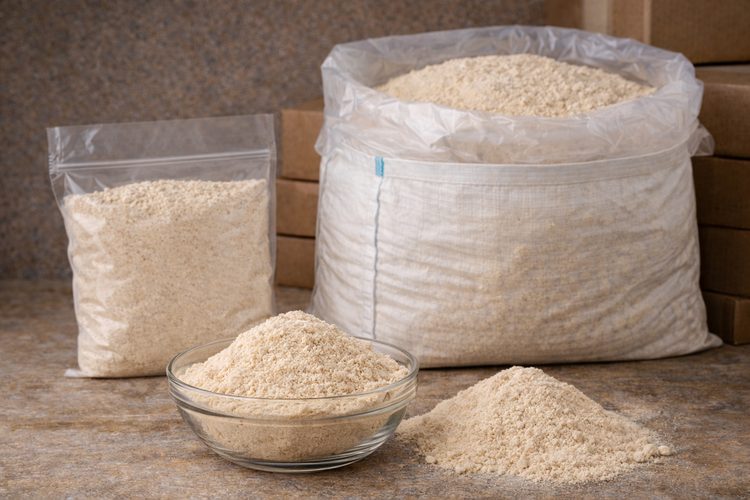
Industrial users often prioritize pack sizes that support receiving efficiency, blend-room handling and warehouse practicality. These programs are designed around ingredient movement and production use rather than consumer-facing presentation.

  • bulk bag and lined carton discussions
  • formats suited to dry ingredient operations
  • warehouse-friendly case structures
  • packing aligned to industrial handling flow
Intermediate conversion

For co-manufacturers and repackers

Some buyers use defatted protein powder as an input into another intermediate blend or branded finished good. In those cases, packaging may be chosen to support staged production, lot control, internal transfer and later repacking into customer-facing units.

  • co-manufacturing ingredient flows
  • blend-to-pack conversion programs
  • lot-managed supply formats
  • commercial flexibility for staged production
Foodservice and specialty use

For practical handling in smaller-volume channels

Foodservice or specialty ingredient users may need more manageable pack sizes that balance protection, handling convenience and product integrity. This can matter for premium smaller-volume accounts, pilot production or regional specialty programs.

  • moderate-use pack discussions
  • easier handling for smaller operations
  • fit for specialty ingredient accounts
  • commercially flexible pack sizing
Export packing

Transit-conscious packaging for international business

Export buyers often need packaging that protects powder integrity, supports documentation flow, preserves lot traceability and works efficiently through container loading, warehousing and destination receiving. Packaging selection can affect both landed cost and product performance on arrival.

  • export-ready pack planning
  • carton and pallet review
  • destination handling compatibility
  • alignment with shipment and storage conditions
Commercial planning

How defatted macadamia protein powder programs are usually structured

Commercial planning for protein powder ingredients usually begins with the role the product will play in the buyer’s business. Some customers are evaluating a pilot run, some are launching a finished nutrition product, and others are sourcing an industrial input for a repeat manufacturing cycle. Each model affects packaging choice, MOQ structure, lead time expectations and how the quote should be framed.

Projects that involve co-manufacturing, export packing, private label or multi-SKU finished goods generally need more coordination than straightforward bulk ingredient supply. Atlas helps buyers move from a simple ingredient inquiry toward a clearer commercial program that reflects formulation intent, packaging direction and shipment practicality.

Order profile

Pilot, launch, contract or rolling supply

Some buyers begin with a formulation trial or small launch, while others need a repeatable ingredient flow tied to ongoing manufacturing. The order profile affects pack format, inventory planning, documentation rhythm and how the supply program should be priced and managed.

MOQ logic

Minimums depend on packaging and commercial complexity

MOQ is rarely shaped by ingredient alone. Packaging structure, handling requirements, export needs, customer-specific labeling, pack count and project type can all influence the minimum commercial setup.

Lead-time logic

Timing depends on readiness across the whole program

Lead times are often affected by product availability, packaging preparation, document alignment, shipment scheduling and whether the project is straightforward industrial supply or a broader commercial rollout with multiple moving parts.

Cost drivers

Main factors affecting the commercial model

Commercial structure may depend on powder format, packaging method, order volume, shipment destination, documentation scope, pallet efficiency, export handling and whether the product is going into bulk ingredient use, co-manufacturing or finished branded goods.

Export readiness

What export buyers typically review before moving forward

Commercial alignment
  • destination market and route
  • ingredient use versus finished-goods conversion
  • shipment timing and freight structure
  • pack declaration and carton identification
  • importer, blender or co-manufacturer handling needs
  • document flow before dispatch
Operational alignment
  • powder protection during transit
  • pallet and warehouse practicality
  • lot traceability through shipment
  • handling compatibility at destination
  • mixed-SKU or single-SKU planning
  • release coordination with export booking
Inquiry checklist

What buyers should include when requesting defatted macadamia protein powder

A more complete inquiry usually leads to faster qualification and a more commercially useful response. The most helpful starting brief includes the intended application, texture goal, whether the ingredient is for bars, beverage, bakery or dry blending, the preferred packaging format, expected volume, target market and required timing.

If the ingredient is being evaluated for export, co-manufacturing or finished private label products, it also helps to define whether the requirement is a pilot project, a launch order or an ongoing replenishment program. That context helps align technical review with realistic commercial execution.

What buyers usually define
  • application fit and formulation role
  • particle direction and handling expectations
  • packaging choice and storage plan
  • domestic versus export shipment model
  • volume profile, order rhythm and lead-time needs
  • documentation and traceability requirements
Let’s build your program

Discuss a defatted macadamia protein powder requirement

Use the contact form to share the application, formulation target, packaging style, estimated volume, destination and required timing. Atlas can review the brief and help organize the next technical and commercial step.

Go to Contact Page
FAQ

Frequently Asked Questions

What is defatted macadamia protein powder commonly used for?

Defatted macadamia protein powder is commonly discussed for protein blends, bars, bakery enrichment, drink powders, meal replacement concepts, dry premixes, functional foods and specialty formulation projects where buyers want nut-derived protein with reduced fat contribution.

Why do buyers choose defatted macadamia protein powder instead of full-fat nut powders?

Buyers often choose defatted formats when they want higher protein concentration, lower fat contribution, different handling behavior in dry blends, cleaner powder flow characteristics and more flexibility in formulations where oil load or richness needs to be managed.

Can Atlas supply defatted macadamia protein powder for export or private label projects?

Atlas can discuss defatted macadamia protein powder for domestic or export-oriented business and can review ingredient supply, foodservice, industrial blending or selected private label directions where the commercial brief supports the project.

What should buyers specify when asking for defatted macadamia protein powder?

Buyers should share the intended application, target texture or particle profile, packaging format, expected volume, destination market, formulation role and required timing so the inquiry can be assessed accurately.

What technical points are commonly reviewed for defatted protein powder?

Common technical points include particle size direction, protein positioning, residual fat expectations, flavor profile, blend compatibility, handling behavior, packaging method, moisture management and fit for the final manufacturing process.

What commercial points usually affect a defatted macadamia protein powder program?

Commercial planning usually depends on ingredient format, volume, order rhythm, packaging, export requirements, documentation scope, lead time, destination and whether the product is meant for industrial blending, finished consumer goods, co-manufacturing or private label.