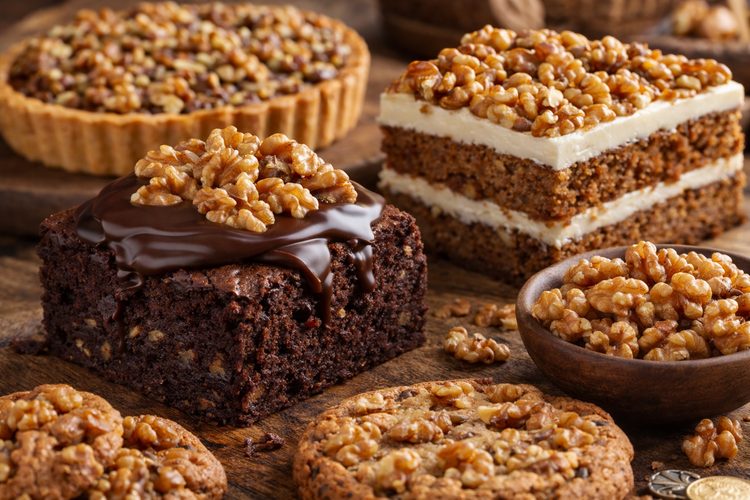
Walnuts can move across many end uses, but premium dessert and bakery positioning is not simply about adding a nut inclusion to an existing recipe. In commercial practice, walnuts are often used to change how a finished product is perceived. They can add visual richness, create more layered texture, signal bakery craft, support premium menu language and justify a higher retail or foodservice position. That is why dessert and bakery buyers rarely get the best commercial outcome by starting with price alone. The stronger result usually comes from aligning walnut format, product role, packaging and shipment timing before the order is placed.
Atlas generally approaches premium walnut bakery projects by asking what the walnut needs to do in the final product. Should it create visible premium appeal on top of a tart, brownie, pastry or loaf? Should it add textural contrast inside a cake, cookie, bar or filled dessert? Should it contribute richness through meal or butter rather than remain as a visible inclusion? Is the product meant for artisan bakery, premium packaged dessert, café retail, foodservice plating or export retail? Those answers shape which walnut format is commercially sensible and which pack structure supports the program best.
Premium buyer view: in dessert and bakery products, the walnut is often part ingredient, part design element and part positioning tool. The right format should support product quality, visual storytelling and margin logic at the same time.
Why walnuts work well in premium desserts and bakery
Walnuts have several characteristics that make them commercially attractive in premium pastry and dessert systems. Visually, they create a more natural and less uniform appearance than many commodity inclusions. Texturally, they can add a softer, richer bite than harder nuts while still giving contrast in cakes, cookies, tarts, pastries and layered desserts. Flavor-wise, they contribute a rounder, deeper nut character that pairs well with chocolate, caramel, maple, spice, coffee, fruit, honey and many bakery-style flavor systems.
In premium positioning, this matters because the inclusion is often not merely functional. It helps the product look and feel more crafted. A dessert topped with strong visible walnut pieces can read differently from one using only invisible nut solids. A cookie or cake using the right walnut format can feel more bakery-led and less industrial, even when produced at scale. That is one reason walnut choice should be linked to finished positioning rather than treated as a generic nut purchase.
How this topic shows up in real buying decisions
In practice, buyers typically compare raw, pasteurized, dry roasted and processed formats such as diced cuts, granulations, meal, butter and oil depending on the application. The right choice depends on the balance between appearance, bite, blendability, oil release, visual value and total delivered cost. A visible topping application does not need the same walnut as an internal bakery filling. A premium pastry garnish does not need the same format as a baked inclusion that must survive mixing, deposition and baking.
For walnut buyers, the usable product menu usually includes raw walnuts, pasteurized walnuts, dry roasted walnuts and processed forms such as diced cuts, meal and butter. Which of those makes sense depends on the end use, whether the customer is manufacturing further, packing for retail or planning export distribution. A hotel dessert line, a café chain bakery item, a grocery premium pastry and a private-label frozen dessert component may all use walnuts, but not in the same way or with the same commercial logic.
Visible walnuts and premium visual value
One of the clearest ways walnuts support premium positioning is through visible inclusion value. Strong-looking walnut pieces on the surface of a pastry, tart, loaf, cake or dessert bar can immediately elevate perceived product quality. This works because the inclusion is recognizable and consumers tend to read larger, more attractive nut pieces as a premium cue. In commercial terms, visible walnut quality can become part of the product’s merchandising language.
However, not every application benefits from the largest possible piece size. Larger halves and pieces may look impressive but can create production issues, uneven portioning or breakage in some lines. Medium diced or selected cuts may deliver a better balance between premium appearance and line practicality. The best commercial decision is usually the one that provides believable premium value while remaining stable through real production and packout conditions.
Visual planning point: when walnuts are exposed on top of the finished product, buyers should prioritize appearance, size consistency and placement logic more explicitly than they would for internal blend applications.
Texture architecture in premium bakery products
Premium desserts and bakery items are often judged on textural complexity as much as flavor. Walnuts can help create that complexity by contributing crunch, soft fracture, inclusion bite or richness depending on the selected format. In a cookie, walnuts may break up sweetness and provide a more substantial bite. In a loaf cake, they may deliver intermittent structure and visual variation. In pastries or plated desserts, they may support contrast between cream, crumb, crisp layers and topping elements.
This is why buyers should think in terms of texture architecture rather than only product identity. The walnut may need to survive baking as a visible piece, stay slightly soft inside a moist crumb, blend into a nut-rich base or reinforce a premium crust. Each of these goals points toward a different walnut specification. A project usually becomes commercially stronger when the walnut is chosen for the target eating experience, not just for a general category fit.
Raw versus roasted in dessert positioning
Roast state can materially change how a premium dessert or bakery product reads in market. Raw or pasteurized walnuts may be appropriate where the baking process itself develops sufficient nut aroma or where a lighter walnut tone is desired. Dry roasted walnuts may be preferred when the brand wants a more pronounced nut signature, deeper flavor tone or more clearly expressed premium character in finished desserts or toppings.
Commercially, this decision should be made in relation to the whole product. A deeply roasted walnut may pair well with chocolate, coffee, dark sugar or caramel systems, but it may be less suitable where the target flavor direction is fresher, lighter or fruit-led. The correct choice depends on the premium position the product is trying to achieve, not only on the walnut itself.
Format choices for premium desserts and bakery
Different dessert and bakery concepts usually call for different walnut routes. Common commercial options include:
- Halves and larger pieces: useful where visible premium identity is central, especially on top-decorated or exposed-surface bakery items.
- Diced or medium cuts: often the most versatile choice for cookies, cakes, pastry fillings and premium inclusions where controlled distribution matters.
- Fine granulations: relevant where the walnut should be present but more evenly dispersed across the product.
- Walnut meal: suited to products that need integrated nut solids, richer crumb character or a more subtle premium nut story.
- Walnut butter or paste: useful where creaminess, filling behavior or deeper walnut richness is part of the product concept.
The strongest commercial route depends on whether the walnut should be seen, felt, tasted prominently or used more as a structural enrichment ingredient.
Premium positioning is not only about the ingredient
In many bakery and dessert lines, premium positioning comes from the combination of ingredient quality, visual storytelling and package or menu presentation. Walnuts can strengthen all three, but only when they are coordinated with the finished product concept. A premium dessert with weak-looking or overly small walnut inclusions may fail to justify its position. On the other hand, a well-placed walnut inclusion or topping can do much of the premium communication on its own.
This is especially important for packaged dessert and bakery products where the product has to sell through visual cues before the consumer tastes it. Visible nuts, stronger piece quality and more deliberate inclusion choice can materially affect how the product is perceived on shelf. That is why the walnut format should usually be discussed together with packaging and merchandising assumptions, not separately.
Internal walnut use: meal, butter and filling systems
Premium positioning with walnuts does not always depend on visible surface inclusions. In some concepts, the walnut works better internally. Walnut meal can enrich bakery texture, deepen flavor and help create a more nut-forward crumb in cakes, cookies and specialty baked goods. Walnut butter or paste can support fillings, layers, creams and dessert systems where the goal is richness rather than visible piece identity.
These routes are especially relevant where the brand wants premium flavor depth without relying entirely on exposed decoration. In commercial terms, internal walnut systems can also make sense when production demands more controlled deposit behavior or when the visible top surface is already occupied by other design elements. The right route depends on how the finished product is intended to deliver value to the buyer or end consumer.
Pack style and route-to-market considerations
Packaging matters because premium dessert and bakery programs often move through specific commercial channels with different expectations. A foodservice dessert program may prioritize stable ingredient supply, repeat quality and practical pack size. A premium retail bakery line may require stronger visual consistency because the finished product will be merchandised directly to consumers. Export retail may add longer timing, added documentation and more conservative packaging assumptions.
When relevant, buyers should clarify whether the walnut program is industrial bulk, foodservice, retail-ready, private label or export-oriented. That single clarification often changes packaging, documentation and timing assumptions. Even when the same walnut format is technically acceptable, the commercial pack and logistics route may need to change to fit the actual market.
Commercial planning point: premium positioning is harder to sustain when pack style and route to market are treated as secondary details. In practice, packaging and timing strongly influence whether the premium idea is commercially viable.
What Atlas would ask before quoting
For walnut dessert and bakery projects, Atlas recommends translating the product concept into a quote request with a few practical points. That makes it easier to discuss realistic California partner options instead of a generic price-led inquiry. Atlas would typically want to know:
- the target walnut format: halves and pieces, diced cuts, fine granulation, meal, butter or another defined form,
- the intended product: cake, cookie, pastry, tart, dessert bar, filling, plated dessert component or another bakery use,
- whether the walnut is mainly visible, structural, flavor-driven or a combination of these,
- the desired eating experience: crunchy, soft contrast, rich crumb, creamy filling or premium surface decoration,
- the preferred process route: raw, pasteurized or roasted,
- the pack style and commercial channel,
- the destination market and timing,
- the volume rhythm: sample, trial, validation, launch volume or repeat replenishment.
Those inputs help reduce avoidable back-and-forth and improve comparability across California supply options. They also help determine whether the project should be optimized for premium visual appeal, production consistency, texture complexity or overall delivered value.
Commercial planning points
Commercially, premium dessert and bakery projects often develop in stages: trial quantity, validation run, launch volume and repeat replenishment. This staged path is practical because premium positioning depends on real product performance, not only concept. A walnut that looks strong in a sample may behave differently through baking, finishing, slicing or packout. Likewise, a format that works visually in a bench sample may not be the most stable answer in scaled production.
From a trading standpoint, the best programs are built around repeatability. That means clear documentation, agreed packaging, sensible shipment cadence and a commercial structure that supports continuity rather than one-off emergency buying. When relevant, the brief should also mention whether the program is industrial bulk, foodservice, retail-ready, private label or export-oriented. That single clarification often changes packaging, documentation and timing assumptions.
Buyers should also compare total delivered premium value rather than only raw material cost. The correct walnut format may improve visual impact, justify a stronger retail or menu position, reduce internal production friction and support more consistent product quality. Those gains often matter more than a narrow nominal cost comparison, especially in premium dessert and bakery lines where perceived value drives real commercial performance.
Buyer planning note
Atlas Global Trading Co. uses topics like this to move conversations from broad interest to a specification-minded inquiry. If you are evaluating walnuts for premium dessert or bakery applications, share the target format, product type, pack style, estimated volume and destination using the floating contact form so the next step can be grounded in a real commercial requirement.
Whether the need is for artisanal bakery, premium packaged desserts, café pastry lines, foodservice plating components or export-oriented retail products, the same principle applies: walnut sourcing works better when product form, intended application, packaging and commercial timing are defined together.
Need help sourcing around this premium walnut dessert topic?
Use the contact form to share your product, packaging, destination and timing requirements for a practical quotation.
- State the exact walnut format and premium product target
- Add target monthly or trial volume
- Include destination market, pack style and target timing
Frequently Asked Questions
What is the main buyer takeaway from “Premium Dessert and Bakery Positioning with Walnuts”?
The main buyer takeaway is that premium walnut dessert and bakery programs work best when product format, visual target, texture role, packaging and commercial timing are defined together rather than treated as separate decisions.
Which walnut format usually works best in premium desserts and bakery products?
There is no single best format for every premium concept. Buyers usually compare halves and pieces, diced cuts, granulations, meal, butter and sometimes roasted walnut formats depending on visual goals, bite, richness, inclusion visibility and production route.
Can this topic apply to both domestic and export programs?
Yes. The same premium positioning logic can apply to both domestic and export dessert and bakery programs, although packaging, documentation, shelf-life assumptions and route-to-market details may vary by destination.