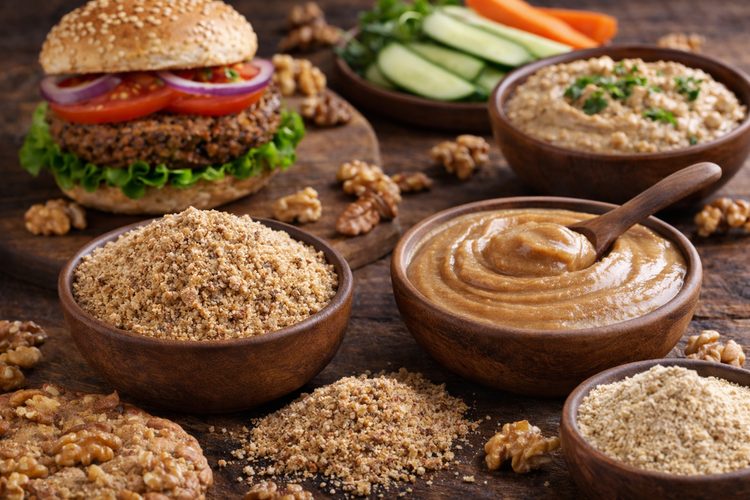
Walnuts can move across multiple end uses, but plant-based foods represent a particularly important commercial category because walnuts can contribute far more than simple inclusion value. In plant-based systems, walnuts may provide body, visible texture, nut-forward flavor, oil richness, particulate structure, meal-based solids and, in some concepts, a more protein-oriented ingredient story. That means the buyer is not only asking whether walnuts can be used. The buyer is usually deciding which walnut form makes the plant-based formula more commercially viable and sensorially credible.
Atlas generally positions walnut programs for plant-based foods by asking what the ingredient needs to do on line and in the final product. Does the product need added creaminess? Does it need a more natural-looking particulate structure? Does it need a meal that blends into the matrix, a butter that supports spreadability, or a protein-oriented walnut ingredient concept that strengthens a broader nutrition story? The stronger commercial outcome usually comes from aligning the format, the formulation role, the packaging route and the shipment timing before the order is placed.
Plant-based buyer view: walnut sourcing works best when the ingredient is defined by function. In plant-based foods, the real commercial decision is whether the walnut is being used for body, richness, texture, flavor, nutrition positioning or some combination of all five.
Why walnuts are commercially relevant in plant-based foods
Walnuts are useful in plant-based development because they can bring multiple value points at once. They can contribute natural fat and richness, create a more substantial mouthfeel, support visible inclusions in savory or sweet products, and help plant-based foods feel less flat or overly starch-driven. They also fit comfortably into products that want a more recognizable whole-food positioning rather than an entirely abstract functional-ingredient profile.
from a buyer's perspective, this matters because plant-based products are often judged on sensory credibility first and nutritional logic second. A formulation may look attractive on paper, but if the texture is weak or the richness is missing, the commercial product may struggle. Walnuts can help bridge that gap. Depending on the format used, they can move a formulation closer to indulgence, premium positioning, whole-food appeal or plant-based nutrition orientation.
How this topic shows up in real buying decisions
In practice, buyers typically compare raw, pasteurized, dry roasted and processed formats such as diced cuts, meal, flour-like reductions, butter and sometimes protein-oriented ingredients. The right choice depends on the balance between appearance, bite, blendability, oil release, labeling goals and total delivered cost. A walnut meal for plant-based burger systems is not commercially identical to a walnut butter for spreadable dips or a protein-oriented walnut ingredient for nutrition-forward blends.
For walnut buyers, the usable product menu usually includes raw walnuts, pasteurized walnuts, dry roasted walnuts and processed formats that move increasingly toward formulation use rather than snack use. Which of those makes sense depends on whether the customer is manufacturing further, building retail plant-based lines, supplying foodservice or planning export distribution. That is why plant-based programs usually benefit from a more detailed quote request than a standard “need walnuts” inquiry.
Walnut meal in plant-based systems
Walnut meal is often one of the most practical formats for plant-based applications because it offers broader incorporation than visible chopped pieces while still retaining a recognizable walnut identity. In commercial terms, meal can help provide solids, body and a more grounded texture in products where visible nut chunks would be too disruptive. It can also support products that want a more natural, less highly processed look in the ingredient statement and sensory profile.
Typical plant-based use cases for walnut meal may include meat-alternative bases, savory fillings, baked plant-based snacks, better-for-you products, textured spreads and hybrid formulations where the walnut is one part of a broader matrix. The exact commercial value depends on how fine the meal is, how it behaves in mixing and how much walnut character the final formula is intended to show.
Meal is especially relevant when the goal is to distribute walnut contribution across the formula rather than isolate it as visible inclusions. Buyers often compare meal against finer or coarser alternatives depending on whether they want more texture, smoother blending or a more pronounced walnut particulate effect.
Walnut butter and plant-based creaminess
Walnut butter becomes more relevant when the product needs a smoother texture, richer mouthfeel or more spreadable character. In plant-based systems, this can matter for sauces, dips, fillings, dressings, dessert-adjacent spreads and certain savory bases. Commercially, walnut butter can help shift a product from merely functional to more indulgent or more premium, especially where creaminess and flavor roundness are important.
However, walnut butter is not simply a richer version of walnut meal. It changes the processing logic. It can influence oil release, viscosity, blending behavior and packing assumptions. It may also change how the product is merchandised because a butter-based walnut application can support more premium language than a simple particulate ingredient route. That is why buyers should define whether they want the walnut to behave as a body-building paste, a flavoring system or a major texture component.
Specification tip: if the target application needs creaminess or spreadability rather than visible inclusion texture, state that clearly in the first brief. It often changes the best walnut route from meal or cuts to butter or a related processed form.
Protein concepts and nutrition-oriented walnut ingredients
Plant-based development often extends beyond texture and flavor into nutrition-forward concepts. In those cases, buyers may evaluate walnut-derived ingredients not only for culinary performance but also for how they fit a broader protein or macro-positioning strategy. This does not automatically mean the walnut is functioning as a primary protein source. In many commercial concepts, it is one part of a larger nutrition architecture alongside other ingredients. Still, the protein-oriented role can materially affect how the walnut concept is discussed and quoted.
For some buyers, the value lies in presenting a more differentiated plant-based ingredient story rather than relying entirely on mainstream commodity protein systems. For others, the walnut component helps soften the sensory profile of a more technical formulation. In both cases, the sourcing discussion becomes more specialized. The buyer should clarify whether the walnut protein concept is meant to drive the nutrition story, support it or simply add a more premium nut-based layer to the formula.
Plant-based products where walnuts can work
Walnuts can appear in a wide range of plant-based commercial concepts, but the correct format shifts depending on the intended role. Possible applications include:
- Plant-based spreads and dips: where meal or butter may provide texture, richness and nut depth.
- Savory plant-based bases and fillings: where walnuts can add substance, visible texture or body.
- Plant-based meat concepts: where meal or finer reductions may help create a more grounded, less synthetic texture profile.
- Better-for-you snacks and baked products: where the walnut can support both nutrition framing and sensory value.
- Protein-oriented blends or niche functional foods: where walnut-derived concepts may contribute differentiation or complement broader plant-based systems.
The most effective commercial path depends on whether the final product needs visible structure, creamy body, protein-oriented positioning or a layered combination of these benefits.
Texture management in plant-based formulations
Texture is one of the hardest parts of plant-based product development, and walnut format selection can affect it significantly. A coarse walnut cut may create rustic natural appeal but be unsuitable for smooth systems. Meal may offer more even distribution but can reduce visual distinctiveness. Butter may improve creaminess while changing viscosity and richness. Protein-oriented walnut ingredients may shift the formula toward a more nutritional direction but also create their own sensory tradeoffs.
This is why the quote should reflect the real textural target rather than a general walnut preference. A plant-based burger mix, a spoonable dip, a refrigerated spread and a nutrition-oriented bar filling do not require the same walnut. When buyers define the desired finished texture early, they usually reduce reformulation time and improve quote relevance.
Raw, pasteurized and roasted logic in plant-based foods
Process route also changes the commercial logic. Raw or pasteurized walnuts may work where the formula will be cooked further or where the product needs a less developed walnut note. Dry roasted walnut forms may be preferred where a stronger savory or nut-forward identity is part of the concept. In some plant-based foods, a more developed walnut flavor can help offset flatness in the overall system. In others, it may compete with the intended flavor direction.
Commercially, the buyer should think about roast state as part of the formulation strategy, not as a secondary afterthought. The right process route depends on how much the final product should taste like walnut, how much thermal processing will happen later and what the end-use category expects.
Application fit, labeling logic and commercial realism
Plant-based categories often come with strong label expectations, and buyers should consider early whether the walnut format aligns with the intended product narrative. A whole-food-oriented brand may value a more recognizable walnut meal or butter concept. A protein-forward or functional brand may want a more technical ingredient path. A mainstream plant-based line may need a balance between clean positioning and commercially scalable cost structure.
That means the right walnut format is not only a technical answer. It is also a brand answer. The format should support the type of label language, consumer promise and price point the finished product can realistically hold in market.
Commercial realism: the best walnut solution for a plant-based food is not always the most technically interesting one. It is the one that still works inside the product’s label strategy, texture target, price ladder and route to market.
What Atlas would ask before quoting
For plant-based walnut projects, Atlas recommends translating the idea into a quote request with several practical inputs. That makes it easier to discuss realistic California options rather than a generic price-only inquiry. Atlas would typically want to know:
- the target walnut format: meal, butter, chopped, finer reduction, protein-oriented walnut concept or another defined form,
- the intended application: spread, dip, filling, meat-alternative base, snack, bakery product or functional formulation,
- whether the walnut should add visible texture, creamy body, nutrition positioning or a combination of those,
- the preferred process route: raw, pasteurized or roasted,
- the pack style and commercial channel,
- the destination market and timing,
- the estimated volume rhythm: sample, pilot, validation, launch quantity or repeat replenishment,
- any specific quality expectations around flavor, color, particle profile or blend behavior.
Those inputs help reduce avoidable back-and-forth and improve comparability across California supply and processing options. They also help frame whether the walnut is being sourced mainly for sensory performance, nutritional positioning or both.
Commercial planning points
Commercially, plant-based walnut projects often develop in stages: sample review, pilot run, validation stage, launch volume and repeat replenishment. Atlas uses that logic because plant-based applications are often more formulation-sensitive than simpler ingredient uses. A walnut meal that works well in an early test may need refinement in a scaled process. A walnut butter that looks promising in concept may change how the product fills or packs. A protein-oriented concept may strengthen the product story but require more disciplined specification control.
From a trading standpoint, the best programs are built around repeatability. That means clear documentation, agreed packaging, sensible shipment cadence and a commercial structure that supports continuity rather than emergency spot buying. When relevant, the brief should also mention whether the program is industrial bulk, foodservice, retail-ready, private label or export-oriented. That single clarification often changes packaging, documentation and timing assumptions.
Buyers should also compare total delivered value rather than raw material price alone. The correct walnut format can improve texture, differentiate the label story, strengthen premium positioning and reduce reformulation friction. Those commercial gains often matter more than a narrow nominal price difference, especially in plant-based categories where sensory credibility and product story are both important.
Buyer planning note
Atlas Global Trading Co. uses topics like this to move conversations from broad interest to a specification-minded inquiry. If you are evaluating walnuts for plant-based foods, share the target format, application, pack style, estimated volume and destination using the floating contact form so the next step can be grounded in a real commercial requirement.
Whether the need is for walnut meal, walnut butter, protein-oriented concepts, plant-based savory systems or nutrition-forward finished goods, the same principle applies: walnut sourcing works better when product form, intended application, packaging and commercial timing are defined together.
Need help sourcing around this plant-based walnut topic?
Use the contact form to share your product, packaging, destination and timing requirements for a practical quotation.
- State the exact walnut format and plant-based application
- Add target monthly or trial volume
- Include destination market, pack style and target timing
Frequently Asked Questions
What is the main buyer takeaway from “Walnuts for Plant-Based Foods: Meal, Butter and Protein Concepts”?
The main buyer takeaway is that walnut sourcing works better when the chosen format, the plant-based application, the desired texture, packaging and commercial timing are defined together.
Which walnut format is usually considered first for plant-based development?
Buyers usually begin by deciding whether they need visible texture, creamy body or a more nutrition-oriented dry ingredient. That often leads the discussion toward walnut meal, walnut butter, chopped walnuts or protein-oriented walnut concepts.
Can these walnut concepts work for both domestic and export programs?
Yes. The same application logic can support U.S. and export plant-based products, although labeling, packaging, documentation and route-to-market details may vary by destination.