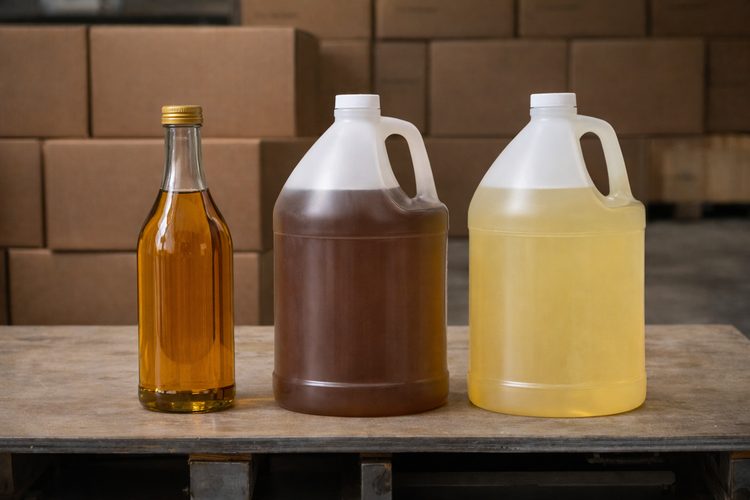
Walnut oil is one of the clearest examples of why industrial nut buying is rarely only about nominal price. Buyers may use the same ingredient name while actually referring to very different commercial products. Cold pressed walnut oil, crude walnut oil and refined walnut oil are not interchangeable just because they come from the same nut. They differ in process route, sensory profile, appearance, finishing level, application fit, packaging needs and commercial logic. The stronger sourcing outcome usually comes from aligning oil stream, end use, pack style, documentation needs and shipment timing before the order is placed.
That distinction matters because walnut oil can sit in several different value chains. It may be a premium culinary oil sold for direct finishing use, a flavor-bearing component in dressings and sauces, a formulation oil in bakery or confectionery systems, an ingredient in snack seasonings, a functional fat in prepared foods, or part of a private-label retail program. In some cases the buyer wants pronounced walnut character and premium story. In other cases the buyer wants cleaner visual appearance, more neutral behavior or broader formulation flexibility. These are different goals, and the oil stream should be chosen accordingly.
Main buyer takeaway: walnut oil sourcing works best when process route, intended application, flavor target, packaging format, shelf-life expectations and commercial timing are defined together. “Walnut oil” by itself is usually too broad for a meaningful quote.
Why the distinction between cold press, crude and refined matters
Many ingredient categories allow some degree of broad buying language. Walnut oil is less forgiving. The extraction and finishing route materially influences how the oil looks, smells, tastes and behaves in the customer’s process. A buyer requesting walnut oil for a premium finishing drizzle is solving a different problem from a manufacturer seeking a more standardized oil stream for formulation. A foodservice brand promoting natural character may prefer one route, while an industrial customer prioritizing consistency and easier integration into a broader formula may prefer another.
This is why the oil stream should be treated as part of the core specification rather than an afterthought. Two walnut oil offers may appear similar on a product list but differ sharply in commercial suitability once flavor intensity, color, filtration, pack format and downstream use are considered. The question is not only which oil costs less. The question is which oil makes the finished product easier to position, manufacture, protect and repeat.
How this topic shows up in real buying decisions
In real purchasing cycles, buyers tend to arrive at the walnut oil question from one of several directions. A chef-led food brand may want cold pressed oil because sensory identity matters and the oil may be used visibly or described on the label. A sauce or dressing manufacturer may want walnut character but still need manageable consistency and reasonable batch-to-batch control. A large industrial processor may want a cleaner, more standardized oil because the oil is one component among many and predictable performance matters more than maximum natural aroma. A further processor may ask for crude oil if the next finishing step is managed internally or by a downstream partner.
These are commercially different situations. They affect not only the oil type itself but also the right pack size, documentation level, minimum run expectations, pallet economics, shelf-life planning and quote structure. The better the buyer describes the intended application, the faster the supplier can narrow the realistic options.
What buyers generally mean by cold pressed walnut oil
Commercially, cold pressed walnut oil is usually associated with a more natural, less aggressively finished profile and a stronger connection to the walnut’s own aroma and flavor. Buyers typically consider it when they want premium sensory value, a culinary-quality positioning, a cleaner label story or a more direct link between the nut and the finished oil. It often fits premium foodservice, specialty retail, gourmet private label, finishing oils, dressings, sauces, marinades and certain high-value formulation uses where the walnut note is intended to be noticed rather than hidden.
That said, “cold press” should not be treated as a complete specification by itself. Buyers should still clarify expected flavor intensity, acceptable color range, filtration expectations, packaging basis and the actual end use. Some customers want a more expressive walnut profile. Others want the cold pressed identity mainly for premium positioning while still expecting a reasonably polished oil. Those nuances change what constitutes a commercially acceptable product.
Commercial strengths and trade-offs of cold pressed walnut oil
The major commercial strength of cold pressed walnut oil is differentiation. It can support premium product stories, chef-oriented positioning and applications where the oil’s character is part of the finished product value. In retail and private-label markets, that can matter considerably. In foodservice, it may support menu claims and higher perceived ingredient quality. In specialty manufacturing, it can add depth to dressings, finishing sauces or products built around premium fat systems.
The trade-off is that buyers usually need tighter alignment around sensory expectation, usage conditions and shelf-life planning. An oil selected for its natural character should be handled and packed in a way that protects that value. The stronger the natural profile matters, the less sensible it becomes to purchase it with vague pack assumptions or unclear turnover expectations. Buyers should therefore avoid requesting cold pressed walnut oil purely as a marketing phrase. It should be chosen when the application and commercial model can actually benefit from it.
What buyers usually mean by crude walnut oil
Crude walnut oil generally refers to an earlier-stage oil stream that has not gone through the same degree of finishing as a refined product. In commercial terms, crude oil may interest buyers that perform downstream treatment, buyers working within integrated processing chains, or industrial customers whose next stage of processing determines the final oil profile and usability. It can also be relevant where the oil is an intermediate rather than a finished customer-facing ingredient.
Because crude oil sits earlier in the process path, the most important buyer question is not whether it is “good” or “bad.” The important question is whether the buyer has a valid operational reason to purchase crude instead of a more finished stream. If the buyer needs an intermediate oil for further processing or has cost and process logic that support in-house finishing, crude oil may be commercially rational. If the buyer needs a ready-to-use ingredient with more defined sensory and visual characteristics, crude oil may create unnecessary complexity.
Commercial strengths and trade-offs of crude walnut oil
The main commercial advantage of crude walnut oil is that it can fit further-processing models and may offer a different cost structure than a more finished oil. It can make sense for sophisticated industrial users that control additional process steps and want to manage the downstream result themselves. It may also be part of specialized ingredient programs where later finishing, blending or purification is already built into the production flow.
The trade-off is that crude oil is usually less suited to buyers seeking a ready-for-market or ready-for-formulation product without further handling. It can create more internal work, additional quality checks, more operational assumptions and a longer path to finished usability. For many buyers, the apparent savings from a less-finished stream can disappear if they are not equipped to manage the next stage effectively.
What buyers usually mean by refined walnut oil
Refined walnut oil is generally chosen when the customer wants a more finished, more standardized and often more formulation-friendly oil stream. In commercial practice, it may be favored for larger-scale manufacturing, broader application flexibility, more controlled appearance and uses where a more neutral or less assertive oil profile is helpful. This can include prepared foods, sauces, bakery systems, functional fat blends, broader ingredient distribution and some private-label programs where consistency and runnability matter as much as origin story.
Refined oil is often the more practical choice when the walnut note does not need to dominate the finished product or when the oil is part of a multi-ingredient system. It can also support buyers that want a cleaner quoting basis with fewer sensory ambiguities. Again, the correct route depends on the customer’s objective. Refined oil is not “better” in absolute terms. It is simply better aligned for certain commercial and technical uses.
Commercial strengths and trade-offs of refined walnut oil
The biggest commercial strength of refined walnut oil is usability across a wider range of formulation environments. It can simplify product-development work, improve batch-to-batch predictability and fit manufacturing systems that prioritize repeatability and broad compatibility. For larger industrial programs, that predictability can be more valuable than a stronger natural walnut aroma.
The trade-off is that buyers seeking a premium gourmet identity or explicit natural walnut flavor may find refined oil less aligned with their commercial story. In those cases, choosing refined simply because it seems easier can weaken the finished product’s positioning. That is why the decision should be anchored in the value creation point of the end product, not just in general ideas about processing.
Application fit: where each oil stream tends to make the most sense
Cold pressed walnut oil is often a better fit in culinary oils, gourmet retail, foodservice finishing use, premium sauces, dressings and specialty formulations where walnut character is meant to be part of the eating experience. Crude walnut oil tends to make more sense in intermediate or further-processing chains where the buyer has internal control over the next steps. Refined walnut oil is commonly better suited to larger-scale manufacturing, broader-formula integration, more neutral presentation needs and programs where consistency and easy handling take priority.
These are general commercial tendencies rather than rigid rules. A refined oil may still be the right answer for a private-label retail line if the buyer wants a cleaner profile and accessible price point. A cold pressed oil may still be used in manufacturing if the brand wants the oil character to be part of the finished formula. The critical point is that the application should drive the oil choice, not the other way around.
Simple buying logic: choose cold pressed when character and premium positioning matter, crude when you control further processing, and refined when consistency, broader usability and cleaner standardization matter most.
Specification thinking: what should be in the walnut oil brief
A serious walnut oil brief should define the oil stream required, intended application, target flavor profile, appearance expectations, filtration or finishing expectations, packaging format, destination market and order cadence. It should also state whether the oil is for industrial bulk use, foodservice, retail-ready sale, private label or export. Without these details, prices are difficult to compare and suppliers may respond with offers that look similar on paper but are not commercially equivalent.
Buyers should also mention whether the oil will be used as a primary flavor-bearing component, a background lipid, a blend ingredient or a customer-facing premium feature. That single clarification often changes the right sourcing route. A formulation oil inside a complex matrix and a front-label premium walnut oil are simply not the same buying problem.
How sensory profile affects the buying decision
Walnut oil is often purchased not only for functionality but for sensory contribution. This is where many sourcing discussions become more precise. The customer may want a distinct nutty aroma, a cleaner and lighter oil impression, a neutral supporting fat system or an intermediate profile that fits a specific recipe. Because the same oil family can deliver different sensory outcomes depending on stream and finishing, buyers should explain the target rather than assuming the supplier will infer it from the product name alone.
That is particularly important in sauces, dressings, dips, bakery fillings, snack seasonings and premium culinary products, where the oil’s sensory role may affect the finished product’s positioning. Stronger sensory intention usually requires a more specification-minded sourcing conversation.
Why appearance and color matter commercially
Color and visual clarity can matter even when the oil is not sold as a standalone retail item. In dressings, dipping oils, visible sauces and premium packaged foods, the oil appearance may influence customer perception. In industrial applications, appearance may still matter if the oil affects the look of the final system or if a standardized visual profile is important to internal QC. This is one reason buyers should clarify whether visual cleanliness, color consistency or a more natural appearance is expected.
What matters commercially is not an abstract color preference. It is whether the oil appearance supports the intended brand, application and production system. A more naturally expressive oil can be a strength in one channel and a complication in another. Again, use case determines value.
Packaging considerations for walnut oil programs
Walnut oil packaging should be aligned to both the oil stream and the operating model. Bulk industrial buyers may need drums, pails, totes or other larger-format packs that support efficient receiving and production use. Foodservice buyers may prefer manageable units that balance protection with kitchen practicality. Retail and private-label buyers may require consumer packs that support premium merchandising, label space and shelf presentation. Export programs may require packaging that protects product integrity over longer transit and more handling points.
Packaging also affects cost, warehouse space, handling labor and turnover discipline. An oil with premium sensory value deserves a packaging format that protects that value. A large industrial formulation program deserves a pack style that fits actual plant consumption. Just as with solid walnut ingredients, packaging should be discussed early rather than after the oil stream has already been chosen.
How shelf-life planning intersects with oil selection
Shelf-life strategy should be part of the walnut oil conversation from the beginning. The buyer should consider how long the oil will remain unopened, how quickly it will be used after opening, whether it will be portioned or repacked, and whether the finished product has a domestic or export distribution path. A premium cold pressed oil used quickly in a foodservice setting can be a strong commercial fit. The same oil in a slow-turning channel with vague inventory control may create avoidable risk. A more standardized refined oil may better support some longer or more complex production environments.
Buyers should therefore define not only desired product type but also practical turnover rhythm. Trial, pilot, launch and repeat replenishment stages can have different packaging and order-size needs, especially when the oil is being validated in real formulations before full commercialization.
Industrial, foodservice, retail and export logic
Industrial buyers generally prioritize repeatability, formulation fit, documentation, usable pack sizes and predictable replenishment. Foodservice buyers may place more value on pourability, pack convenience, sensory impact and workable back-of-house unit sizes. Retail and private-label programs care more about presentation, label story, price architecture and the balance between premium positioning and practical shelf movement. Export buyers need all of that plus destination-market packaging logic, documentation readiness and longer-route shipping discipline.
This is why Atlas encourages buyers to mention channel clearly. The same walnut oil can be packed, positioned and quoted differently depending on whether the program is industrial bulk, culinary foodservice, retail-ready, private label or export-oriented.
What Atlas would ask before quoting
Atlas would usually begin by asking which walnut oil stream the buyer believes they need: cold pressed, crude or refined. If that choice is not yet settled, we would ask about the intended application, desired flavor intensity, appearance expectations and whether the oil is part of a premium positioning or a broader industrial formula. We would also ask about packaging preference, destination market, timeline, estimated volume and whether the program is for industrial use, foodservice, retail-ready sale, private label or export.
From there, we would want to know whether the customer is in the trial phase, scale-up phase or repeat replenishment phase. We would ask about pack sizes the team can actually handle, whether documentation needs are straightforward or customer-specific, and whether the oil is expected to stand on its own sensory merit or integrate more neutrally into a wider formulation. These questions reduce avoidable back-and-forth and improve quotation quality.
Commercial planning points buyers often overlook
One commonly overlooked issue is the cost of choosing the wrong oil stream and then compensating for it elsewhere in the formula. An oil that is too neutral may force flavor workarounds. An oil that is too expressive may complicate a delicate formulation. Another overlooked issue is packaging mismatch. A theoretically attractive price may lose value if the pack size creates slow turnover, difficult staging or inefficient shipping. Buyers also sometimes underestimate the difference between trial-stage buying and repeat industrial supply. A product that works beautifully in small pilot volume still needs a sustainable commercial structure at larger scale.
Another planning point is that different stakeholders may be optimizing for different outcomes. Purchasing may prioritize price and continuity. R&D may care about flavor and formulation behavior. QA may focus on consistency and documentation. Marketing may care about claim support and positioning. The stronger sourcing process addresses all four, not just one.
How to compare walnut oil quotes more intelligently
When comparing suppliers, buyers should ask whether the offers are באמת comparable in process route, finishing level, flavor expectation, packaging basis, documentation scope, order-size assumptions and destination readiness. Two walnut oil quotes may differ because the products are actually different, not because one supplier is simply expensive. A lower nominal price can still be the weaker option if it leads to extra reformulation, added handling or a finished product that misses the intended market position.
Better comparisons begin with matched specifications. Once the oil stream, application, packaging and channel are aligned, price becomes much more meaningful and supplier evaluation becomes more practical.
Buyer planning note
Atlas Global Trading Co. uses academy topics like this to help buyers move from general category interest to a more specification-minded quote request. For walnut oil, the most useful next step is to state the intended application, whether the target is cold pressed, crude or refined, the desired flavor and appearance profile, the preferred packaging format, the destination market and the expected volume rhythm. That lets the sourcing conversation reflect a real commercial need instead of a broad ingredient label.
If you are evaluating walnut oil for foodservice, industrial manufacturing, private label or export distribution, the strongest inquiry is the one that explains where the value must be created. Is the oil being purchased for premium identity, intermediate processing, or standardized formulation performance? Once that is clear, the commercial route becomes easier to structure.
Need help choosing the right walnut oil stream?
Use the contact form to turn this research topic into a practical quote request for Atlas based on real application, oil type, packaging and destination requirements.
- State cold pressed, crude or refined target
- Add application, pack style and expected volume
- Include destination market and target timing
How buyers can send a better first walnut oil request
A useful first inquiry usually identifies the oil stream, intended use, flavor target, color expectations, packaging format and destination. It also helps to mention whether the program is industrial bulk, foodservice, retail-ready, private label or export-oriented, and whether the buyer is at sample stage, validation stage or repeat reorder stage. That single level of clarity often shortens the sourcing cycle significantly.
Typical commercial use cases for walnut oil
Common walnut oil use cases on this website include sauces and dressings, bakery and confectionery formulations, snack applications, premium retail oils, foodservice finishing use and export-oriented private-label programs. The oil brief should always be tied to one of those concrete commercial uses rather than treated as a generic commodity request.
Frequently Asked Questions
How should buyers choose between cold press, crude and refined walnut oil?
The right choice depends on the intended application, flavor target, color tolerance, process conditions, shelf-life expectations and cost structure. Cold pressed walnut oil is generally selected when natural walnut aroma and premium positioning matter. Crude walnut oil can suit further processing or industrial programs where the buyer manages additional finishing steps. Refined walnut oil is usually the more practical route when neutral profile, cleaner appearance, broader formulation flexibility and greater consistency matter most.
What should be defined before asking for a walnut oil quote?
Buyers should define the oil stream required, intended application, flavor profile expectations, color expectations, packaging format, destination market, volume cadence, shelf-life target and whether the oil is for foodservice, industrial manufacturing, retail or export. Those details make quotation and supplier comparison much more useful.
Why can two walnut oil prices differ so much?
Walnut oil pricing varies because the oils are not always equivalent products. Extraction route, degree of finishing, expected sensory profile, filtration level, packaging format, minimum run size, documentation requirements and destination logistics all influence the commercial outcome. A lower-priced oil can become the weaker option if it does not match the intended application.