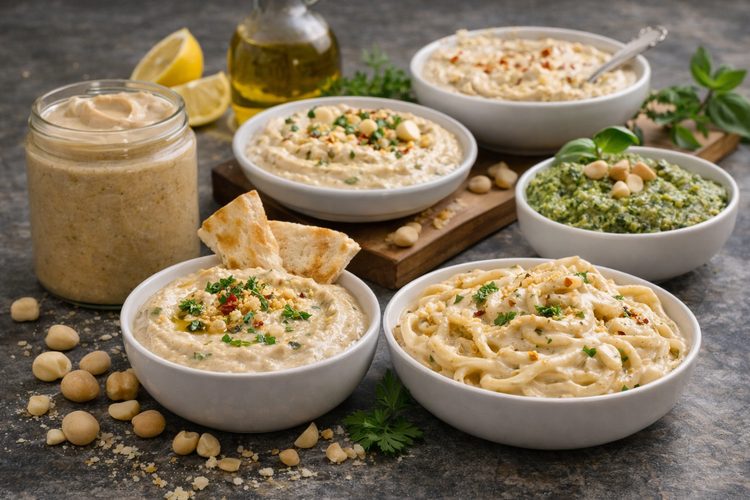
Macadamias in sauces, dips and luxury spreads is not simply a question of adding a premium nut to a recipe. In commercial practice, it is about choosing the right ingredient form and process route so the macadamia contributes the intended richness, body, flavor and premium identity without creating avoidable formulation or packaging problems. The best supply outcome usually comes from aligning specification, intended application, pack style and shipment timing before the quote is placed.
For manufacturers, foodservice developers and private-label buyers, macadamias can bring a distinctive creamy mouthfeel and a more upscale flavor profile than many standard nut or seed systems. That makes them relevant in indulgent savory sauces, luxury dips, premium spreadable products, plant-based creamy systems, chef-led condiment concepts and export-oriented retail lines positioned above mainstream nut spreads.
Why macadamias are especially useful in sauce and spread systems
Macadamias are often selected for these applications because they combine richness, smoothness and premium sensory perception. In formulation terms, they can contribute body, lubricity, mild sweetness, rounded nut flavor and a less aggressive profile than some other nut bases. In commercial terms, they can help move a product from “standard nut-based” into a more giftable, chef-inspired, gourmet or luxury retail position.
This matters because many buyers are not only looking for functionality. They are also looking for positioning. A macadamia-based sauce, dip or spread can support stronger storytelling around indulgence, hospitality, premium retail, upscale pantry products or refined plant-based concepts. That commercial role should be defined before ingredient format is selected.
For macadamia sauces and spreads, the first practical question is usually not price. It is what the macadamia must do in the finished product: create creaminess, carry savory flavor, replace part of a dairy or seed base, deliver a luxury nut note, improve spreadability or support a higher-value market position.
How this topic shows up in real buying decisions
In actual sourcing discussions, buyers often compare raw kernels, pasteurized kernels, lightly roasted kernels, meal, fine flour, butter-style paste and macadamia oil, depending on the target system. A rough dip base, a smooth spread and a pourable sauce do not need the same input. Nor does a refrigerated foodservice dip have the same commercial logic as a shelf-oriented premium retail spread.
The usable product menu can therefore include raw macadamias for further grinding, pasteurized macadamias for more controlled downstream conversion, lightly roasted kernels for a warmer flavor note, fine meal or flour for blended systems, smooth macadamia butter for direct spread development, and macadamia oil where flavor or mouthfeel enhancement is desired without full particulate inclusion. Which route makes sense depends on viscosity targets, oil behavior, particle-size expectation, finished pack style and the commercial position of the final product.
Common product forms used in sauces, dips and spreads
Each macadamia format changes both formulation behavior and cost logic. Buyers should therefore think in terms of finished-product function rather than generic ingredient naming.
- Raw kernels: often chosen by manufacturers who want to control roasting, wet grinding or final flavor development in-house.
- Pasteurized kernels: useful where the customer wants a controlled base for further processing without a roasted flavor profile dominating the final product.
- Roasted kernels: relevant when the finished system needs a more developed nut note and a warmer, more indulgent flavor direction.
- Macadamia meal or flour: suitable for blended dips, thickened savory systems and applications where the buyer is building a composite formula rather than a pure nut butter.
- Macadamia butter or paste: often the most direct route for luxury spreads, smooth dips and premium creamy sauce bases where consistency and ease of incorporation matter.
- Macadamia oil: occasionally used as part of a broader system when the goal is richer mouthfeel, premium label appeal or flavor adjustment rather than full nut solids contribution.
The right choice depends on how much control the buyer wants over grind profile, roast development, texture and cost of conversion.
Texture, grind profile and particle-size control
Texture is one of the most important variables in macadamia sauces, dips and spreads. A customer developing a luxury spoonable dip may want slight texture and visible nut character. A premium retail spread may need a very smooth, highly refined finish. A foodservice sauce base may need to be pumpable, blendable or easily dispersed in a larger finished system. Those are very different requirements, even if the ingredient family is the same.
That is why Atlas would encourage buyers to define whether the target is coarse, textured, medium-smooth, fine-smooth or butter-like. A vague request for “macadamia paste” may not be commercially useful unless the customer also defines the actual performance requirement. Particle size affects spreadability, visual quality, mouthfeel, oil separation behavior and packaging choice.
Oil release and stability considerations
Macadamias are naturally rich, which is part of their commercial appeal in creamy systems. That richness can improve mouthfeel and deliver an indulgent finish, but it also means oil behavior should be discussed early. A sauce or spread that looks smooth at pilot scale may behave differently after storage, transport or repeated opening if the oil system and particle profile were not matched correctly to the final application.
From a practical standpoint, buyers should consider whether the finished product is intended to be refrigerated, ambient, hot-filled, packed in jars, packed in tubs, portioned for foodservice or shipped into export channels with longer transit time. The richer the system, the more important it is to think about real storage and handling conditions rather than assuming all nut pastes behave the same way.
Flavor profile: raw, mild roasted or more developed roasted notes
Macadamias can contribute very different flavor impressions depending on process route. Raw or minimally treated material can support a lighter, cleaner and more neutral creamy base. More developed roasted input can support a fuller nut aroma and a more obviously indulgent sensory profile. Neither option is universally better. The right choice depends on the finished concept.
In savory sauces and dips, a milder macadamia profile may be preferred when herbs, cheese notes, spices, garlic, truffle-style flavor systems or vegetable components are meant to lead. In luxury spreads or chef-oriented condiment concepts, a stronger roasted macadamia note may help create a more distinctive signature. For sweet-savory or dessert-adjacent luxury spreads, that developed note may be commercially important.
Where macadamias fit in savory sauces
In savory sauce systems, macadamias are typically used to create body, emulsified richness and a smoother premium finish. They can support cream-style sauces, blended savory nut sauces, premium pantry condiments, spoonable gourmet toppings and chef-inspired plated applications. The buyer should define whether the macadamia is meant to replace part of a dairy-rich profile, act as a plant-based creamy component, or simply add an elevated nut finish to a more complex sauce formula.
This application area is especially interesting for foodservice and premium prepared foods because macadamias can communicate sophistication without requiring a very large finished inclusion level. That can make them commercially useful even when cost control remains important.
Where macadamias fit in dips
For dips, the most important questions are usually spoonability, body, flavor balance and consumer-facing premium perception. A dip built around macadamias may be positioned as rich, clean, gourmet, plant-forward or chef-inspired depending on the rest of the formula. Texture expectations are also critical. Some programs want a thick, rustic, spoonable dip with visible nut presence. Others want a smoother refrigerated spread-dip hybrid intended for crackers, vegetable snacks or hospitality service.
Buyers should also decide whether the macadamia is the lead ingredient or one premium layer inside a broader system. In some concepts, macadamias are paired with herbs, roasted vegetables, cheese, chili, garlic or fermented notes. In others, they help soften and round out more assertive ingredients.
Where macadamias fit in luxury spreads
Luxury spread applications often place the heaviest commercial emphasis on macadamias because the nut may be central to both the texture and the marketing story. Here the buyer is typically not only formulating a spreadable product. They are building a premium shelf proposition. That means the nut format, roast style, smoothness, jar presentation, oil behavior and label language all matter.
Luxury spreads may be savory, sweet-savory or positioned as gourmet pantry products. Some are more like high-end nut butter systems. Others are more like curated culinary spreads or hotel-and-gifting lines. In these programs, a better ingredient brief can materially improve commercial alignment because it clarifies whether the objective is clean creamy spreadability, artisan texture, visible nut identity or a glossy refined finish.
Blending macadamias with other ingredients
In many commercial formulas, macadamias are not used alone. They may be combined with other nuts, seeds, dairy components, oils, starches, seasonings, cocoa, sweeteners or flavor systems. That can be useful for cost control, viscosity adjustment, texture management and target flavor design. However, the buyer should still be clear about what portion of the premium story belongs to the macadamia component.
From a sourcing perspective, this matters because the required macadamia form may differ depending on whether it is the primary base or a secondary premium note. A pure macadamia spread concept may justify one type of input. A blended savory dip system may justify another.
Packaging and pack-style decisions
Pack format can materially change the way a macadamia sauce or spread program is quoted. A bulk ingredient paste packed for further manufacturing is very different from a retail-ready jarred spread, a foodservice tub, a squeeze-format sauce or an export-oriented giftable pack. The ingredient itself may be similar, but the commercial route is not.
Buyers should therefore define whether the program is industrial bulk, foodservice, retail-ready, private label or export-oriented. That one clarification often changes packaging assumptions, storage expectations, label requirements and shipment planning. It also changes how the total delivered cost should be evaluated.
Storage, shelf-life and handling logic
Because sauces, dips and spreads are more processed than whole-kernel applications, storage logic is especially important. The buyer should think through pack-off condition, expected storage duration, opening behavior, whether the product will be repeatedly used, and whether the finished item will move through domestic or export distribution. Oil separation, flavor retention and visual consistency can all become practical issues if the system is not matched to the actual commercial route.
This is why Atlas would encourage customers to discuss not only the ingredient but the real inventory flow: trial quantity, validation run, launch volume and repeat replenishment. Better turnover planning can be as commercially important as the ingredient specification itself.
What Atlas would ask before quoting
For macadamia sauce, dip and spread projects, Atlas would usually encourage the buyer to translate the concept into a quote request with five practical points: target format, application, pack style, destination market and volume rhythm. More specifically, Atlas would typically ask whether the customer needs raw kernels, meal, flour, butter, paste or oil; whether the application is a sauce, dip or spread; whether the target texture is coarse, creamy or ultra-smooth; whether the product is for industrial manufacturing, foodservice or retail; and what timeline matters most.
Those details help reduce avoidable back-and-forth and make quotes more comparable across different California partner options. They also help determine whether the product should be approached as a raw input, a semi-processed ingredient or a more finished pack-ready concept.
Commercial planning points
Commercially, these projects often move in stages: concept sample, validation run, launch volume and repeat replenishment. That staged logic is important because the final supply structure often becomes clearer only after the customer confirms texture, flavor and handling performance. Some programs start with a bench-scale premium formulation and then refine cost and packaging for scale. Others start with a broader target cost and adjust macadamia level upward when the premium position becomes clearer.
It is also useful to define whether the program is domestic or export, and whether it is sold under the buyer’s own brand, as private label, or as a foodservice line. Those points change documentation, packaging and delivery assumptions.
Buyer planning note
Atlas Global Trading Co. uses topics like this to move conversations from broad product interest to a more specification-minded inquiry. Macadamias in sauces, dips and luxury spreads usually work best when the buyer defines what the ingredient should do in the finished product: create creaminess, support a premium nut flavor, contribute body, elevate mouthfeel, improve spreadability or strengthen premium retail positioning.
If you are evaluating macadamias for savory sauce bases, premium dips, luxury spreads, plant-based creamy systems or export-oriented gourmet lines, share the exact format, target texture, pack style, estimated volume and destination using the floating contact form so the next step can be grounded in a real commercial requirement.
Need help sourcing macadamias for sauces, dips or spreads?
Use the contact form to turn this topic into a practical quote request with format, texture target, packaging and shipment timing defined upfront.
- State the exact macadamia format and target texture
- Add application, pack style and target monthly or trial volume
- Include destination market and target timing
Frequently Asked Questions
What should buyers specify first when sourcing macadamias for sauces, dips and spreads?
Buyers should define the exact format, whether meal, fine flour, paste, butter or oil is required, the intended application, target texture, oil behavior, pack style, destination market and expected volume rhythm. These inputs make quotations more comparable and reduce formulation surprises.
Why are macadamias especially attractive in premium sauce and spread applications?
Macadamias contribute richness, a creamy mouthfeel and a premium flavor profile that can support luxury positioning in savory sauces, dips and spreadable products. They are often chosen when the customer wants a more indulgent result than a standard nut or seed base.
Can macadamia sauce and spread concepts be applied to both domestic and export programs?
Yes. The same logic can apply across domestic, foodservice, retail-ready, private-label and export-oriented programs, but packaging, shelf-life planning, documentation and freight assumptions may differ by destination and pack format.