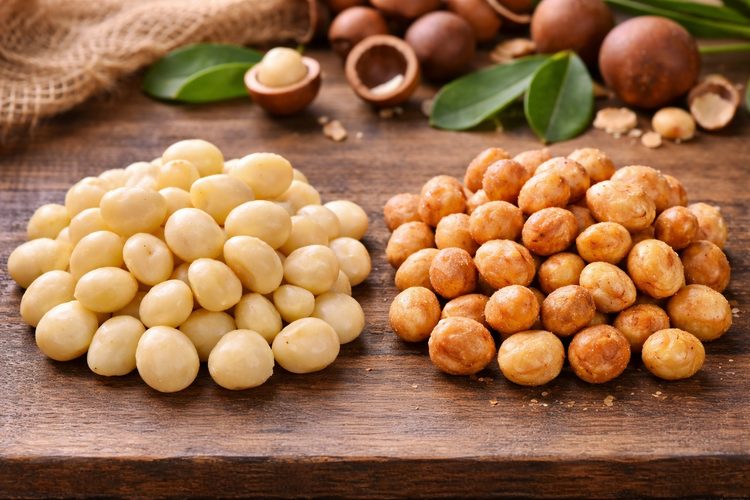
Choosing between raw and roasted macadamias matters because industrial nut buying is rarely only about nominal price. The stronger commercial result usually comes from aligning specification, process route, packaging and shipment timing before the order is placed. In other words, the right format is the one that helps the finished product perform as intended while keeping the commercial structure workable.
For macadamias, raw versus roasted is not a cosmetic difference. It changes flavor intensity, texture, downstream flexibility, storage logic, handling requirements and the amount of processing still left for the buyer to manage. A customer producing a premium snack pouch, a bakery inclusion, a sauce base, a foodservice garnish or an export retail program may all use macadamias, but they may need very different starting formats.
Why this choice matters in real commercial programs
Buyers often begin with a broad request for macadamias and only later realize that the choice between raw and roasted affects far more than the taste of the final product. It influences how much process control stays with the supplier or moves to the customer. It changes the likely production steps, whether the material can be seasoned or coated later, and whether the product is ready for direct use or still needs conversion. It also changes the product story on shelf or in the menu description.
That is why raw versus roasted should be treated as an application decision rather than a simple preference. A buyer making macadamia butter, meal, flour, coating systems or sauces may want raw input to preserve flexibility. A buyer filling premium retail packs or topping finished foods may want roasted material to avoid adding another processing step. The better the customer defines the end use, the easier it becomes to identify the commercially correct format.
Raw and roasted macadamias may come from the same kernel family, but they serve different jobs in the supply chain. A useful quote starts by defining what the product needs to do after arrival, not only by naming the nut.
How this topic shows up in real buying decisions
For macadamias, the quote should reflect the actual format and route. Whole or kernel material is different from diced, meal, extra fine flour, butter or oil. The commercial logic also changes when the material is raw, pasteurized, dry roasted or oil roasted. Some customers need a versatile ingredient that can be roasted, ground or blended later. Others need a more finished format that is closer to immediate use.
For macadamia buyers, the usable product menu usually includes raw macadamias, pasteurized macadamias, dry roasted macadamias, oil roasted macadamias, diced macadamias, macadamia meal, macadamia flour, macadamia butter and macadamia oil. Which of those makes sense depends on the end use, whether the customer is manufacturing further, packing for retail, supplying foodservice or planning export distribution.
What “raw” usually means in commercial practice
In buyer terms, raw macadamias are usually selected when the buyer wants to preserve processing flexibility. Raw material can be roasted later to a preferred degree, used in grinding systems, converted into meal or paste, coated, seasoned, diced or incorporated into formulations where the final thermal treatment still happens downstream. This is often the more practical route for manufacturers who need control rather than immediate finished eating quality.
Raw formats are especially relevant when the macadamias will become part of another industrial step, such as bakery processing, confectionery conversion, sauce manufacture, savory coatings, premium crumbs, nut butter production or food ingredient blending. In those cases, the customer is usually buying not just macadamias, but optionality.
What “roasted” usually means in commercial practice
Roasted macadamias are generally chosen when the buyer wants a more ready-to-use product. Roasting can develop flavor, reduce the need for further conversion and help the nut move directly into retail, snack, topping or foodservice applications. The commercial benefit is often simplicity: one less major process step for the buyer to manage.
However, roasted is not a single standardized condition. Buyers should still define whether they need dry roasted or oil roasted, lighter or more developed roast style, whole kernels or pieces, plain or ready for seasoning. A premium retail snack line may want a different roast expression than a garnish program or a snack mix inclusion.
Flavor differences: cleaner base versus developed nut profile
Flavor is usually the most obvious difference between raw and roasted formats. Raw macadamias offer a milder and less developed profile, which can be advantageous in formulas where the nut is meant to provide body or richness without dominating. Roasted macadamias offer a more obvious nut character and can contribute warm, toasted notes that support premium snack or culinary positioning.
From a commercial standpoint, the question is whether the finished product needs subtle flexibility or ready-made flavor value. If the product will later be seasoned, blended with strong ingredients, or processed into another system, raw material may give the formulator more room. If the product is intended to deliver immediate nut flavor in the final eating experience, roasted material often makes more sense.
Texture differences and how they affect end use
Raw and roasted macadamias also behave differently in texture terms. Roasted formats typically deliver a more immediate snack-ready crunch and may be preferred in direct consumption programs, premium snack packs, toppings and foodservice finishes. Raw formats may be more relevant when the texture will be transformed later through chopping, grinding, baking or wet processing.
This difference matters because not every customer wants the nut in its final snack-ready condition. Some buyers need the material to tolerate another step or contribute structure inside a larger manufacturing process. Others want the eating quality already established before filling the pack.
Downstream processing flexibility
One of the clearest commercial advantages of raw macadamias is downstream flexibility. Buyers can roast to their own profile, choose whether to dice before or after roasting, blend with other ingredients differently, or convert into meal, flour, butter and sauces with greater process control. This is often important for companies with proprietary flavor systems or specialized manufacturing routes.
Roasted macadamias reduce that flexibility but may improve speed to market. They are often useful where the customer wants immediate finished-character input without investing in roasting capacity, roast validation or another layer of process management. The trade-off is straightforward: more flexibility versus more convenience.
Raw macadamias in ingredient manufacturing
Raw macadamias are often the better choice for ingredient manufacturing programs rather than direct retail or foodservice use. Examples include meal and flour production, macadamia butter systems, sauce bases, savory crumb blends, confectionery applications, bakery fillings, dough inclusions and other industrial formulas where the nut becomes one processing input among several.
In these settings, the customer usually values control over roast development, particle size, blend logic and final sensory outcome. A raw format helps maintain that control and can make quotation more practical when the buyer still has several formulation pathways under consideration.
Roasted macadamias in ready-to-sell and ready-to-serve programs
Roasted macadamias are often the better fit for direct retail snacks, premium foodservice garnishes, snack mixes, gifting lines, retail pouches, jars, hospitality trays and applications where the nut is meant to deliver final-stage eating quality with minimal additional processing. In these cases, the value lies in reducing internal work and creating a more direct path from sourcing to sale or service.
This route is especially relevant for private-label snack programs, export retail packs and premium shelf concepts where the visual, textural and flavor expectations are already clear and the buyer wants a finished, repeatable supply format.
Dry roasted versus oil roasted
Even once roasted format has been chosen, the buyer may still need to decide between dry roasted and oil roasted. Dry roasted macadamias often support a cleaner premium profile and can be attractive for straightforward snack or ingredient programs. Oil roasted macadamias may create a richer surface character and can be more relevant when the finished product is intended to feel more indulgent or closer to mainstream savory snacking expectations.
This distinction can affect label strategy, flavor delivery, mouthfeel and total commercial logic. Buyers should therefore specify not only “roasted” but the actual route needed for the intended application.
How packaging changes the raw versus roasted decision
Packaging can materially affect which format makes more sense. A raw industrial ingredient packed for further processing has different packaging logic from a roasted retail-ready snack pouch or export retail jar. Roasted material usually requires the buyer to think more clearly about final pack condition, shelf positioning and inventory flow because the product is already closer to finished form.
For that reason, the brief should identify whether the program is industrial bulk, foodservice, retail-ready, private label or export-oriented. That one clarification often changes packaging assumptions, documentation needs and timing expectations, especially for roasted programs.
Inventory and timing considerations
From a trading standpoint, raw and roasted formats also behave differently in commercial planning. Raw input is often more appropriate for customers building the final product downstream on their own schedule. Roasted input is often tied more closely to launch windows, replenishment planning, retail timing or direct consumption programs. The closer the format is to finished use, the more important forecast discipline and shipment cadence usually become.
That is why many programs are best planned in stages: trial quantity, validation run, launch volume and repeat replenishment. The right format often becomes clearer once the buyer has confirmed exactly where the product sits in the production or retail chain.
Cost logic: not just price per kilo
Raw material may sometimes look simpler from an input-cost perspective, but the buyer still needs to account for downstream roasting, validation, labor, equipment use and process loss. Roasted material may carry a more finished-cost logic, but it can reduce internal conversion steps and simplify operations. The real comparison is therefore not only raw price versus roasted price. It is total delivered cost in the actual program.
This is especially important when buyers are comparing multiple supply offers. Two quotations may look close on paper but reflect very different assumptions about process responsibility, finished readiness and packaging scope. A better inquiry makes those differences visible early.
What Atlas would ask before quoting
Atlas encourages buyers to define intended use, pack style, destination, timeline and quality expectations early. Those inputs help reduce avoidable back-and-forth and improve comparability across California supply options. For raw-versus-roasted decisions, Atlas would usually want to know whether the customer needs further processing flexibility, whether the product will go straight into retail or foodservice, whether there is an in-house roasting capability, and whether the final product needs immediate nut flavor or later-stage control.
In practical terms, the quote request works best when it includes target format, application, pack style, destination market and volume rhythm. Once those points are defined, the raw-versus-roasted choice becomes much more commercial and much less abstract.
Typical use cases for raw macadamias
Typical raw-format use cases include further manufacturing, ingredient conversion, bakery systems, confectionery, premium crumb systems, sauces and dips, nut butter, fine grinding, private thermal processing and customer-controlled roast development. In these cases, the buyer often wants macadamias to remain adaptable until later in production.
Typical use cases for roasted macadamias
Typical roasted-format use cases include premium retail snack lines, flavored roasted programs, snack mixes, hospitality packs, foodservice toppings, gifting assortments, private-label retail packs and export-oriented finished snacking formats. In these cases, the buyer is usually valuing finished character, convenience and shelf or menu readiness.
Commercial planning points
From a trading standpoint, the best programs are built around repeatability. That means clear documentation, agreed packaging, sensible shipment cadence and a commercial structure that supports continuity rather than one-off emergency buying. The raw-versus-roasted choice should therefore be judged partly on whether it helps create a stable replenishment model for the real business rather than only a one-time spot order.
When relevant, the brief should also mention whether the program is industrial bulk, foodservice, retail-ready, private label or export-oriented. That single clarification often changes packaging, documentation and timing assumptions in material ways.
Buyer planning note
Atlas Global Trading Co. uses topics like this to move conversations from broad interest to a specification-minded inquiry. Raw versus roasted macadamias is not a theoretical decision. It is a practical sourcing choice tied directly to processing flow, product performance and commercial strategy. The right answer depends on what the nut must do next.
If you are evaluating macadamia supply, share the format under consideration, intended application, pack style, estimated volume and destination using the floating contact form so the next step can be grounded in a real commercial need.
Need help deciding between raw and roasted macadamias?
Use the contact form to turn this format question into a practical quote request with application, packaging and timing defined upfront.
- State whether you need raw flexibility or roasted readiness
- Add application, pack style and target monthly or trial volume
- Include destination market and target timing
Frequently Asked Questions
How should buyers decide between raw and roasted macadamias?
The decision should be based on end use, process route, flavor target, texture expectations, packaging style and commercial timing. Raw and roasted macadamias are not interchangeable in many applications, so the format should match what the finished product needs to deliver.
When are raw macadamias usually the better commercial choice?
Raw macadamias are often the better choice when the buyer wants downstream control over roasting, seasoning, cutting, grinding, coating or blending. They are also relevant when the product will be further processed into meal, flour, butter, sauces, bakery applications or private production systems.
When do roasted macadamias usually make more sense?
Roasted macadamias usually make more sense when the buyer needs ready-to-use flavor, immediate eating quality, retail presentation, foodservice finishing or a premium snack profile without adding another thermal step in production.