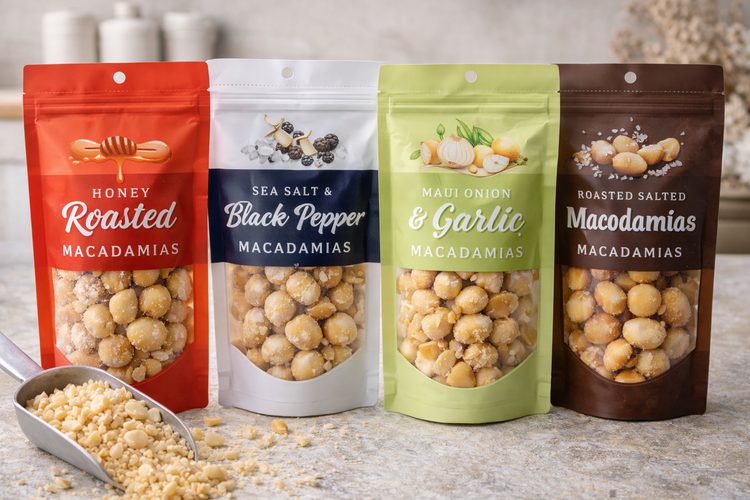
Flavored roasted macadamia programs for specialty retail are not simply about choosing a nut and adding seasoning. They sit at the intersection of premium product design, roast management, flavor adhesion, packaging presentation and commercial execution. Macadamias already occupy a premium price and image position relative to many snack nuts, so the margin logic depends on getting the retail proposition right. In practical terms, a specialty line has to perform on shelf, justify its premium price, protect product quality through distribution and still deliver a repeatable consumer experience after launch.
Atlas usually positions macadamia retail programs by asking what the product is supposed to achieve at point of sale. Is the line meant to feel giftable, gourmet, premium everyday, travel-friendly, hospitality-oriented, export-ready or private-label upscale? Those choices influence roast route, seasoning intensity, pack format, finish quality and the type of commercial structure that makes sense. The strongest outcome usually comes from defining the retail job first, then building the macadamia specification around it.
Core buyer takeaway: Flavored roasted macadamia lines work best when kernel selection, roast style, seasoning system, packaging format, target shelf channel and replenishment rhythm are defined together before the quote stage.
Why macadamias fit specialty retail so well
Macadamias carry built-in premium cues. They are associated with indulgence, buttery richness, upscale gifting, destination-driven tourism channels and premium snack merchandising. In specialty retail, that matters because shelf success often depends on more than nutritional positioning or convenience. It depends on perceived quality, visual confidence and the ability of the product to signal that it belongs in a gourmet or elevated assortment.
Flavored roasted lines build on that premium base. Instead of competing only as a plain premium nut, the product becomes a designed retail experience. A well-built flavor line can give the customer a reason to pick up the pack, justify a higher price point, support seasonal promotions and create room for multiple SKUs built around one core ingredient. The commercial upside is clear, but so is the need for tighter product discipline. Because the input cost is already premium, weak execution in roast or flavor adhesion can damage both retail sell-through and brand perception.
How this topic shows up in real buying decisions
In practice, buyers compare raw, pasteurized, dry roasted and oil roasted formats, as well as different seasoning routes, salt levels and packaging options. The right choice depends on the balance between appearance, bite, blendability, oil release, label goals, seasoning carry and total delivered cost. A flavored roasted specialty retail line is therefore not only a nut sourcing discussion. It is also a seasoning, pack-out and market-positioning discussion.
For macadamia buyers, the relevant product menu may include raw kernels for custom processing, dry roasted kernels for cleaner flavor systems, oil roasted kernels where mouthfeel or seasoning adhesion is especially important, salted roasted programs, sweet applications, savory spice profiles and finished retail-ready or private label lines. Which of those makes sense depends on whether the product is being sold in gourmet retail, travel retail, premium grocery, hotel gifting, e-commerce assortments, export premium snack channels or foodservice-adjacent retail environments.
What makes flavored roasted macadamias different from standard roasted nut lines
Macadamias are more sensitive to premium presentation because the consumer expects more from them. A standard roasted peanut or almond line may compete partly on familiarity and price efficiency. A macadamia line usually competes on indulgence, gifting quality, finish and sensory sophistication. That means the roast must be controlled carefully enough to protect buttery character without flattening it, and the seasoning system must enhance the nut rather than overwhelm it.
In commercial terms, the product is often judged on three simultaneous dimensions: visual quality, immediate aroma and first-bite texture. A specialty retail buyer therefore usually wants better control over kernel appearance, roast consistency, seasoning coverage and pack aesthetics than would be required in a purely industrial or ingredient-focused program.
Common flavor directions for specialty retail macadamia programs
Classic premium savory profiles
Sea salt, sea salt and cracked pepper, garlic herb, rosemary, smoked salt and related savory profiles often work well because they reinforce the premium identity of the nut without competing too aggressively with its natural richness. These lines are often suitable for upscale grocery, wine pairing sets, gourmet gift assortments and hotel mini-bar or resort retail concepts.
Sweet and indulgent profiles
Honey roasted, maple, vanilla, cinnamon, caramel and dessert-inspired concepts can support gifting, seasonal retail, coffee chain adjacencies and premium snack merchandising. In these products, sugar system, coating behavior and surface finish matter as much as flavor concept. The buyer should think about whether the line is meant to feel confectionery-adjacent or snack-driven.
Bold specialty savory flavors
Chili-lime, truffle, barbecue, umami, spicy sesame, black garlic or globally inspired savory profiles may help a line stand out in modern specialty retail. These programs typically require stronger flavor control because macadamias can be drowned out by seasoning if the application is not balanced properly.
Regional and export-adapted profiles
Export or destination-oriented specialty lines may use flavors that fit regional taste expectations or travel retail storytelling. In those cases, the product brief should define not only the flavor family but the intended market position, because market fit influences seasoning strength, packaging language and merchandising format.
Roast route and its effect on specialty retail performance
Dry roasted
Dry roasting is often chosen when the brand wants a cleaner flavor presentation and more direct expression of the nut. This route can work well for premium retail lines where ingredient simplicity or “less interference” positioning matters. However, the seasoning system must still be designed carefully so that adhesion and coverage meet commercial expectations.
Oil roasted
Oil roasted routes may be preferred when mouthfeel, flavor richness or seasoning adhesion needs extra support. In some flavored lines, especially stronger savory profiles, oil roasting can help create better surface pickup. This route should be discussed not only as a processing decision but as part of the final label, sensory and merchandising plan.
Custom roast intensity
Because macadamias have a relatively delicate premium character, roast intensity should be matched to flavor profile. A mild herb or salt line may need a gentler roast to preserve buttery notes. A stronger savory or sweet application may tolerate a more developed roast. That is why the product concept and roast route should be aligned early rather than decided independently.
Seasoning adhesion and surface performance
One of the biggest technical issues in flavored nut programs is seasoning retention. The product may look excellent immediately after processing but lose visual uniformity or flavor consistency during packing, shipping or repeated retail handling if the adhesion system is weak. Buyers should therefore ask not only what the flavor is, but how it is being carried. Is the system dry-seasoned, oil-assisted, sweet-coated or structured around another adhesion approach?
For specialty retail, this matters because visual quality is part of the selling experience. Consumers notice patchy coverage, dusting at the bottom of the pouch and overly greasy or sticky finish. The line must therefore balance sensory impact with clean presentation and acceptable shelf behavior.
What buyers should think about
- Coverage uniformity across kernels
- Dusting or seasoning fallout during transport
- Grease transfer or pack staining risk
- Flavor strength consistency from first bite to last
- Whether the seasoning enhances or masks natural macadamia character
Kernel style, grade and appearance
Because specialty retail is highly visual, kernel appearance matters. Whole kernels or larger attractive pieces are often preferred for premium shelf presence, especially when the product is sold in transparent or semi-transparent packaging. However, the exact kernel style should still reflect the retail concept. Some programs may prioritize luxurious large-kernel appearance, while others may focus on manageable bite, pack density or a more casual snackable format.
Buyers should also consider the relationship between kernel grade and price architecture. A high-end giftable line may justify a stronger emphasis on visual premium kernels, while a broader specialty grocery program may need a more balanced approach between appearance and cost-in-use.
Retail packaging decisions that affect the program
In specialty retail, packaging is part of the product, not just the container. Stand-up pouches, rigid jars, tins, cartons, premium canisters and giftable resealable formats all create different commercial signals. Pack format also changes shelf performance, shipping efficiency, merchandising style and price-per-pack logic. A pouch may suit modern premium snacking and e-commerce. A rigid container may better support gifting, travel retail or luxury positioning. A smaller portion format may help higher-priced SKUs enter a wider consumer base.
The buyer should define whether the line is meant for everyday premium snacking, premium gifting, tourist retail, hotel or resort retail, curated specialty grocery, direct-to-consumer fulfillment or export shelf programs. That clarification often changes pack material, graphics approach, pack count, master case design and documentation needs.
How this topic affects real commercial planning
Commercially, flavored roasted retail projects usually move through distinct stages: concept definition, sample review, validation run, packaging alignment, launch volume and repeat replenishment. Atlas uses that logic to guide pack and shipment planning, especially when private label, export retail or premium seasonal launches are involved. A sample-stage concept may still be flexible on flavor intensity or pack design. A repeat program needs tighter discipline around volume rhythm, pack availability and channel fit.
When relevant, the brief should also mention whether the program is retail-ready, private label, export-oriented or part of a broader product family. That single clarification often changes packaging, documentation and timing assumptions. A domestic premium pouch line is not the same as an export giftable tin line, even if both use roasted macadamias.
What Atlas would ask before quoting
For macadamia retail projects, Atlas typically recommends translating the product idea into a quote request with five practical points: target format, application, pack style, destination market and volume rhythm. For flavored roasted lines, Atlas would also usually ask the customer to define roast preference, flavor direction, whether the product is intended to be mild or bold, pack size, retail channel, and whether the line is at trial, validation or launch stage.
That makes it easier to discuss realistic California partner options instead of a generic price-only inquiry. A flavored roasted macadamia quote should reflect actual commercial intent: specialty grocery, hotel retail, private label, export gifting or another defined channel. Without that context, even a technically correct quote can still be commercially incomplete.
Typical use cases for macadamias on this website include premium bakery, cookies and confectionery, snack mixes, plant-based dairy, sauces and dips. In specialty retail, the product brief should still match a concrete end use such as gourmet snack pouches, gift packs, private label premium assortments or export retail programs.
Cost-in-use versus nominal price
Specialty retail buyers should be careful about focusing only on price per pound or kilogram. A lower-priced flavored product that suffers from poor seasoning adhesion, weak visual finish or pack mismatch can create more commercial damage than a higher-priced program built for repeat shelf performance. Macadamias already sit in a premium ingredient tier, so the line only works if the finished proposition feels coherent and premium enough to support the margin.
That is why cost-in-use matters. The buyer should consider not just the nut cost, but the total retail package: flavor success, visual impact, packaging quality, sell-through potential, acceptable pack price and repeat replenishment practicality.
How buyers can structure a better RFQ
The most useful RFQs in this category usually sound more like product briefs than generic nut inquiries. For example: “Please quote dry roasted whole macadamias with sea salt and rosemary profile, specialty retail pouch format, premium grocery channel, domestic U.S. launch, pilot volume followed by monthly replenishment.” That kind of request helps connect ingredient, process and market reality.
By contrast, a request for “flavored roasted macadamias, please quote” leaves too much commercial ambiguity. It may generate a number, but not always a number that is useful for real decision-making.
Buyer planning note
Atlas Global Trading Co. uses topics like this to move conversations from broad interest to a specification-minded inquiry. If you are evaluating macadamia supply for flavored roasted specialty retail lines, share the format, pack style, estimated volume and destination using the floating contact form so the next step can be grounded in a real commercial need.
For this category, the strongest outcomes usually come when the buyer defines both the product and the retail job it must do: what it should taste like, how it should look on shelf, how it should be packed, where it will be sold and how the program will be replenished after launch.
Need help sourcing around this macadamia retail topic?
Use the contact form to turn a flavored roasted concept into a more practical retail quote request with roast, seasoning, packaging and timing clearly defined.
- State the roast type and flavor direction
- Add target monthly, trial or launch volume
- Include destination market, pack format and timing
Frequently Asked Questions
What is the main buyer takeaway from “Flavored Roasted Macadamia Lines for Specialty Retail”?
The main buyer takeaway is that specialty retail macadamia programs work best when roast style, seasoning system, packaging format, target shelf channel and commercial timing are defined together before quotation.
What product decisions matter most in flavored roasted macadamia programs?
The most important decisions usually include kernel grade, roast route, seasoning adhesion method, flavor direction, pack size, visual appearance, shelf positioning and whether the line is intended for domestic retail, private label or export-oriented specialty channels.
Should specialty retail buyers use dry roasted or oil roasted macadamias?
It depends on the product concept. Dry roasted lines may suit cleaner premium positioning and more direct nut flavor, while oil roasted lines may be preferred when seasoning adhesion or richer mouthfeel is part of the target. The correct route depends on the flavor system and retail job.
Why does packaging matter so much in premium flavored macadamia lines?
Packaging affects shelf perception, price architecture, handling quality, giftability and logistics. In specialty retail, the container is part of the premium proposition, not just a transport solution.
What should a buyer include in a quote request for flavored roasted macadamias?
A useful quote request should define roast type, seasoning or flavor profile, packaging format, target channel, destination market, expected volume, launch stage and target shipment timing.