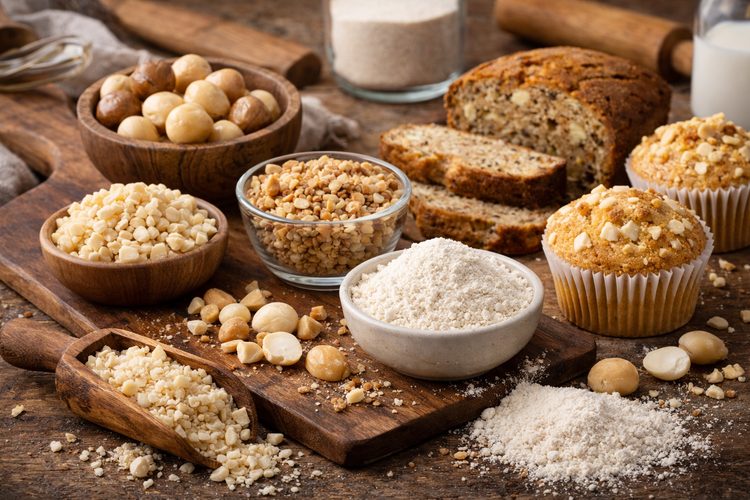
Macadamias can move across several food categories, but in bakery the sourcing decision is usually about matching the ingredient format to a specific functional role in the finished product. A bakery line may need whole kernels for a premium top finish, diced pieces for even dough distribution, or flour and meal for texture, richness and formulation support. Atlas generally frames bakery macadamia programs around a practical question: what does the ingredient need to do on line and in the final product? The answer affects not only the right format, but also roast choice, pack style, process fit and delivered cost.
Bakery buyers often begin with flavor and visual appeal, but the commercial conversation quickly becomes more technical. The ingredient has to survive mixing, sheeting, depositing, proofing, baking, cooling and packing. It may need to remain visible, contribute a specific bite, release some oil for richness, or stay sufficiently stable so the finished product does not look or eat differently from batch to batch. A strong bakery brief therefore combines product form, application, quality expectation and commercial timing rather than treating each one separately.
Why bakery format selection matters
Macadamias are a premium ingredient, so choosing the wrong format can raise total program cost even when the nominal purchase price looks attractive. Whole kernels may deliver stronger premium perception, but if the application does not truly need them, the product may end up over-specified. Diced pieces can often create better distribution and more efficient use of nut content in cookies, snack bars and bakery inclusions. Flour and fine meal may be the better route when the goal is richness, moisture contribution, nut flavor and formulation support rather than visible identity.
For bakery manufacturers, the core choice is usually between visible inclusion value, process practicality and formula functionality. Some applications need a clean showpiece look. Others need the nut to survive mechanical handling with minimal breakage. Others need the ingredient to support texture and fat delivery in a more dispersed form. The right choice depends on the product architecture, not on a generic preference for one format over another.
Buyer takeaway: bakery macadamia programs work best when the chosen format matches the actual product function, whether that is visual premium impact, controlled inclusion distribution or flour-like formulation support.
How this topic shows up in real buying decisions
In practice, bakery buyers compare raw, pasteurized, roasted and processed forms such as whole kernels, halves, diced cuts, meal, flour, butter and, in some systems, even oil. The correct route depends on the balance between appearance, bite, blendability, oil release, label positioning, equipment compatibility and total delivered cost. A cookie manufacturer may want visible chunks that survive dough mixing, while a cake or muffin producer may need smaller pieces that distribute evenly without sinking. A bakery mix developer may care more about flour functionality than visible nut identity.
For macadamia buyers, the usable product menu often includes raw macadamias, pasteurized macadamias, dry roasted macadamias, oil roasted macadamias, diced macadamias, meal, flour, butter and oil. Which of those makes sense depends on the end use, whether the customer is manufacturing further, packing retail products or building export-oriented lines. Even within bakery, the difference between artisan cookies, industrial biscuits, laminated pastries, bars, brownies, muffins and gluten-aware concepts can materially change the right specification.
Whole kernels for premium bakery presentation
Whole kernels and large style pieces are most often used when the bakery product needs a clear premium visual statement. This is common in upscale cookies, decorated pastries, loaf toppings, limited-edition bakery items, gourmet bars and gift-oriented bakery concepts where the nut is meant to be seen immediately. The value of whole kernels is strong recognition and premium appearance. The tradeoff is higher sensitivity to breakage, more variable piece count and a typically higher cost structure than more reduced formats.
Buyers should think carefully about whether whole kernels are truly necessary in every bakery use. They may be ideal for top application or hand-finished lines, but less practical for aggressive industrial mixing or high-speed lines where breakage reduces the benefit of paying for whole appearance. A strong quote request will usually clarify whether the product is top-decorated, folded into dough or used in a filled format so the whole-kernel route can be judged properly.
Diced macadamias for dough, batter and bar systems
Diced macadamias are often the most commercially balanced option for industrial bakery. They can provide visible inclusion, recognizable nut identity and a pleasant bite while improving distribution in doughs, batters, fillings and cereal-style bakery bars. Medium and small diced styles are especially useful where the product must travel through mixers, depositors or sheeted systems without creating large voids, uneven cut faces or excessive breakage.
In cookies and bars, buyers often care about several related factors at once: how evenly the nut distributes, how many visible pieces appear on the finished face, whether the nut stays recognizable after baking and how the inclusion affects bite. Larger cuts can create a more generous appearance but may also increase breakage or cause uneven weight distribution. Smaller cuts may blend more efficiently but can become less visually dramatic. The right choice is usually a compromise between premium look and process practicality.
Diced formats can also help control cost-in-use. When nut content is expensive, smaller controlled cuts may help the buyer achieve good visible coverage and sensory presence without needing oversized inclusions in every finished piece. That is why many repeat bakery programs settle on a diced specification even if early product development starts with larger visual samples.
Macadamia flour and meal in bakery formulations
Macadamia flour and meal serve a different function from inclusions. Instead of providing visible nut identity, they contribute richness, nut flavor, fat, texture modification and, in some applications, partial flour replacement. These formats are relevant in cookies, brownies, cake systems, crusts, premium baking mixes, fillings, gluten-aware concepts and products where a softer or richer crumb is desired.
Buyers should distinguish between a more granular meal and a finer flour-style product. A coarser meal may bring rustic texture and stronger visible specking, while a finer flour can blend more uniformly into the formula. The correct choice depends on whether the application needs structure, softness, moisture retention, a premium nut note or label-driven differentiation. Flour-like formats should always be quoted against real formula needs rather than treated as interchangeable with other nut flours.
Because macadamia flour has a very different composition and functional behavior from standard cereal flours, bakery developers should think about how it influences dough consistency, batter flow, fat perception, bake spread and finished tenderness. The product may add richness and premium perception, but it also changes the way the system behaves. That is why application detail matters so much when discussing flour programs.
Formulation note: macadamia flour is usually not just a flavor add-on. In bakery systems it can alter texture, mouthfeel, fat contribution and perceived richness, so the specification should match the intended formulation role.
Raw versus roasted in bakery applications
One of the most important technical-commercial decisions is whether the bakery program needs raw or roasted macadamias. Raw product can be appropriate when the bakery process itself provides enough thermal exposure to develop the final flavor. This is often relevant where the nut goes through baking and the buyer wants to avoid over-roasting before the ingredient reaches the oven.
Dry roasted product can make sense when the bakery item has a shorter bake window, lower moisture development or a need for stronger ready-to-use nut expression. It can also help when the brand wants a more defined roasted flavor in the finished item without relying entirely on the bake process. Oil roasted product may offer a distinct flavor and mouthfeel but should be evaluated carefully in bakery systems where surface oil, label positioning or handling characteristics matter.
In other words, the “best” style depends on how much of the final flavor is expected to come from the bakery process itself. Buyers who define the bake profile and the desired finished flavor generally get more relevant offers.
Bakery applications that drive format choice
Cookies and biscuits: These programs often use whole kernels for top appeal or diced pieces for internal distribution. The buyer usually focuses on visible nut count, bite, distribution after mixing and how well the inclusion holds up through baking.
Bars and tray-baked products: Medium and small diced macadamias are often preferred where even distribution, cut-face appearance and manageable inclusion cost matter. The right piece size can help keep bars consistent while still delivering premium nut identity.
Muffins, cakes and quick breads: Buyers may choose diced pieces for distribution or flour/meal for richness and texture support. The concern here is often whether inclusions sink, whether the crumb remains balanced and how the nut changes moisture and tenderness.
Pastries and laminated products: Whole or larger pieces can work for surface application and premium visual value, while smaller cuts may better suit fillings and internal layers where clean distribution is more important than dramatic top appearance.
Premium bakery mixes and specialty formulations: Meal and flour can play a larger role here, especially when the objective is to create a premium nut-forward profile, richer mouthfeel or differentiated formula story.
Appearance, bite and distribution in finished bakery goods
Bakery buyers are usually balancing three practical outcomes: how the nut looks, how it eats and how well it distributes. A product that looks premium in a sample bowl can perform poorly if it shatters in the mixer or disappears into the dough. Conversely, a smaller cut that seems less dramatic on paper may deliver better real-world piece count, more even distribution and a stronger perceived nut presence across the finished run.
Bite is also important. Macadamias are often selected because they provide a rich, less aggressive crunch than some harder nut types. That makes them attractive in premium cookies, soft-baked items and indulgent bars where the nut should feel luxurious rather than hard. The specification should therefore reflect not only visual size, but also the desired eating experience.
Oil release and bakery process behavior
Macadamias are a high-fat nut, so oil behavior can influence bakery performance. In inclusion formats, the question is often whether the nut contributes richness without creating greasy surface effects or excessive fragility. In meal and flour formats, the more relevant issue is how the ingredient interacts with dough or batter, how it changes the system’s richness and whether it affects tenderness, cohesion or perceived moisture.
Buyers using macadamia flour or meal should be especially clear about formulation intent. Is the ingredient there to add flavor, to partially replace another nut or flour input, to create premium positioning or to modify eating texture? The better the supplier understands that role, the easier it becomes to discuss a sensible product route.
Packaging and pack style considerations
Packaging matters because it affects receiving, internal handling, quality preservation and labor at the plant. Trial quantities may need smaller and easier-to-manage packs. Routine bakery production typically prefers industrial bulk formats that reduce handling time and improve efficiency. Retail-ready, private label and export-oriented bakery programs introduce a different set of packaging considerations, including presentation, secondary packing, documentation and logistics fit.
Atlas generally recommends that buyers specify whether the program is industrial bulk, foodservice, retail-ready, private label or export-oriented at the start of the inquiry. That single clarification often changes pack recommendations, timing assumptions and the overall commercial structure of the quote.
Commercial planning points
Commercially, bakery macadamia projects often develop in stages: trial quantity, validation run, launch volume and repeat replenishment. Atlas uses that logic to guide pack and shipment planning, especially when retail packaging, export retail or private label is part of the conversation. The more clearly a buyer identifies the project stage, the easier it becomes to match the sourcing discussion to the real decision at hand.
Trial quantities are usually about application fit and product development. Validation runs check repeatability under plant conditions. Launch volumes introduce more serious questions around cost-in-use, pack efficiency and timing. Repeat replenishment is about continuity, forecast rhythm and a commercial structure that supports stable supply rather than one-off emergency buying.
Commercial perspective: the strongest bakery programs are built around repeatability, with clear agreement on format, pack style, delivery rhythm and what the ingredient must do in production.
What Atlas would ask before quoting
For bakery macadamia projects, Atlas usually recommends turning the product idea into a quote request with five practical points: target format, application, pack style, destination market and volume rhythm. We also encourage buyers to add any priorities around roast style, appearance, bite, blendability or flour functionality. That makes it easier to discuss realistic California partner options instead of a generic price-only inquiry.
Typical pre-quote questions include:
- Is the bakery use for cookies, bars, cakes, pastries, mixes or fillings?
- Do you need whole kernels, diced cuts, meal, flour, butter or another processed form?
- Should the product be raw, pasteurized, dry roasted or oil roasted?
- Is the main priority visible premium appeal, even distribution, softer bite or formulation support?
- Will the ingredient be used as a top application, internal inclusion or blended flour-like component?
- Is the program industrial bulk, foodservice, retail-ready, private label or export-oriented?
- What volume stage are you in: trial, validation, launch or ongoing monthly supply?
- Which destination market and timing should the quotation reflect?
Typical bakery uses for macadamias on this site
Typical use cases for macadamias on this website include premium bakery, cookies and confectionery, snack mixes, plant-based dairy, sauces and dips. For bakery specifically, the most common commercial discussion points are inclusion visibility, piece control, flour functionality, roast profile and pack efficiency. The product brief should always match one of those concrete end uses rather than remaining overly broad.
Common buyer mistakes
One common mistake is asking for “macadamias for bakery” without stating whether the need is for visible kernels, internal pieces or flour. Another is choosing a format based only on sample appearance without considering mixer stress, bake performance or cost-in-use. A third is ignoring pack style until late in the process, even though packaging can materially affect both plant handling and overall commercial fit.
Buyers also sometimes overpay for a premium inclusion format in applications where a smaller diced cut or a flour route would deliver better functionality and a more efficient finished product cost. Clear application detail helps avoid that kind of mismatch.
Buyer planning note
Atlas Global Trading Co. uses topics like this to move conversations from broad interest to a more specification-minded bakery inquiry. If you are evaluating macadamia supply for cookies, bars, cakes, pastries, mixes or other bakery applications, share the required format, expected pack style, estimated volume, destination and any technical notes on bite, appearance or blendability using the floating contact form. That gives the next step a real commercial foundation.
Practical quote request template
If you are preparing a bakery inquiry, the following structure usually speeds up the conversation:
- Application: cookies, biscuits, bars, cakes, muffins, pastries, bakery mix or filling
- Format: whole kernels, halves, diced cuts, meal, flour, butter or oil
- Style: raw, pasteurized, dry roasted or oil roasted
- Functional need: premium visual, even distribution, controlled bite, flour support or richer mouthfeel
- Pack style: trial pack, industrial bulk, foodservice, retail-ready or export-oriented requirement
- Volume: sample quantity, validation run, monthly usage or container program
- Destination: USA, Europe, Middle East, Asia or other target market
- Timing: needed-by date, launch window or repeat replenishment cadence
That type of brief gives both buyer and supplier a far better basis for discussing realistic supply options than a general request for price on “macadamias for bakery.”
Need help sourcing bakery macadamias?
Use the contact form to turn this bakery topic into a practical quote request built around the format, application, pack style and timing your line actually requires.
- State the exact macadamia format and bakery application
- Add target trial, monthly or launch volume
- Include destination market, pack style and needed-by timing
Frequently Asked Questions
Which macadamia format works best for bakery production?
The right format depends on the bakery application. Whole kernels suit premium visual toppings, diced cuts often work better for dough and batter inclusions, and flour or meal fits systems where texture, fat contribution or partial flour replacement are more important than visible nut identity.
Should bakery buyers choose raw or roasted macadamias?
That depends on the bake process and target flavor. Raw product may be suitable when the bakery process adds enough heat to develop the final profile, while roasted product can be better when the buyer wants stronger ready-to-use flavor or more defined nut character in the finished item.
What should be included in a bakery macadamia quote request?
A better bakery inquiry usually includes application, format, target particle size, roast preference, pack style, destination market, expected volume, timing and any priorities around appearance, bite, oil release or processing performance.