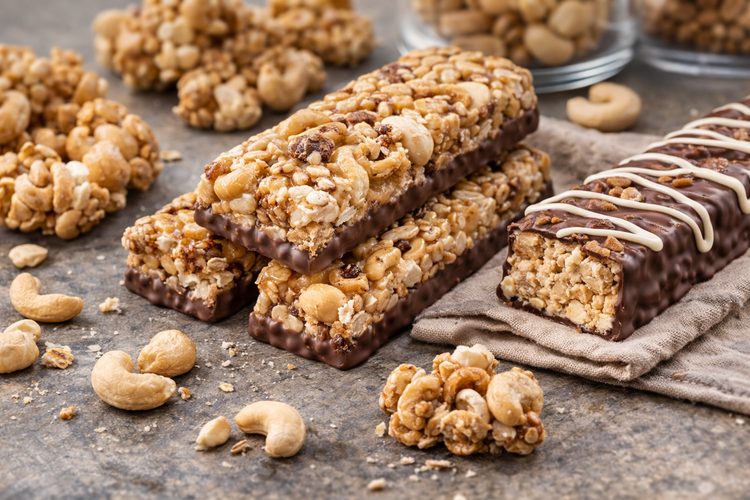
Cashews can move across multiple snack concepts, but in bars, clusters and functional snacks the sourcing conversation is rarely only about a generic nut price. The ingredient has a structural role. Depending on the product design, cashews may add visible premium identity, clean nut flavor, controlled crunch, softer chew contrast, fat contribution, binder support or protein-adjacent solids. The strongest commercial outcome comes when the buyer defines what the cashew is supposed to do in the finished snack and then sources the correct format around that use.
That means a whole roasted kernel for a premium front-of-pack protein bar is not commercially equivalent to diced raw material for a baked breakfast square, and neither is equivalent to fine cashew flour used in a softer functional base. Even when all three ingredients come from the same nut family, their cost-in-use, handling profile and packaging logic are different. Atlas approaches these projects as application-led ingredient decisions rather than one-line commodity substitutions.
Core buying principle: For bars, clusters and functional snacks, the right cashew program is usually defined by bite target, visual target, process route, fat behavior, binder compatibility, packaging format and launch stage, not by nominal price alone.
Why cashews work well in snackable functional formats
Cashews occupy a useful middle ground for snack developers. They can feel more premium than many commodity inclusions, present a smoother and often less aggressive nut profile than some alternatives, and offer flexibility across indulgent, better-for-you and hybrid positioning. In a bar, cashews can soften the perceived harshness of a high-protein formula. In a cluster, they can help create visual irregularity and premium texture. In functional snacks, they may support energy, satiety and clean-label storytelling while still working across sweet and lightly savory directions.
From a formulation perspective, cashews are also versatile because they are not limited to one format. Buyers can work with whole kernels, halves, large pieces, small diced cuts, granulated material, meal, flour, butter or paste-like systems depending on the snack architecture. That flexibility matters commercially because one customer may need consumer-visible top notes, while another only needs controlled nut solids embedded into a base mass.
How this topic shows up in real buying decisions
In practice, snack buyers usually compare raw, pasteurized, dry roasted, oil roasted and processed formats such as diced cuts, granulated material, meal, flour, butter and oil-bearing components. The correct choice depends on the balance between appearance, bite, blendability, oil release, labeling goals, manufacturing conditions and total delivered cost. The quote should reflect the real process route instead of treating every cashew form as interchangeable.
For cashew buyers in this category, the usable commercial menu often includes raw kernels for secondary roasting or baking, roasted halves and pieces for immediate inclusion, diced cuts for weight distribution and bite control, fine flour for base systems, and cashew butter for binding or flavor rounding. Which route makes sense depends on whether the customer is manufacturing further, packing ready-to-sell functional snacks, working with a co-man, or planning export distribution under branded or private label programs.
Common snack formats where cashews are used
Nutrition and protein bars
In protein bars, cashews may be used as visible inclusions, blended particulate matter, nut butter components or texture-balancing solids. Their role changes depending on whether the bar is chewy, layered, coated, extruded, cold formed or baked. For visible inclusions, buyers often focus on cut size, roast level, breakage resistance and visual distribution. For matrix use, the buyer may care more about oil release, grind consistency, sensory softness and interaction with syrups, fibers and protein systems.
Granola-style and bound clusters
Clusters usually ask the ingredient to do several things at once: create visual interest, contribute bite, hold together with binders, and tolerate tumbling, depositing or bag filling. Cashews can support a more premium look than many cereal-only or seed-only formats, but the buyer still needs to define whether the nut should dominate the appearance or only support the cluster architecture. Diced cashews may distribute more evenly, while larger pieces may create stronger perceived value at pack opening.
Functional snack bites and energy bites
In bite-sized formats, cashews can function as a whole food anchor, a fat-bearing texture modifier or a nut-forward flavor signal. These formats may also involve dates, syrups, fibers, cocoa, seeds, dried fruits, protein powders or coating systems. In those applications, the buyer should think carefully about whether the cashew should remain recognizable as a piece or be integrated into the base as flour or butter.
Better-for-you confectionery-adjacent snacks
Some products live between a bar and a confectionery item. They may use chocolate-style coatings, drizzle systems, inclusions, caramel-like binders or protein-enriched centers. Cashews are commercially useful here because they can support indulgent cues while still fitting a more functional positioning. The main buying challenge is usually choosing the format that gives enough visual and sensory value without making the piece fragile or greasy during production and distribution.
Choosing the right cashew format for the line
Whole kernels and halves
Whole kernels and halves are usually chosen when the product wants a strong premium signal and visible nut identity. They are most common in upscale bars, snack mixes, premium clusters and retail-facing functional snacks where pack presentation matters. The tradeoff is cost and space efficiency. Larger kernels also create more visible variability and may affect cut quality in bars if the product is slabbed and sliced.
Large and medium pieces
Pieces often provide a strong balance between appearance and process control. They can still deliver a clear nut bite and visible distribution while improving weight control and line consistency versus whole kernels. For many snack systems, pieces are the commercial middle ground: more premium than flour or granulated material, but easier to dose and distribute than full kernels.
Diced cuts
Diced cuts are particularly useful in bar matrices and clusters where uniformity matters. Buyers may choose a tighter cut size to improve depositor flow, slab consistency, inclusion distribution and cutting performance. Smaller cuts can also reduce point-loading within a bar, limiting breakage or uneven bite. In export retail or high-volume co-manufacturing, that consistency can matter more than the visual drama of larger kernels.
Granulated material, meal and flour
When the cashew is not meant to stand out visually, ground formats can support base structure, nut flavor, macro positioning and texture rounding. In functional snack applications, this may be relevant where the product must feel softer, more cohesive or more homogeneous. The buyer should specify whether the flour is intended for visible particulation, base thickening, moisture interaction or background nut profile.
Cashew butter and paste-style systems
Cashew butter can play a structural role in softer bars, filled bites or bound snack systems. It may support cohesion, richness and nut taste while helping bridge dry ingredients together. Commercially, this changes the conversation from inclusion sourcing to fat-phase or binder-phase sourcing, so the RFQ should reflect the intended usage rather than simply naming the ingredient.
Raw, pasteurized or roasted: which route fits best?
The right roast route depends on whether the customer wants the nut to arrive as a ready-to-use sensory component or as an ingredient that will undergo additional transformation. Raw or pasteurized formats may be more suitable when the product will be baked, roasted again or deeply integrated into a manufacturing step where the final flavor profile is still being built on line. Roasted formats are often selected when the goal is immediate nut flavor, visible premium color and a cleaner path to finished assembly.
Dry roasted material may suit brands focused on more direct nut flavor and simpler ingredient positioning. Oil roasted material may make sense in certain snack systems where mouthfeel, seasoning carry or a different flavor style is preferred. Buyers should not treat these categories as equivalent. Roast route affects flavor, texture, color, process burden and in some cases labeling strategy.
Technical factors that matter in bars and clusters
Bite and texture management
Bite design is central in functional snacks. Too large a cut can create hard points in a bar, especially when proteins and fibers are already tightening the matrix. Too fine a cut can make the nut disappear and remove the premium sensory payoff. Buyers should think in terms of finished bite rather than ingredient tradition. A chewy protein bar, a crunchy cluster and a soft refrigerated bite may each need a different cashew geometry even if the flavor direction is similar.
Oil release and migration
Cashews contain natural oil, so the chosen format influences oil release during mixing, holding, cutting and shelf life. Finer formats and butter systems can contribute more directly to richness and matrix cohesion, but they may also need tighter management around texture drift and packaging compatibility. Larger roasted inclusions may control that effect better, but they change bite and piece integrity. This is why bars and clusters should be reviewed as total systems rather than isolated ingredients.
Binder interaction
Bars and clusters frequently depend on syrups, fibers, nut butters, chocolate-style coatings, humectants or protein pastes for structure. The cashew format has to interact well with that binder system. A buyer evaluating a diced roasted piece for a syrup-bound cluster has a different requirement from a buyer using cashew flour in a cold-formed functional dough. Atlas would want to know whether the line is slabbed, extruded, deposited, mixed in kettles, baked in trays or formed as a no-bake mass.
Cutting and depositing behavior
Bars often fail commercially not because the ingredient is wrong in theory, but because it behaves badly in production. Oversized pieces may drag through cutting wires or cause bar face irregularity. Too much fragile roasted particulate may increase fines and pack dust. Overly oily systems may reduce clean release. The best ingredient choice is often the one that supports both eating quality and line reliability.
Visual distribution
In clusters and premium bars, visual distribution is a selling tool. Consumers notice whether the nuts look generous, controlled or random. Large pieces communicate indulgence and value, but they can also reduce pack uniformity. Smaller diced formats improve spread and count consistency. The commercial brief should identify whether the product wins at shelf by visible nut load or by clean, repeatable manufacturing.
Application-specific buying logic
High-protein bars
High-protein bars often need help with softness, flavor masking and bite variation. Cashews may be used to moderate dense protein texture, create flavor contrast and make the product feel less synthetic. In these formulas, medium pieces, diced cuts or butter components are often more practical than large whole kernels. Buyers should also think about how the nut behaves over shelf life as the bar firms up.
Breakfast bars and cereal-cluster products
These products often balance cereal solids, sweetener systems and lighter positioning. Cashews may serve as premium inclusions or visual upgrades, but the program usually needs tighter cost control than luxury snacking. Pieces and diced formats are common because they preserve nut visibility without overloading the BOM. Packaging format also matters, since multi-pack retail, pillow packs and export shelf display each carry different requirements.
Indulgent-functional hybrid snacks
Products that combine functional claims with indulgent coatings or dessert-style flavors often need the nut to support both nutrition perception and premium taste. Roasted cashews may work well here, especially when the product wants a more complete nut note without another roast step. If coatings or drizzles are involved, inclusion stability and finished appearance become more important than raw ingredient flexibility.
Clean-label snack bites
Snack bites positioned around simple ingredients often use nuts as both structure and story. Cashew butter, flour or smaller pieces may all be relevant depending on whether the product is rollable, pressed, cut or enrobed. These programs often benefit from a very clear quote request because small changes in grind or residual oil can materially affect texture and machinability.
What Atlas would ask before quoting
For cashew projects in bars, clusters and functional snacks, Atlas recommends translating the product idea into a quote request with five core points: target format, application, pack style, destination market and volume rhythm. In most cases, Atlas would also ask whether the material should be raw, pasteurized or roasted; whether the cashew is visible in the final product; what cut size or grind range is preferred; and whether the program is at trial, validation, launch or repeat stage.
That makes it easier to discuss realistic California partner options and commercial routes rather than turning the conversation into a generic price-only inquiry. A quote for roasted diced cashews for cluster production should not be compared with a quote for raw whole kernels intended for secondary processing. The end use has to anchor the discussion.
Useful RFQ example: “Please quote dry roasted cashew pieces for protein bar inclusion, medium cut, bulk industrial packing, initial validation run followed by monthly replenishment, destination EU, target shipment window Q3.” This gives a much better basis for commercial comparison than “quote cashews for bars.”
Commercial planning points
Commercially, these programs often develop in stages: trial quantity, validation run, launch volume and repeat replenishment. Atlas uses that logic to guide pack and shipment planning, especially when retail packaging, export retail or private label is part of the conversation. A sample-stage requirement may accept more flexibility, while a repeat program needs clearer packaging discipline, forecast rhythm and continuity expectations.
When relevant, the buyer should also mention whether the program is industrial bulk, foodservice, retail-ready, private label or export-oriented. That single clarification often changes packaging, documentation and timing assumptions. A co-man producing palletized retail bars has different needs from a distributor packing clusters under a regional private label brand, even if both are using cashew pieces.
Packaging logic for snack ingredients
Packaging decisions influence ingredient performance more than some buyers expect. Larger consumer-visible roasted formats may need packing that preserves piece integrity and minimizes fines. Industrial powder or meal systems may prioritize flow, storage efficiency and line-side handling. Retail-ready or export programs may need a tighter discussion around secondary packing, palletization, label coordination and transit conditions. In other words, pack style is not a downstream detail; it is part of the commercial specification.
Atlas generally encourages customers to mention whether they need bulk cartons, lined industrial packs, foodservice-ready units, private label retail formats or export-oriented case configuration. That helps align the sourcing route with the actual program economics.
Cost-in-use versus nominal ingredient price
Cashews can make a snack look and taste more premium, but smart buyers still need cost discipline. The right commercial question is usually not “Which cashew is cheapest?” but “Which cashew format gives the target bite, appearance and process performance at the best total delivered cost?” A cheaper whole kernel that creates cutting loss, breakage or uneven distribution may be less efficient than a slightly higher-value diced specification that runs well on line. A roasted inclusion may look more expensive on paper than raw material, but if it reduces internal roasting burden and speeds commercialization, the total program economics may still be better.
That is why Atlas frames these conversations around cost-in-use, not only invoice price. Bite performance, line efficiency, pack consistency and shelf appearance all have commercial value in bars and functional snacks.
How buyers can think about specification by snack architecture
If the cashew is meant to be seen
Focus on roast style, color, inclusion size, breakage tolerance and pack appearance. This is especially relevant in premium protein bars, upscale clusters and visually merchandised snacks.
If the cashew is meant to shape bite
Focus on piece geometry, hardness, roast level and how the inclusion behaves with proteins, syrups and fibers over shelf life.
If the cashew is meant to support the base system
Focus on grind profile, oil release, binder interaction and whether flour, meal or butter is the better route for the formulation.
If the snack is export or private label
Focus on repeatability, packaging discipline, documentation flow and whether the chosen format can be supplied consistently at the intended commercial rhythm.
Where buyers often go wrong
A common mistake is choosing a format based on how the ingredient looked in a kitchen sample rather than how it behaves at plant scale. Another is asking for whole kernels because they appear premium, when the bar is actually better served by medium pieces for cut stability and cost control. A third is treating raw and roasted formats as mostly interchangeable even though they create different flavor loads and process burdens. The most reliable buying outcomes usually come from matching specification to manufacturing reality early.
Buyer planning note
Atlas Global Trading Co. uses topics like this to move conversations from broad interest to a specification-minded inquiry. If you are evaluating cashews for bars, clusters or functional snacks, share the format, roast route, pack style, estimated volume and destination through the contact form so the next step can be grounded in a real commercial brief.
Whether the need is for visible roasted pieces in a premium protein bar, more uniform diced cuts for cluster production, flour for a soft functional base or butter for binder support, the most useful sourcing conversation starts with the product architecture and commercial timing, not only the ingredient name.
Need help sourcing around this cashews topic?
Use the contact form to turn this snack concept into a more practical quote request for Atlas and its California partner network.
- State the exact cashew format and roast route
- Add target monthly, pilot or launch volume
- Include destination market, pack style and timing
What a better inquiry looks like
The strongest inquiries in this category usually identify the snack type first and the cashew role second. For example: “roasted diced cashews for syrup-bound cluster line,” “medium cashew pieces for coated protein bar inclusion,” or “cashew flour for functional snack bite base.” That kind of language improves quotation quality because it ties the nut specification to a real manufacturing use case.
Atlas generally finds that clearer briefs reduce avoidable back-and-forth, improve price comparability and help buyers move more confidently from sample stage to repeat commercial supply.
Frequently Asked Questions
What is the main buyer takeaway from “Cashews in Bars, Clusters and Functional Snacks”?
The main buyer takeaway is that cashews should be sourced against the real snack architecture. Kernel style, roast route, cut size, binder interaction, packaging and commercial timing should be aligned before quotation.
Which cashew formats are commonly used in bars, clusters and functional snacks?
Common formats include whole kernels, halves, pieces, diced cuts, granulated material, meal, flour, butter and selected roasted formats. The right choice depends on bite, visual appearance, process conditions, oil release and cost-in-use.
Should snack buyers choose raw or roasted cashews?
It depends on the line. Raw or pasteurized material may suit products that will be baked or further processed. Roasted material often suits snacks that need immediate nut flavor, finished color and faster assembly into the final product.
Why do cut size and particle size matter so much in bars and clusters?
Cut size affects visual value, bite consistency, line performance, cutting behavior and how evenly the nut distributes through the finished snack. A format that looks attractive in a sample may not be the best choice for plant-scale deposition or bar cutting.
What should a buyer include in an RFQ for this kind of cashew application?
A strong RFQ should define application type, target format, raw or roasted requirement, preferred cut or grind size, pack style, destination market, trial or monthly volume and target shipment timing.
Can the same sourcing logic apply to domestic and export snack programs?
Yes. The same core logic applies to U.S. and export programs, although packaging, documentation, pallet planning and shipment cadence may vary significantly by destination and channel structure.