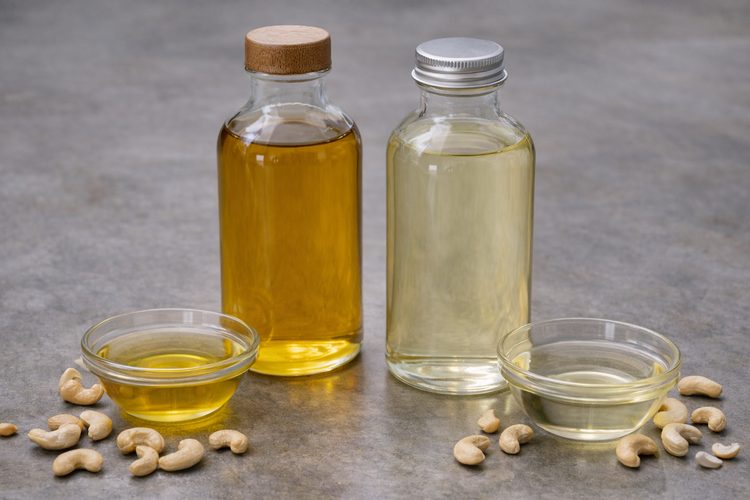
Cold press and refined cashew oil should not be treated as interchangeable by default. Industrial nut buying is rarely only about nominal price, and oil buying is even more sensitive to application fit because small differences in flavor, appearance and handling can change the value of the finished product. The stronger commercial outcome usually comes from aligning oil stream, intended application, packaging route and shipment timing before the order is placed.
For buyers, the practical question is not simply whether cashew oil is available. It is which cashew oil profile makes sense for the real job the ingredient needs to do. In some products, the oil is expected to contribute identity, premium positioning and a recognizable nut character. In others, it must behave as a more neutral functional oil that supports texture, processability or finished product consistency without drawing attention to itself. Cold press and refined streams solve different problems, and sourcing improves when the buyer defines those problems early.
Why the distinction matters commercially
Oil streams are often compared too broadly. A buyer may ask for cashew oil and receive quotations that look similar on paper, but the commercial use case may be completely different. Cold press oil is generally discussed when minimally processed positioning, natural sensory character or premium story value is important. Refined cashew oil is more often considered when the customer needs a cleaner, more neutral route that can integrate into broader formulations without competing for attention.
This distinction matters because the usable value of the oil depends on what the finished product is trying to achieve. A premium dressing, finishing oil or upscale culinary concept may benefit from an oil that still carries a cashew identity. A formulated snack coating, creamy filling or industrial blend may be better served by a more neutral and predictable route. Buyers who clarify the end use, label ambition, pack style and volume rhythm usually get more comparable quotations and avoid sampling the wrong type of material.
Buyer shortcut: a strong inquiry is not only “quote cashew oil.” It is closer to “quote cold press cashew oil for premium dressing use” or “quote refined cashew oil for a neutral formulation route in an industrial product.”
What cold press cashew oil usually signals in the market
Cold press cashew oil is generally associated with a more identity-led and premium-oriented route. Buyers who explore this stream are often looking for an oil that supports a less heavily processed positioning, a more distinctive ingredient story or a finished product where the oil is allowed to be part of the sensory experience rather than hidden inside the formula. In this context, flavor, aroma and visual character may be assets rather than variables to be minimized.
Commercially, this means cold press oil is often discussed in applications where the customer wants to preserve the idea of origin, nut character or artisanal positioning. It can be relevant in premium culinary formats, sauces, dressings, dips, finishing applications, specialty retail oils, upscale foodservice concepts or premium personal formulations where the oil itself contributes perceived value. The core tradeoff is that the oil is being chosen partly for its identity and not only for its neutrality.
What refined cashew oil usually signals in the market
Refined cashew oil is more often chosen when buyers need a cleaner, more standardized and broadly usable oil route. In those cases, the value comes less from distinct sensory identity and more from formulation compatibility, operational repeatability and the ability to work across a wider set of products without strongly changing flavor direction. Refined oil is often the more practical option when the buyer wants the benefits of a cashew-derived oil stream without making the oil itself the hero story.
In commercial terms, refined cashew oil may fit better into industrial formulations, broader culinary systems, coated products, fillings, sauces, blended fat systems or applications where color and flavor need to stay more controlled. That does not make it automatically better. It simply means the decision should be led by product function rather than by generalized assumptions about premium value.
How this topic shows up in real buying decisions
For cashews, the quote should reflect the real format and route. Whole or kernel material is different from diced, meal, extra fine flour, butter or oil. The commercial logic also changes when the material is raw, pasteurized, dry roasted or oil roasted. Once the discussion reaches oil, buyers usually need to distinguish even more carefully between different streams, because oil selection often influences flavor profile, positioning language, pack route and formula economics at the same time.
For cashew buyers, the usable product menu can include raw cashews, pasteurized cashews, dry roasted cashews, oil roasted cashews, diced cashews, meal, flour, butter and oil. Which of those makes sense depends on the end use, whether the customer is manufacturing further, packing for retail or planning export distribution. In oil programs, that logic becomes even more application-dependent, because the oil may function as a featured ingredient, a supporting component or a purely technical part of the formula.
Application differences between cold press and refined streams
Dressings, sauces and finishing applications
Cold press cashew oil is often more relevant when the oil is visible in the sensory profile or part of the product narrative. Premium dressings, chef-driven sauces, culinary finishing formats and upscale foodservice concepts may benefit when the oil contributes character rather than disappearing into the background. Buyers in this space typically care about perceived richness, aroma, taste direction, premium story value and retail or menu positioning.
Refined cashew oil may still be suitable for sauces and dressings, but it tends to fit better when the formulator wants a smoother and more neutral base that allows acids, herbs, spices, sweeteners or other flavor components to lead the sensory profile. In these cases, the oil is chosen for its behavior inside the formulation rather than for its standalone identity.
Plant-based dairy and creamy formulations
In creamy plant-based applications, the oil choice often depends on whether the buyer wants the cashew character to remain noticeable or whether the oil is there to support texture, richness and process performance in a quieter way. Refined cashew oil can be commercially attractive when the aim is a cleaner formulation route with less sensory interference. Cold press oil may make more sense when the product wants to lean into premium nut character or more natural-positioned storytelling.
The useful decision here is not which stream sounds better in theory, but which one fits the finished texture, flavor direction and target consumer message. A spoonable premium spread, a dairy-alternative concept and a creamy culinary sauce may each require a different answer.
Bakery, confectionery and fillings
In bakery and confectionery systems, oil usually performs a functional role first. That often pushes the conversation toward consistency, handling and interaction with the broader formula. Refined cashew oil may therefore be the more logical route when the objective is system performance without adding a strong taste cue. However, there are premium dessert and specialty confectionery applications where a more distinctive oil story may still be commercially relevant.
Buyers in this category should be careful not to ask for an oil stream only by name. The better approach is to specify whether the oil is being used for flavor, mouthfeel, coating, filling texture, premium claim support or broader formulation balance.
Retail specialty oils
If the finished product is a retail oil line sold on its own, the commercial logic changes again. Cold press oil is often better aligned with premium specialty positioning, artisanal narratives and sensory-led retail stories. Refined oil may still have a place where a cleaner profile and broader everyday-use positioning are preferred. The choice depends on what the consumer is expected to buy: a distinctive specialty oil or a more versatile general-use product.
Industrial blending and neutral formulations
Refined cashew oil is often more appropriate in industrial routes where the oil must fit quietly into a broader system. Here, the customer may prioritize repeatability, cleaner sensory integration, process predictability and cost logic over ingredient storytelling. This does not eliminate the need for specification detail. It simply means that the relevant questions shift from premium identity to formulation function.
What buyers should compare beyond the oil name
Flavor profile
The first difference many buyers care about is how much cashew identity remains in the oil. If the oil is meant to contribute to the finished sensory profile, that may be a benefit. If the buyer needs a more neutral formulation route, too much identity can become a problem. This should be discussed before sample approval rather than after.
Appearance and positioning fit
Visual expectations and label strategy also matter. Some finished products benefit from a more artisanal or less heavily processed perception. Others need a cleaner, standardized look and a simpler formulation message. The oil stream should match the commercial objective of the finished product.
Formulation role
Buyers should clarify whether the oil is acting as a hero ingredient, a support fat, a coating medium, a flavor carrier, a texture aid or a blending component. The more precise the role, the easier it becomes to decide whether cold press or refined oil is the better route.
Total delivered cost
Oil selection should be evaluated against total delivered value, not only price per unit. An oil with stronger premium story value may justify its place in a consumer-facing or culinary application. A more neutral and operationally flexible oil may create value through easier formulation or broader usability. Comparing them only by nominal price usually misses the commercial point.
Packaging and handling route
Oil packaging should also be aligned with the real program. Industrial bulk, foodservice and retail-ready routes imply different container sizes, handling methods, storage assumptions and transport priorities. The oil stream and the pack route should be discussed together.
What Atlas would ask before quoting
Atlas encourages buyers to define intended use, pack style, destination, timeline and quality expectations early. For oil projects, Atlas would typically ask more specifically how the oil is meant to behave in the finished product and how the program will move commercially.
- Does the buyer need cold press or refined cashew oil, or are both routes under evaluation?
- What is the intended application: dressing, sauce, culinary finishing, plant-based dairy, filling, bakery, confectionery, retail oil line or another formulation?
- Should the oil contribute flavor and premium identity, or remain relatively neutral within the formula?
- Is the route industrial bulk, foodservice, retail-ready, private label or export-oriented?
- What pack size or container format is required?
- What is the commercial stage: trial quantity, validation run, launch volume or repeat replenishment?
- What destination market and timing expectations should shape the supply route?
- Are there label, artwork or positioning requirements that make one stream more suitable than the other?
Typical use cases for cashews on this website include snacks, bakery, confectionery, plant-based dairy and spreads. Oil projects should still be tied back to a specific finished use, because application fit is what determines whether cold press or refined cashew oil is commercially stronger.
Commercial planning points
From a trading standpoint, the best programs are built around repeatability. That means clear documentation, agreed packaging, sensible shipment cadence and a commercial structure that supports continuity rather than one-off emergency buying. For oil streams, that same principle applies. The more clearly the buyer defines the intended route, the easier it becomes to judge whether the premium value of cold press oil or the broader utility of refined oil is the better commercial fit.
Commercially, these projects often develop in stages: trial quantity, validation run, launch volume and repeat replenishment. Atlas uses that logic to guide pack and shipment planning. An R&D sample for a premium sauce concept is not the same task as a recurring industrial oil program. Likewise, a retail-ready specialty oil line has different packaging and label implications than an ingredient route into manufacturing. The stage should be defined early so the quotation process reflects the real commercial path.
When relevant, the brief should also mention whether the program is industrial bulk, foodservice, retail-ready, private label or export-oriented. That single clarification often changes packaging, documentation and timing assumptions. It can also change which oil stream is more commercially rational, because the route to market affects how much value the finished product can extract from sensory identity versus formulation flexibility.
How buyers can make the conversation more practical
One of the most useful shifts is to stop discussing cold press versus refined oil as a general quality ranking. In practice, the better stream is the one that fits the buyer’s application, packaging route and commercial model. A premium culinary line may need the sensory distinction of a cold press route. A large-scale formulation may be better served by the neutrality and broader utility of refined oil. Neither answer is correct in every case.
That is why a practical quote request should describe the job the oil must do, the way the finished product will be sold or used, the required pack style and the expected order rhythm. Once those are defined, oil-stream decisions become far easier to compare on a real commercial basis.
Buyer planning note
Atlas Global Trading Co. uses topics like this to move conversations from broad interest to a specification-minded inquiry. If you are evaluating cashew oil supply, share whether you are considering cold press or refined oil, the intended application, pack style, estimated volume and destination using the floating contact form so the next step can be grounded in a real commercial need. The useful objective is not simply to choose an oil stream by name, but to choose the route that best fits your finished product, operating model and market position.
Need help selecting the right cashew oil stream?
Use the contact form to turn this research topic into a practical quote request with oil type, application, pack style and commercial timing.
- State whether you need cold press or refined oil
- Add target monthly or trial volume
- Include destination market and target timing
Frequently Asked Questions
How should buyers choose between cold press and refined cashew oil?
Buyers should choose based on the job the oil must do. Cold press cashew oil is usually selected when flavor identity, premium positioning and minimally processed perception matter. Refined cashew oil is typically preferred when neutral profile, broader formulation flexibility, appearance consistency and operational repeatability matter more.
What should be included in a quote request for cashew oil?
A practical quote request should include whether the buyer needs cold press or refined oil, intended application, sensory expectations, pack size, destination market, trial or monthly volume, and the target ship or delivery window. These details make quotations more comparable and more useful.
Why are cold press and refined cashew oil not directly interchangeable in every application?
They are not always interchangeable because they can differ in flavor intensity, appearance, formulation fit, positioning value, cost structure and how they behave in finished products. The best choice depends on whether the oil is supporting taste, texture, label story, processing efficiency or shelf presentation.