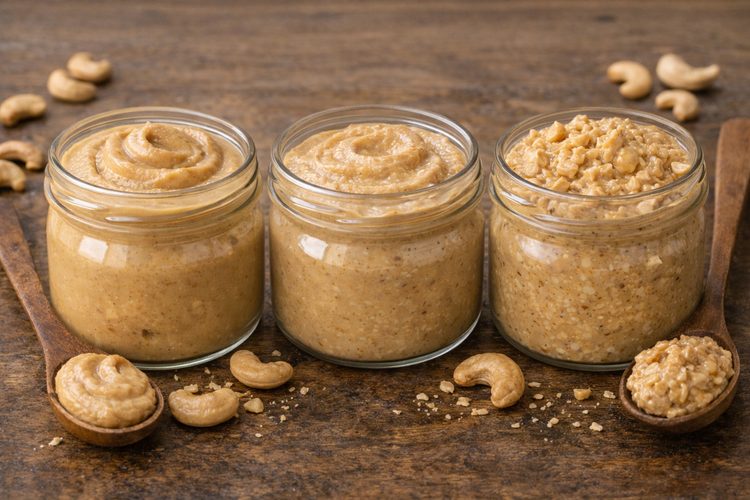
Cashew butter is often treated as a simple commodity line item, but most supply issues start when the texture brief is too vague. Saying “smooth cashew butter” is rarely enough for a factory, foodservice brand or private-label buyer. In practice, buyers usually need a texture that performs inside a process window: it must pump, spread, deposit, swirl, blend, fill, freeze, remain stable on shelf, or recover after transit without creating oil separation, grit complaints or line slowdowns.
That is why the texture specification should be built around end-use behavior rather than only appearance. A butter intended for bakery fillings may need more body and less oil migration than one intended for a drink base. A retail spread may need clean spoonability and a luxurious mouthfeel, while an industrial inclusion for bars or confectionery may need tighter control over firmness, flow and post-fill set. The stronger commercial result usually comes from defining grind, roast, flow, packaging and shipment conditions together before quotation.
Why texture is one of the first commercial questions
For cashew butter buyers, texture is not only a sensory topic. It directly affects manufacturing efficiency, finished product consistency, complaint risk and freight suitability. A butter that looks acceptable in a sample jar can still fail in production if it bridges in pails, requires heating that the site did not plan for, breaks in emulsion systems, or releases free oil during warehousing.
Texture also shapes cost. Ultra-smooth, highly refined and tightly controlled grind profiles may require more processing attention than a standard smooth butter. Roasted versus lightly roasted material can influence viscosity, flavor intensity and oil release. Stabilized and unstabilized systems behave differently in storage and may lead to different ingredient statements, shelf-life assumptions and pack formats. Buyers comparing offers should therefore look beyond price per kilogram and ask how each product will behave once it is pumped, mixed, spread or packed.
Buyer shortcut: the useful specification is not “smooth cashew butter.” The useful specification is closer to “light roasted smooth cashew butter, pumpable at room temperature, low perceived grain, suitable for bakery filling, packed in 20 kg pails, for monthly repeat orders into the EU.”
What “texture” means in cashew butter procurement
In commercial buying, texture usually combines several technical traits rather than one single measure. Buyers may be reacting to mouthfeel, but processors are often managing particle size distribution, oil phase behavior, roast development and finished flow. A strong specification normally clarifies at least some of the following:
- whether the butter should be ultra smooth, standard smooth, semi-smooth or intentionally slightly textured,
- whether it should be spoonable, spreadable, extrudable, pumpable or blendable,
- whether light oiling-off is acceptable or whether a more stable appearance is required,
- whether the application needs a clean melt, a fuller body or a more fluid finish,
- whether the target is a retail eating texture or a process texture for manufacturing.
Those distinctions matter because two butters can both be sold as “smooth,” yet behave very differently in actual use. One may feel luxurious and rich but sit too heavily for pumping. Another may be highly workable on a line but read as too thin in a jarred retail product. Buyers should describe the intended function first and then align the butter style to that function.
Core technical variables that influence cashew butter texture
Texture in cashew butter is the outcome of several linked variables. No single factor explains the entire result. Suppliers and buyers generally get better outcomes when the conversation includes the full process logic.
1) Raw material quality and grade consistency
The starting cashew material influences both flavor and grind behavior. Kernel condition, moisture, breakage pattern, origin profile, storage history and the amount of natural oil released during roasting all affect finished texture. More uniform input material generally supports better repeatability from lot to lot. If a buyer is sensitive to texture consistency across multiple shipments, the raw material discussion should happen early.
2) Roast style and roast depth
Roast level strongly affects flavor development, color and rheology. Lighter roasts may preserve a milder cashew note and can support certain clean-label positioning, while darker roasts may intensify flavor and change oil release characteristics. As roast increases, the finished butter may feel more fluid or more aromatic depending on the system. Buyers should not separate flavor requirements from texture requirements because the two are often linked.
3) Grinding profile and particle size distribution
Texture is not just “fine” or “coarse.” The perception of smoothness depends on the distribution of particles, not just the smallest achievable size. A butter can test fine but still feel sandy if the particle profile is uneven. This is especially relevant for premium spreads, confectionery centers and dairy-alternative bases where mouthfeel is closely evaluated.
4) Oil release and fat phase behavior
Cashew butter texture depends heavily on how much oil is liberated during processing and how that oil behaves after filling. More free oil may improve flow and depositability but can also increase surface oiling-off or migration in certain applications. Less free oil may create more body, but it can also make the butter harder to handle in colder conditions. Buyers should be clear about whether they prefer a firmer body or easier flow.
5) Stabilizer use versus natural separation
Some programs prioritize a short ingredient legend and accept natural oil separation. Others need a more shelf-stable retail appearance or a process-stable system that does not require extensive rework before use. Stabilization choices affect label, texture recovery, mixing behavior and storage instructions. This is a commercial as well as technical decision because it changes both expectations and downstream handling.
6) Fill temperature and storage conditions
A cashew butter may leave the plant with a suitable texture but behave differently after cooling, transit or long storage. Ambient export conditions, winter delivery, hot container exposure and warehouse temperature swings can all influence set, oil migration and ease of use. Packaging and logistics should therefore be matched to the texture target from the outset.
Common commercial texture categories buyers can use
Many sourcing conversations improve when buyers use practical texture language instead of generic adjectives. The following categories are often more useful than simply asking for “premium” or “smooth” cashew butter.
Ultra smooth / premium spread texture
Used when mouthfeel is central to consumer perception. Typically relevant for jarred retail spreads, premium foodservice applications, spoonable toppings and higher-end private-label lines. Buyers usually want low perceived grain, visually clean surface appearance, controlled oiling behavior and pleasant spreadability over the expected shelf life.
Standard smooth / industrial all-purpose texture
Suitable for many general manufacturing applications where a smooth profile is needed but the brief does not require an especially luxurious mouthfeel. This style is common for bakery, confectionery, sauces, fillings and foodservice back-of-house use where process compatibility and cost control matter as much as finished sensory elegance.
Semi-smooth / process-oriented texture
Used when the butter is going into a formulated system and a slight degree of body or grain is acceptable. This can be appropriate for bar systems, inclusions, energy products, flavored fillings or applications where the butter is not the final standalone eating experience.
Fluid / pumpable texture
Buyers who run tanks, depositors or continuous mixing lines may prioritize easy movement over extra body. These briefs should specify the intended operating temperature and whether any warming step is acceptable. Without that detail, “pumpable” can mean very different things to different facilities.
Body-forward / filling texture
For bakery or confectionery centers where the butter needs more hold, lower drip tendency or better structural presence after filling. These programs often require discussion of sweetness system, added ingredients, target solids and interaction with surrounding dough, chocolate or coating systems.
How this topic shows up in real buying decisions
Cashew butter texture is often the hidden reason a buyer changes suppliers. In many cases the issue is not headline quality failure but mismatch between the delivered product and the actual line requirement. A foodservice brand may receive a butter that tastes good but is too firm to spread quickly in service. A bakery plant may receive a butter that pumps well when warm but thickens excessively after resting. A confectionery team may see oil migration into adjacent layers. A plant-based dairy manufacturer may find that the butter does not fully integrate into the intended emulsion profile.
From a commercial standpoint, the real question is not “Can you supply cashew butter?” but “Can you supply a cashew butter whose texture profile matches my operating reality?” That is why the best quote requests define the product’s job inside the customer’s process.
Application-specific texture guidance
Retail spreads
Retail spread programs usually prioritize spoonability, consumer mouthfeel, visual consistency and controlled oil separation. Buyers should specify whether they want a natural, stir-required profile or a more stable ready-to-spread profile. They should also note jar size, fill behavior, label claims, expected shelf life and whether the product will face warm-market distribution.
Bakery fillings and swirls
Bakery applications usually care about depositor performance, bake tolerance, oil migration, body after cooling and compatibility with dough, creams or laminated structures. A slightly firmer butter may be preferable in some filled applications, while others need a smoother flowing system for even deposit weight. The texture brief should mention whether the butter is used as a center, ribbon, layer, topping or blended ingredient.
Confectionery and chocolate systems
For praline-style centers, nut-based fillings and confectionery blends, smoothness and particle control are usually important, but so are fat interactions and post-process behavior. Buyers should specify whether the butter will be mixed with sugar, cocoa, chocolate, wafers or inclusions, and whether they are controlling water activity, deposit temperature or shell stability.
Plant-based dairy and beverages
These applications often need fine grind and consistent dispersibility, but they also require attention to emulsion performance and process conditions. The butter may need to blend cleanly into beverage bases, frozen dessert systems or cultured-style products. Buyers should describe shear environment, hydration approach, homogenization steps and whether the butter is replacing another nut base.
Sauces, dressings and savory systems
Here the key question is whether the cashew butter is acting as a fat source, a bodying ingredient, a flavor carrier or a creaminess contributor. Texture should be specified in terms of blendability and finished viscosity within the full formula, not only as a standalone butter.
Foodservice and back-of-house formats
Foodservice buyers often need repeatable handling under variable conditions. Easy spreading, quick recovery after storage, limited mess and convenient pack style can matter more than laboratory-style texture precision. Pails, tubs and squeeze applications all imply different expectations.
Specification language Atlas would encourage buyers to use
When buyers provide a short but precise brief, quotation becomes faster and more comparable. A useful cashew butter specification request may include:
- Texture target: ultra smooth, smooth, semi-smooth, pumpable, spreadable, depositor-friendly or body-forward.
- Roast style: raw-milled, lightly roasted, medium roasted or deeper roasted, depending on flavor and flow needs.
- Ingredient expectation: 100% cashew butter, salted, sweetened, stabilized, flavored or blended.
- Application: retail spread, bakery filling, confectionery center, beverage base, frozen dessert, sauce or foodservice.
- Handling temperature: expected use at ambient, warmed, chilled or hot-fill conditions.
- Packaging: pails, jars, drums, industrial totes or private-label retail packs.
- Quality notes: low perceived grain, color target, oil separation tolerance, allergen management, shelf-life target.
- Commercial details: trial quantity, repeat monthly volume, annual program size, destination market and target ship window.
Example quote request: “Please quote smooth roasted cashew butter for bakery filling use, moderate body with low oiling-off, packed in 10 kg pails, first trial 500 kg and then monthly 4-6 MT, destination UAE, label and export documents required.”
Technical checkpoints buyers should discuss before approval
Even when a butter looks commercially acceptable, buyers usually benefit from aligning on a few practical checkpoints before final approval:
- How does the texture behave at the customer’s actual processing temperature?
- Does the butter remain workable after transit and storage, or is remixing expected?
- Is slight oil separation acceptable, or is a more stable appearance required?
- Does the application need very low perceived grain or simply functional smoothness?
- Will the butter be used as-is, or diluted, sweetened, blended or emulsified further?
- Does the packaging format help or hinder product handling on the customer’s site?
- Is the program domestic only, or does it need export-ready labeling and documentation?
These questions reduce the risk of approving a butter that performs well only in a sample evaluation but not in production reality.
Texture versus flavor: why they should be sourced together
Buyers sometimes separate flavor and texture into different conversations, but cashew butter does not always allow that clean split. Roast degree changes flavor but can also alter how the butter flows and feels. A richer roast can support a more pronounced nut profile while affecting oil release and spreadability. A lighter roast can keep the profile delicate but may not deliver the same aromatic impact in finished goods. The commercial point is simple: if the end product depends on both flavor and texture, the specification and sample evaluation should test both at the same time.
Natural versus stabilized cashew butter programs
This choice often sits at the center of texture discussions. Natural cashew butter may fit a cleaner ingredient statement and a more artisanal positioning, but buyers should be comfortable with some degree of oil separation and handling variability over time. Stabilized systems may offer a more uniform retail appearance or easier operational consistency, but they come with different formulation and labeling implications.
Neither route is universally better. The right route depends on brand positioning, sales channel, shelf-life target, warehouse conditions and how much product rework the customer can tolerate. A buyer who wants a clean-label premium jar spread for a temperate market may make a different decision than an export buyer supplying hotter markets with long shelf exposure.
Packaging considerations that affect usable texture
Packaging is not separate from texture; it is part of the texture program. Cashew butter packed in retail jars behaves differently in practice than the same product in larger industrial packs. Wide-mouth jars may support easier consumer use, while pails and drums raise questions about scooping, warming, agitation and partial-use hygiene in production.
For industrial customers, pack size influences both handling efficiency and texture recovery. A product that is acceptable in a 10 kg pail may be more difficult to manage in larger drums if the customer lacks warming or mixing capability. Export programs should also consider transit time, palletization, container temperatures, seal integrity and documentation expectations. Texture issues are sometimes blamed on product formulation when the real problem is that the pack and route were not planned correctly.
Commercial planning points for trials and repeat supply
Many cashew butter programs move through a predictable sequence: bench sample, production trial, validation run, commercial launch and repeat replenishment. Texture evaluation should be built into each stage. A sample that passes a spoon test may still need plant validation for pumping, filling or blending. Likewise, a product that works in a warm trial may behave differently in winter or after long export transit.
Atlas generally encourages buyers to define the commercial stage clearly. Is the request for an R&D sample, a pilot run, a first industrial lot or a repeat monthly program? That matters because the needed consistency, paperwork, lead time planning and inventory assumptions will change. The best programs are not built on emergency spot buying. They are built on repeatable specifications, agreed pack style, realistic lead times and a shared view of application risk.
What Atlas would ask before quoting
To move the discussion from article research to a practical quote request, Atlas would normally ask:
- What is the end use: retail spread, bakery filling, confectionery, beverage, frozen dessert, sauce or foodservice?
- How should the butter behave in use: spreadable, spoonable, pumpable, depositor-friendly or more body-forward?
- Do you want a natural profile or a more stable system?
- What roast character do you need: mild, medium or more developed?
- Do you need 100% cashew butter, or a salted, sweetened or customized formulation?
- What packaging format works for your operation?
- What volume stage are you in: sample, pilot, launch or repeat monthly buys?
- Which market will receive the product, and are there destination-specific documentation or labeling requirements?
- What delivery timing matters most: immediate need, seasonal build, ongoing replenishment or container program?
How buyers can reduce mismatch risk
The most common avoidable mistake is using broad language for a highly specific application. Buyers can reduce mismatch risk by pairing descriptive language with operational language. Instead of saying “smooth and premium,” say “smooth, low grain perception, easy to spread after ambient storage, with limited surface oiling, for 350 g retail jars.” Instead of saying “for manufacturing,” say “pumpable for bakery filling line at ambient plant conditions, filled from 20 kg pails, repeat monthly.”
That shift makes sourcing more efficient because it lets the supplier compare the requested product against actual processing capability, not just product category labels.
Buyer planning note
Atlas Global Trading Co. uses topics like this to help buyers move from general product interest to specification-minded inquiries. For cashew butter, the most useful starting point is not only the grind description but the application brief behind it. Texture, roast, packaging and route should be aligned before price comparison. If you are evaluating a cashew butter program, send the intended use, target texture, packaging format, trial or monthly volume and destination market through the quote form so the next conversation is grounded in a real commercial need.
Need help sourcing cashew butter for a real application?
Use the contact form to convert this topic into a practical brief with texture targets, packaging needs, volume assumptions and destination details.
- State the exact butter texture and roast style
- Add pack size, trial volume or monthly demand
- Include application, destination market and timing
Frequently Asked Questions
How should buyers describe the target texture for cashew butter?
Buyers should describe the butter in practical process terms: ultra smooth, smooth, semi-smooth or slightly textured; spoonable, spreadable or pumpable; acceptable oil separation level; expected use temperature; and the exact end application such as retail spread, bakery filling or beverage base.
Which factors usually change cashew butter texture the most?
The main variables are roast degree, particle size distribution, oil release during grinding, natural versus stabilized system design, fill temperature, pack format and storage conditions across the supply chain. Texture is usually the result of those factors working together rather than one factor alone.
What commercial details should be included in a cashew butter quote request?
A stronger request includes the intended application, target texture, roast style, ingredient statement, pack size, expected trial or repeat volume, destination market, required documents and the target ship or delivery window. Those details make offers easier to compare and reduce rework.