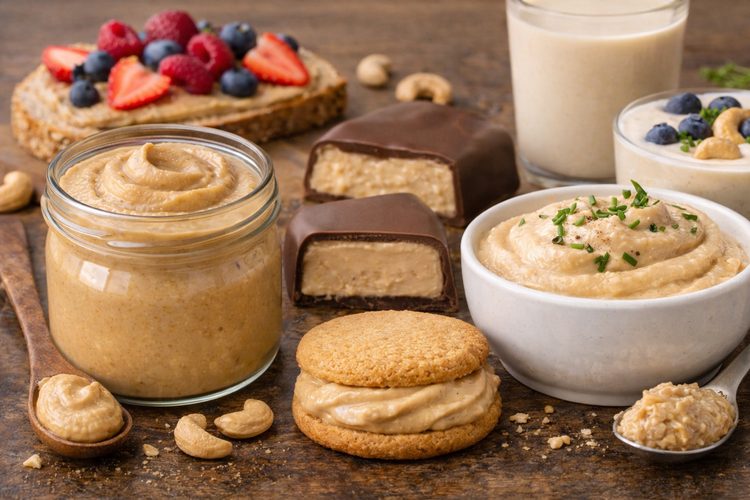
Cashew butter sits at an important intersection of flavor, texture and formulation utility. It is not only a consumer-facing spread ingredient. In commercial buying, it is also a process ingredient used to build creamy body, carry roasted nut flavor, support indulgent texture, replace or complement dairy fat, and create premium positioning in finished foods. That is why cashew butter sourcing is rarely only about nominal price. The stronger commercial outcome usually comes from aligning grind profile, roast character, finished texture, packaging route and shipment timing before an order is placed.
For many buyers, cashew butter performs best when it is treated as an application-specific ingredient rather than a generic nut paste. A butter that works well in a retail jar may not behave the same way in a bakery filler, confectionery center or beverage base. A smooth spoonable system for consumer use may be too loose for layered fillings. A fluid grind that blends easily into plant-based dairy may not deliver the same body required for deposit applications. The most practical specification therefore begins with end use, not with the ingredient name alone.
Why cashew butter is commercially attractive across categories
Cashew butter is valued because it offers a relatively mild and adaptable nut profile compared with more assertive nut butters. That makes it commercially useful in flavored spreads, sweet fillings, savory sauces, dairy alternatives and blended formulations where the buyer wants creamy richness without overpowering the rest of the formula. It can contribute perceived indulgence, soften flavor edges, improve mouthfeel and support premium claims, especially in categories where clean texture and neutral color matter.
It also gives manufacturers flexibility. Depending on grind, roast and formula design, cashew butter can function as a base, a flavor carrier, a texturizer, a fat contributor or a partial replacement for dairy or other nut systems. Buyers looking at multiple applications often prefer ingredients that can be rationalized across product lines. A well-specified cashew butter program may support several SKUs at once, such as retail spread lines, confectionery fillings and plant-based dessert bases, which can simplify sourcing and planning.
Commercial reminder: “cashew butter” is not a complete brief. For quotation and supply planning, buyers should define whether they need a retail-ready spread texture, a filling-grade body, a blendable plant-based base, or a more specialized process texture for industrial manufacturing.
How cashew butter differs by application
The same base ingredient can appear in several product categories, but the performance target changes considerably depending on where it is used. Buyers that treat all cashew butter programs as interchangeable often run into line inefficiencies or reformulation work later.
Cashew butter for consumer spreads
In spread applications, cashew butter is expected to deliver a pleasant mouthfeel, clean visual appearance and good spoonability or spreadability. The product usually needs to feel smooth, premium and easy to use directly from the jar. Buyers in this segment typically care about roast flavor balance, perceived grain, oil separation behavior, label friendliness, fill performance and shelf-life stability. The commercial discussion often includes consumer positioning as much as factory handling.
For a simple nut-butter spread, the specification may focus on roast style, smoothness, oiling behavior and whether the line is natural or stabilized. For flavored spread programs, buyers also need to consider how sweeteners, cocoa, vanilla, salt or inclusions will affect viscosity and final pack appearance. The butter should fit both the processing route and the final consumer experience.
Cashew butter for fillings
Fillings require more application discipline because texture directly affects deposit accuracy, layer definition, migration control and finished bite. Cashew butter can be used in bakery centers, confectionery fillings, wafer layers, snack bar binders and dessert ribbons, but each of those uses sets different expectations for body, fluidity and stability. A bakery center may need hold and reduced drip. A confectionery system may need very low grain perception and compatibility with sugar or chocolate phases. A snack bar binder may need cohesive body rather than luxurious spoonability.
In commercial terms, buyers should specify whether the butter is the main filling base or one component within a broader formulation. That distinction changes both the ingredient design and the evaluation process. A filling-grade cashew butter may need to be judged under depositor conditions, cooled product conditions or interaction with other fats and solids, not only in a standalone sample cup.
Cashew butter for plant-based foods
Cashew butter is especially relevant in plant-based foods because of its ability to build creaminess and round out texture without overly aggressive flavor. It can support plant-based dips, spreads, sauces, cultured alternatives, frozen dessert systems and beverage-adjacent formulations. In these uses, buyers often care about how cleanly the butter disperses, how it behaves under shear, whether it forms a smooth base, and how it interacts with stabilizers, acids, salts or fermentation systems.
For plant-based foods, a butter that is merely “smooth” may still be unsuitable if it does not hydrate or integrate the way the formulation requires. Buyers should therefore discuss grind profile, roast level, flow behavior and the actual process path, including mixing, heating, homogenization or cold blending.
How this topic shows up in real buying decisions
On paper, several cashew butter offers can look similar. In practice, the operational differences are often large. One product may work well in jarred consumer spreads but arrive too fluid for a filling line. Another may give excellent plant-based sauce body but be perceived as too dense for spoonable retail packs. One may have a mild flavor that fits savory systems, while another may be more roast-forward and better suited to indulgent sweet applications. Buyers comparing prices without clarifying the intended job of the butter often create avoidable re-approval cycles.
From a sourcing standpoint, the better outcome usually comes when purchasing, R&D, operations and commercial teams align on a single application brief. That brief should connect product form, desired performance, pack style, destination and order rhythm. The quote then reflects the real route rather than a generic ingredient category.
Key technical variables buyers should define
1) Grind and particle profile
Particle size distribution influences mouthfeel, visual smoothness, flow and finished application texture. A fine grind may be essential in premium spreads, confectionery and plant-based dairy-style products where any graininess is noticeable. Some industrial uses can tolerate a standard smooth grind if the butter is being blended with other ingredients. Buyers should decide whether they need ultra-smooth texture, standard smooth processability or a more body-forward profile.
2) Roast style
Roast level influences flavor depth, color, aroma and often perceived richness. Light roast may support more neutral formulations. Medium roast may provide a stronger nut note for spreads and sweet applications. A more developed roast can work in indulgent profiles but may not fit every plant-based or savory formulation. Roast style should be quoted together with the application target, not separately.
3) Texture and flow at use temperature
Room-temperature spoonability is not the same as line-temperature flow. Buyers should describe whether the butter must be spreadable from a retail jar, pumpable from industrial packs, depositor-friendly in fillings or easily dispersible in a mixed formula. Without a use-temperature discussion, phrases like “smooth” or “fluid” remain too broad.
4) Natural versus stabilized behavior
Some programs accept oil separation and position the product as natural. Others need a more stable appearance or easier handling. This decision influences label, pack performance, storage expectations and the amount of rework needed before use. It is particularly relevant in spreads and export programs exposed to variable temperatures.
5) Ingredient statement and formulation constraints
A buyer may want 100% cashew butter, or may be open to salted, sweetened or otherwise adjusted systems. For plant-based foods, the formulation brief may also include specific label or claim requirements. Those decisions shape both supply feasibility and comparability between offers.
6) Pack format and downstream handling
The same butter can feel very different operationally depending on whether it is packed in retail jars, foodservice tubs, pails or drums. Packaging influences filling temperature, storage behavior, scooping, warming and mixing. It should be treated as part of the application discussion, not as an afterthought.
Application deep dive: spreads
In spreads, cashew butter is often selected because it supports a premium, creamy and mild nut profile that can be marketed as indulgent yet versatile. This segment includes pure nut spreads, sweetened retail spreads, blended nut-and-flavor concepts and foodservice table spreads. The most relevant technical-commercial questions usually include:
- Should the product feel dense and rich or lighter and more easily spreadable?
- Is natural oil separation acceptable, or does the brand need more stable shelf appearance?
- Will the butter be sold plain, salted, sweetened or blended with cocoa, vanilla or other flavors?
- What jar or tub format is planned, and how will the butter behave at filling and in consumer use?
- Does the product target premium retail, mainstream retail, foodservice or private label?
Commercially, the spread buyer should not only request a sample jar. They should define the intended consumer position, the expected pack size, the route to market and whether the program needs short pilot runs or repeat high-volume supply. A spread line often becomes a repeat business rather than a spot purchase, so lot-to-lot consistency and commercial continuity matter from the first quote.
Application deep dive: fillings
Cashew butter brings flavor, richness and cohesive fat texture to fillings, but the exact processing target varies. In bakery, it may be used in center fillings, layered creams, piped components or topped applications. In confectionery, it may sit inside praline-style systems, chocolate centers or nut-based fillings. In bars and snacks, it may help bind solids while contributing indulgent mouthfeel.
Buyers should specify whether the butter needs to hold shape, flow at deposit, remain stable after cooling, resist oil migration or integrate into a larger filling system. They should also describe the surrounding formula. A cashew butter used on its own behaves differently from one blended with sugar, fats, cocoa, syrups or proteins. The better the process detail, the better the quote and sample comparison.
Filling buyer note: the right question is rarely “Do you have cashew butter for fillings?” The better question is “Do you have a cashew butter that fits my fill temperature, deposit method, surrounding ingredients and target bite?”
Application deep dive: plant-based foods
Plant-based foods represent one of the strongest functional use cases for cashew butter. It can contribute body, creaminess and a relatively adaptable flavor platform in dips, sauces, dairy-alternative bases, dessert systems and ready-to-use culinary formulations. Because the ingredient is often being used as part of a structured system rather than as a direct spread, buyers should evaluate it within their actual process route.
That means asking how the butter behaves when mixed with water, plant proteins, starches, hydrocolloids, oils, seasonings, cultures or acids. A cashew butter that tastes excellent as a spoon sample may not necessarily perform ideally in a high-shear sauce kettle or a chilled cultured product. For plant-based programs, specification thinking should extend beyond grind to include dispersibility, smooth integration, flavor neutrality or roast expression, and packaging suitability for manufacturing use.
Examples of how buyers can frame the brief
Good quote requests often sound very different depending on the application:
- Spread brief: smooth roasted cashew butter for 250 g and 500 g retail jars, premium spoonable texture, low grain perception, acceptable light natural oil separation, monthly private-label program.
- Filling brief: cashew butter for bakery center, medium roast, moderate body, low drip, suitable for depositing and cooling, packed in 10 kg pails for pilot and scale-up.
- Plant-based brief: fine grind cashew butter for dairy-free sauce base, easy dispersibility and clean creamy mouthfeel, industrial pack, repeat monthly use in further processing.
These are all “cashew butter,” but they are clearly different commercial products in practice. That is why functional language matters.
What Atlas would ask before quoting
Atlas generally encourages buyers to define intended use, pack style, destination, timeline and quality expectations early so quotations reflect a real commercial scenario. For this topic, Atlas would normally ask:
- Is the product going into a spread, a filling, a plant-based food system or multiple related SKUs?
- Should the butter be ultra-smooth, standard smooth, more fluid or more body-forward?
- What roast style best fits the finished product?
- Do you want 100% cashew butter or a customized formulation route?
- Is natural oil separation acceptable, or is a more stable presentation needed?
- What packaging format works for your plant or channel?
- What is the expected volume rhythm: R&D sample, validation run, launch volume or repeat replenishment?
- Is the program domestic, foodservice, retail-ready, private label or export-oriented?
- What documentation, labeling or market requirements should be considered from the start?
Commercial planning points
From a trading standpoint, the strongest cashew butter programs are built around repeatability rather than emergency buying. That means the product specification should support a real replenishment model. A sample may be approved quickly, but the supply program still needs consistent documentation, appropriate packaging, feasible lead times and volume planning that suits the buyer’s production or launch calendar.
When relevant, the brief should also clarify whether the program is industrial bulk, foodservice, retail-ready, private label or export-oriented. That single clarification often changes packaging, documentation and timing assumptions. For example, a bulk plant-based manufacturer may prioritize large-format pack efficiency and repeat line performance, while a retail spread program may put more weight on consumer texture, label language and fill presentation.
Buyers should also think in stages. Many successful programs move from trial quantity to validation run to launch volume to repeat replenishment. That sequence helps align technical approval with realistic commercial planning.
Why application-fit matters more than generic price comparison
Nominal price comparisons can be misleading when the proposed products are designed for different uses. A cheaper butter may require more adjustment in the customer’s formula, more warming in production or more consumer handling instructions on pack. A slightly more expensive butter may reduce rework, improve sensory consistency or support a stronger finished product claim. The relevant cost is usually the total delivered and usable cost in the real application, not only the invoice line price.
That is especially true when buyers are using cashew butter across multiple channels. A product that fits one application precisely may be more commercially valuable than a generic material that forces compromise across all of them.
Buyer planning note
Atlas Global Trading Co. uses topics like this to move sourcing conversations from broad interest to specification-minded inquiry. If you are evaluating cashew butter for spreads, fillings or plant-based foods, the most useful next step is to define the application, target texture, roast style, pack format, estimated volume and destination market. That creates a more practical commercial starting point than a general request for cashew butter pricing. Atlas can then structure the discussion around the real use case, not only the ingredient label.
Need help sourcing cashew butter for a real application?
Use the contact form to turn this research topic into a practical quote request built around application, texture, packaging and commercial timing.
- State whether the use is spread, filling or plant-based
- Add target texture, pack style and volume rhythm
- Include destination market and timing requirements
Frequently Asked Questions
Why is cashew butter used across spreads, fillings and plant-based foods?
Cashew butter is used because it can contribute creamy texture, mild nut flavor, fat richness and formulation flexibility across retail spreads, confectionery fillings, bakery applications and plant-based dairy or sauce systems. Its commercial value comes from being adaptable across several end uses when properly specified.
What should buyers specify before requesting a cashew butter quote?
Buyers should specify the application, texture target, roast style, ingredient statement, packaging format, trial or monthly volume, destination market and required timeline. These details help suppliers quote the right product route rather than a generic cashew butter line.
Does the same cashew butter work equally well in every application?
Not always. A cashew butter suited to retail spreads may not perform ideally in bakery filling, confectionery, frozen desserts or plant-based beverages because viscosity, oil behavior, grind profile and processing requirements can differ by application. Buyers usually get better outcomes when they source against the actual end use.