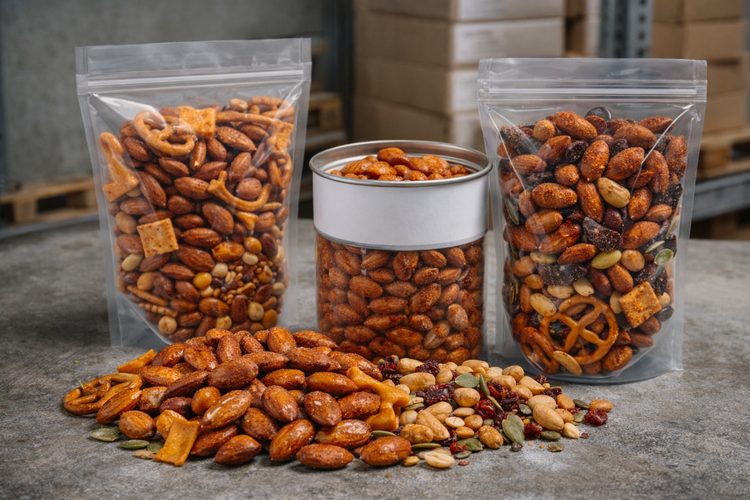
Almonds are one of the most commercially flexible ingredients in snack mix development, but successful snack mix programs are not built by choosing a nut in isolation. They are built by defining what the almond must do inside the finished mix. In one program the almond may provide crunch and a premium whole-kernel look. In another it may act as a carrier for savory seasoning, balance sweeter inclusions or lift perceived value without pushing the mix too far into a luxury price tier.
That is why almond snack mix sourcing should not begin with a generic request for roasted almonds. Buyers usually get stronger outcomes when they translate the concept into a usable brief: kernel style, roast approach, seasoning logic, target pack size, route to market, volume rhythm and expected shelf-life performance. The almond that works well in a clean-label trail mix is not always the same almond that works in a bold, heavily seasoned snack pouch or a premium export retail blend.
How this topic shows up in real buying decisions
Snack mix buyers usually compare more than one almond option even when the pack design is already fixed. They may start with whole raw kernels, pasteurized kernels, dry roasted kernels, oil roasted kernels, smoked or flavored almonds, or processed forms such as diced pieces when the mix needs a lower average cost or a different bite profile. The right decision depends on the balance between appearance, roast character, crunch retention, seasoning behavior, label goals, finished mix ratio and total delivered cost.
For example, a premium nut-forward mix sold in stand-up retail pouches may call for whole dry roasted almonds because visual quality and a clean roasted profile matter. A value-driven snack mix with multiple inclusions may need a more controlled size range or a less expensive roast-and-season structure to keep the blend balanced. A sweet-and-savory mix may need almonds that can carry seasoning without over-dusting nearby dried fruit pieces. A private label export mix may place more emphasis on pack barrier, shelf-life management and case efficiency than on the highest kernel size.
The strongest snack mix programs usually begin with a clear answer to one question: is the almond there to lead the blend, support the blend, carry seasoning, manage cost, or do several of those at once?
Choosing the right almond format for snack mixes
Whole almonds are often the default starting point because they provide a recognizable premium cue and a cleaner visual read in transparent or partly transparent packaging. But whole kernels are not always the best answer. Some snack mix programs prefer smaller kernels, halves, controlled break pieces or diced formats when the goal is more even distribution, better piece count per serving, softer cost structure or easier integration with other components of similar size.
Whole kernels
Best suited when the mix is visually premium, nut-forward or sold on the strength of large visible components. Buyers should still consider size consistency, breakage tolerance and pack fit.
Smaller or mixed size kernels
Can be commercially useful when the blend needs more even portion distribution or a slightly lower nut cost without abandoning whole-almond identity.
Controlled broken pieces
Sometimes useful in dense snack blends where full kernels are not necessary and where mix uniformity or cost control is more important than a whole-kernel premium look.
Seasoned roasted formats
Relevant when the almond is expected to contribute a defined flavor note rather than only neutral roasted crunch. These require more care around seasoning transfer and pack presentation.
For snack mix use, format choice should always be evaluated against the rest of the blend. Almonds that are much larger than neighboring ingredients may visually dominate the pack. That may be desirable in a premium mix, but it can also distort portion economics. On the other hand, almond pieces that are too small may disappear visually, fracture further during mixing, or settle differently in the bag. Good format selection is therefore both a sensory decision and a line-function decision.
Roast style and texture planning
Roasting is one of the most commercially important choices in an almond snack mix program because it changes the product’s bite, color, aroma and seasoning readiness. Snack mix buyers usually compare dry roasted and oil roasted options first, but the more useful discussion is what the almond should deliver in the finished pack. Is the goal a cleaner roasted note, a deeper savory impression, a stronger surface for seasoning carry, or a more neutral almond presence that does not overpower other components?
Dry roasted almonds often fit programs that want a straightforward roasted identity and a less heavy finish. Oil roasted almonds can make sense where a richer eating profile or stronger seasoning attachment is important. Neither approach is universally better. The right answer depends on target flavor profile, mix positioning, packaging life and how the almond behaves during post-roast handling, blending and filling.
Roast color consistency
Visible snack mixes rely on consistent appearance. Uneven roast color can weaken the premium impression even when the flavor is acceptable.
Crunch retention
The almond should still deliver the intended bite after blending, packing, transport and shelf time, not only at the time of production.
Breakage management
Some roast styles can increase brittleness, which matters if the mix will pass through several handling steps before the consumer opens the pack.
Flavor balance
The roast should complement the mix. In some concepts the almond should stand out. In others it should integrate quietly with sweet, savory or spicy notes.
Questions buyers should ask about roast style
- Does the mix need a light, medium or more assertive roasted character?
- Will the almond be seasoned directly, or should it remain more neutral while other components carry the dominant flavor?
- How much handling will occur after roasting and before final pack-out?
- Is breakage tolerance tight because the almond is a hero ingredient?
- Does the channel require a premium visual, a value profile, or a strong indulgent flavor experience?
Seasoning systems, adhesion and fallout
Seasoning is one of the most underestimated parts of snack mix planning. Many mixes fail commercially not because the base almonds are wrong, but because the flavoring system does not stay where it should. In practical terms, buyers need to think about how the seasoning is applied, how well it adheres, how much dust ends up loose in the pack, whether the seasoning migrates onto other inclusions, and whether the final blend still looks clean enough for the intended market.
For savory programs, the almond may be the main seasoning carrier or only one of several seasoned components. That changes the commercial logic immediately. If the almond is carrying the signature flavor, adhesion and surface consistency matter more. If the almond is only part of a broader flavor system, the buyer may instead focus on keeping the seasoning balanced so it does not create visual clutter or overpower delicate components such as dried fruit or lighter cereals.
Fine seasoning systems
Often chosen when buyers want even flavor coverage and a relatively tidy pack appearance, although fine powders still need attention to dusting and blend fallout.
Heavier particulate seasoning
Can support a more textured, bold-looking profile but may increase fallout, uneven distribution or visible dust accumulation in the pouch.
Oil-assisted adhesion
Useful when stronger seasoning retention is required, but it should be balanced against pack cleanliness, handling behavior and shelf-life considerations.
Blend-transfer risk
Important when almonds are packed with raisins, chocolate pieces, cereal pillows or other components that can pick up seasoning unintentionally.
In snack mixes, seasoning is rarely just a flavor issue. It affects consumer perception of quality, line cleanliness, bag appearance and complaint risk. Excess powder at the bottom of the bag may suggest poor quality even if the flavor remains acceptable. Uneven flavor carry can create serving-to-serving inconsistency. Overly oily adhesion may make the mix feel heavy or shorten the visual shelf appeal. For these reasons, the seasoning brief should cover target taste, visual character and acceptable fallout level.
Blend compatibility and inclusion balance
Almonds must work with the full mix architecture. This includes size harmony, weight balance, relative hardness, fragility and flavor hierarchy. A snack mix with almonds, walnuts, cashews, pretzels, seeds and dried fruit behaves differently in the filler than a simple nut-and-fruit blend. The more mixed the formula becomes, the more useful it is to think about how almonds travel through the line and present in the final pouch.
Distribution in the pack
If the almond is too large, too heavy or too few in number, the consumer may perceive the mix as inconsistent. Piece count matters as much as total nut percentage.
Texture layering
Almonds may provide the anchor crunch while other inclusions provide sweetness, salt, chew or cereal crispness. That texture role should be intentional.
Cross-contact flavor effects
Seasoned almonds can influence nearby components during storage, especially in tight retail packs. This should be anticipated during product design.
Visual premium cues
Whole roasted almonds often support a more premium shelf image than heavily fragmented material, but the commercial choice still depends on target price and channel.
Packaging architecture for snack mix programs
Snack mix packaging should never be treated as the final step after the ingredient has already been chosen. The pack influences product protection, perceived value, case efficiency and how the consumer experiences the mix at shelf and at opening. Industrial bulk, foodservice, club-size, convenience-store single serve, stand-up pouch, pillow bag, jar, canister and private label export retail packs all create different commercial assumptions.
Retail snack mix programs often need packaging that supports visual appeal, sensible barrier performance and merchandising logic. Transparent windows can help sell the blend, but they also increase the importance of color consistency and dust control. Larger family packs may need a different fill and breakage strategy than smaller impulse packs. Export retail can add further complexity because pack material, case count, label language and freight resilience may all change.
Packaging questions that matter early
- Is the product industrial bulk, foodservice, retail-ready, club pack or export retail?
- Will the consumer see the mix directly through the package?
- How much shelf-life protection is needed for the route to market?
- Does the pack need to withstand long transit or multi-stage distribution?
- What case count and pallet logic make sense for the target channel?
Commercial reasons packaging changes the quote
- Different pack materials and sizes shift total delivered cost
- Retail-ready structures involve more components than bulk ingredient packing
- Case count and pallet efficiency affect freight economics
- Private label programs add artwork, timing and approval complexity
- Export-ready packs may require more disciplined shelf-life and documentation planning
Quality control and operational checkpoints
For almond snack mix programs, quality review should include more than the almond specification alone. Buyers usually want consistency across roast color, seasoning distribution, breakage level, blend uniformity, pack fill, seal integrity and shelf-life behavior. The acceptable level of dust, fractured kernels or seasoning fallout can vary by channel, but these issues should be discussed before launch rather than only after the first production complaint.
Incoming lot review often looks at visual appearance, odor, kernel integrity, seasoning character, pack cleanliness and general match against the approved standard. For repeated programs, consistency matters as much as the initial sample. A snack mix that tastes good in development can still underperform if production lots drift in roast color, if the almonds fracture more in the filler than expected, or if seasoning distribution changes after scale-up.
Breakage risk
Too much fracture can weaken the premium look and create extra fines in the bag, especially in transparent or premium-positioned packs.
Seasoning fallout
Loose powder at the bottom of the pouch can make the pack look inconsistent even when the flavor system itself is acceptable.
Flavor drift
The almond may taste right on day one but perform differently after packing and storage if the roast or seasoning system is not stable enough for the route.
Blend imbalance
Poor distribution of almonds relative to other components can create consumer disappointment and make the mix feel under-delivered.
Oxidation exposure
Roasted and seasoned components need a freshness plan that matches the packaging and expected shelf time, especially in retail and export channels.
Private label mismatch
A pack may be commercially approved but still weak operationally if case format, artwork timing or replenishment assumptions were not built in early.
Commercial planning points
Commercially, snack mix projects often develop in stages: trial quantity, validation run, launch volume and repeat replenishment. Atlas uses that logic to guide pack and shipment planning, especially when retail packaging, export retail or private label is part of the conversation. The best programs are not just priced; they are structured to survive the movement from sample success to repeat commercial supply.
When relevant, the brief should also mention whether the program is industrial bulk, foodservice, retail-ready, private label or export-oriented. That single clarification often changes packaging, documentation and timing assumptions. It may also change what “acceptable” means in visual appearance, dust tolerance, case count, delivery rhythm and commercial flexibility.
1. Trial quantity
Used to confirm flavor fit, almond style, blend behavior and early packaging direction.
2. Validation run
Checks whether the almond performs consistently on the line and in the intended pack format.
3. Launch volume
Brings commercial pack, case count, shelf-life assumptions and freight planning into the program.
4. Repeat replenishment
Focuses on consistency, lead-time discipline, packaging continuity and reliable forecast rhythm.
What Atlas would ask before quoting
For almond snack mix projects, Atlas recommends translating the product idea into a quote request with five core points: target almond format, application, pack style, destination market and volume rhythm. In practice, many buyers also benefit from adding roast expectation, seasoning role, mix composition and visual positioning. That makes it easier to discuss realistic California partner options instead of a generic price-only inquiry.
Target almond format
Whole, smaller whole, roasted, seasoned or controlled broken pieces depending on the final mix concept.
Snack mix application
Is the almond the hero component, one inclusion among many, or a flavor carrier within a broader seasoned system?
Pack style
Industrial bulk, foodservice, retail-ready, club pack, private label or export retail should be defined early.
Destination market
Domestic and export routes may require different packaging, documentation, shelf-life assumptions and case economics.
Volume rhythm
Trial, monthly replenishment, seasonal promotion or container-based export planning each create different commercial needs.
Flavor and visual standard
Roast level, seasoning style, dust tolerance and visible premium cues should be described as clearly as possible.
Sample quote request for a stronger snack mix inquiry
A more workable inquiry might read like this: “We are launching a retail-ready savory snack mix for the U.S. market. We need dry roasted seasoned almonds as a visible premium component in a stand-up pouch program. The blend includes pretzels and seeds, so we need good seasoning retention with controlled fallout and consistent whole-kernel appearance. Initial validation run first, then monthly repeat volume after approval.”
That kind of brief gives the supplier something usable. It identifies not only the ingredient, but the commercial role of the almond in the mix. It helps align roast choice, seasoning discussion, packaging assumptions and volume planning. The result is usually a more realistic quote conversation and a better chance of successful launch.
Buyer planning note
Atlas Global Trading Co. uses topics like this to move conversations from broad interest to a specification-minded inquiry. If you are evaluating almond snack mix supply, share the almond style, roast preference, seasoning direction, pack format, estimated volume and destination using the floating contact form so the next step can be grounded in a real commercial need.
Need help sourcing almonds for a snack mix program?
Use the contact form to turn this research topic into a practical quote request for Atlas. The clearer the roast, seasoning, pack and volume assumptions, the more useful the next commercial discussion becomes.
- State the almond style, roast profile and flavor direction
- Add target trial, launch or monthly volume
- Include pack format, destination market and timing
Frequently Asked Questions
What is the main buyer takeaway from “Building Almond Snack Mix Programs: Roasting, Seasoning and Packaging”?
The main takeaway is that successful almond snack mix sourcing depends on defining the target kernel style, roast profile, seasoning approach, blend composition, packaging format and shipment rhythm together rather than treating them as separate decisions.
What roast style is usually better for almond snack mix programs?
The better roast style depends on the snack mix concept. Dry roasted almonds may suit cleaner profiles and lighter seasoning systems, while oil roasted almonds may help support a richer eating profile or stronger seasoning carry. The right choice should match flavor goals, blend behavior and pack-life expectations.
Why does seasoning design matter in almond snack mixes?
Seasoning design matters because adhesion, fallout, dusting, oil migration and flavor carry can affect mix consistency, pack appearance and repeatability. A good seasoning system should work with the almond surface, the other inclusions in the mix and the intended route to market.
Can this topic be applied to both U.S. and export snack mix programs?
Yes. The same product and packaging logic applies to domestic and export programs, but export routes often require tighter planning around barrier packaging, shelf-life assumptions, freight timing and market-specific retail or private label requirements.
What should a buyer include in an almond snack mix quote request?
A useful quote request should include the almond format, roast style, seasoning direction, snack mix application, pack format, destination market, expected volume and target timing so the offer reflects the real commercial program rather than only the raw ingredient.