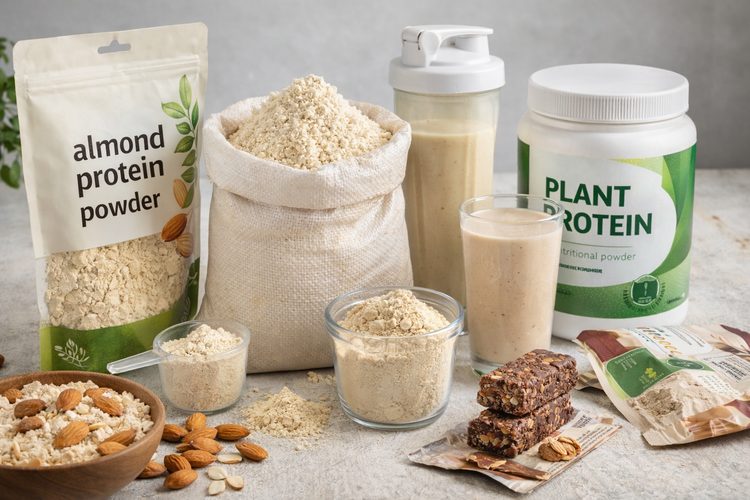
Defatted almond protein is not usually purchased as a commodity filler. It is typically evaluated as a functional and positioning ingredient for brands that want to add protein contribution, almond identity and a more premium plant-based story while keeping fat lower than a full-fat almond flour or meal system. From a commercial standpoint, that means buyers should avoid treating the product as a simple “protein powder” substitute. The stronger outcome usually comes from aligning the intended application, target nutrition panel, flavor expectations, particle behavior, packaging format and shipment rhythm before the first quote is requested.
In practice, defatted almond protein sits between several purchasing categories. It can behave like a nutritional ingredient, a dry-mix component, a specialty bakery input and a better-for-you positioning tool all at once. That is exactly why specification quality matters. A vague request for “almond protein powder” may generate a price, but it does not necessarily generate the right material for a ready-to-mix sachet, a powder beverage base, a high-protein bar system, a bakery premix or a cereal-and-protein blend. Buyers normally get better results when they translate the product concept into a clear application brief first.
What defatted almond protein usually means in a buying conversation
Commercially, buyers often use the phrase defatted almond protein to refer to an almond-derived ingredient where a meaningful portion of the native oil has been removed in order to shift the composition toward a higher relative protein position than conventional full-fat almond flour or meal. The product is therefore usually discussed in terms of protein contribution, residual fat level, flavor cleanliness, particle size, color and how it behaves in dry or semi-dry systems. It is not identical to whole-kernel almonds, standard almond meal or almond butter, and it should not be quoted as though it were.
That distinction matters because the application logic changes when fat is reduced. Lower residual oil may help certain formulations where flow, blend uniformity, reduced greasiness, more controllable nutritional math or longer dry-system handling performance are important. At the same time, the ingredient may behave differently in terms of mouthfeel, dispersibility, clumping tendency, hydration response and flavor intensity compared with full-fat almond ingredients. Those tradeoffs should be discussed before commercial comparison begins.
Why developers consider defatted almond protein
Teams generally look at defatted almond protein when they want more than raw protein numbers. In many better-for-you and nutritional products, formulation is about balancing protein contribution, ingredient-story quality, taste, texture and visual simplicity. A product developer may want a more premium nut-derived component in a dry nutritional blend, a softer nut note in a protein-forward base, or a way to build a plant-positioned formula without relying entirely on one dominant legume or cereal protein source.
Defatted almond protein is therefore often reviewed in categories such as nutritional powder blends, meal-support mixes, high-protein bakery premixes, bars, bite systems, breakfast applications, functional snack inclusions and better-for-you dry bases. It can also appear in plant-forward formulations where the commercial brief includes words like premium, natural-leaning, nut-based, softer flavor, more recognizable ingredient deck or improved sensory balance versus a harsher protein-only approach.
Buyer takeaway: defatted almond protein is usually not bought only for cost per kilogram. It is usually bought for the combination of protein contribution, almond identity, lower fat than standard almond flour, blend positioning and commercial fit with the final product story.
How this topic shows up in real buying decisions
In a real procurement cycle, the first challenge is deciding whether defatted almond protein is the primary protein system, a secondary support ingredient or a balancing component inside a wider nutritional blend. Those three roles are commercially different. If it is the primary protein contributor, the buyer will typically focus harder on protein target, flavor neutrality, color, microbiological expectations and cost-in-use. If it is a supporting component, the conversation may lean more toward mouthfeel, taste roundness, visual quality and brand story. If it is part of a layered blend, then compatibility with the other proteins and carrier ingredients becomes central.
This is also where buyers discover that a quotation should reflect the real route to market. A dry blend manufacturer may need a flowing powder for industrial bags and large batch handling. A brand owner launching retail sachets may care more about sensory performance, claim language, domestic or export pack architecture and private label scale-up. A bakery premix producer may care about hydration, finished crumb characteristics, color contribution and consistency from lot to lot. The correct commercial discussion depends on the end use, not only on the ingredient name.
Typical application categories
Defatted almond protein can be relevant across several product groups. In nutritional powder blends, it may be considered for protein contribution and a more premium nut-led positioning. In better-for-you formulations, it can support product concepts that want to avoid appearing overly synthetic or overly dependent on one common protein source. In bars and bites, developers may evaluate it for how it contributes to structure, chew and flavor layering inside a composite system. In bakery and premixes, it may be assessed as part of a higher-protein story, especially where the formulation brief also includes texture and label considerations.
It may also be reviewed in cereal and breakfast blends, dry smoothie bases, sports or active-lifestyle mixes, meal support powders and hybrid plant-based formulations where the product team wants a more rounded ingredient portfolio. Each of these categories places different emphasis on flow, hydration, flavor, sweetness interaction, color tolerance and cost structure.
How defatted almond protein differs from standard almond flour or meal
One of the most important commercial distinctions is that defatted almond protein should not automatically be treated as interchangeable with conventional almond flour, almond meal or almond butter. Standard almond flour and meal normally retain more of the almond's natural oil and therefore contribute differently to flavor, richness, caloric positioning, lubrication and finished-system mouthfeel. Defatted almond protein shifts the balance toward a drier, more protein-oriented specification.
That means the buyer should usually expect the formulation conversation to revolve around a different set of checkpoints: protein declaration strategy, residual oil tolerance, powder handling, blend flow, caking risk, dispersibility, sensory cleanliness, protein stacking with other ingredients and whether the product is being used for a true functional role or for premium positioning support. Failing to distinguish these products can create misleading price comparisons and incorrect performance expectations.
What procurement teams usually need to define before quoting
For a better quotation process, Atlas would normally encourage buyers to define the following upfront: application category, desired protein role in the formula, target residual fat position, flavor tolerance, expected color profile, particle size range, pack format, monthly or annual volume, destination market and commercial stage. Even a quick preliminary brief built around those points is more useful than a generic request for “almond protein pricing.”
Buyers should also state whether the requirement is for a bench trial, pilot-scale blend, launch quantity or repeat industrial program. Trial needs may prioritize access, pack convenience and rapid technical comparison. Launch and replenishment needs normally place greater emphasis on documentation, continuity, pack size efficiency, forecast discipline and timing alignment.
Technical attributes that influence buying decisions
Defatted almond protein is usually reviewed through a cluster of technical attributes rather than a single number. Buyers often ask about protein position, but the decision also depends on residual fat, moisture, flow behavior, particle profile, color, aroma, taste, microbiological quality, packaging suitability and how the ingredient interacts with the rest of the formulation. A powder that looks attractive on paper may still be commercially weak if it is too coarse for the intended application, too dark for the target visual profile or too prone to handling difficulties for the plant using it.
Particle size matters because it changes mouthfeel, blending uniformity and dust characteristics. A finer grind may support smoother dry beverages and more uniform distribution, while a slightly different particle profile may suit bakery, bars or other systems where the sensory target is broader. Color also matters. Some better-for-you products accept a warmer, more naturally nut-derived appearance, but others require a lighter and more neutral visual contribution to support the brand's finished look.
Flavor profile is another major checkpoint. Product developers often want to know whether the ingredient reads clean, nut-forward, mild, roasted, earthy or neutral enough to sit inside a more complex flavor system. Since nutritional products are frequently flavored with cocoa, vanilla, coffee, fruit or spice systems, the almond note must be evaluated against the final flavor direction, not in isolation.
Residual fat and why it matters commercially
Residual fat is one of the core reasons a buyer chooses defatted almond protein in the first place. Lower fat relative to full-fat almond flour can affect nutritional design, powder handling, greasiness, shelf behavior and compatibility with broader protein systems. But buyers should not assume that “defatted” means identical across all offers. Commercially, residual fat expectation should be specified rather than inferred.
This matters because cost structure, sensory feel and formula behavior can all change with the degree of oil removal and the route by which the ingredient is produced. A stronger buying brief therefore usually states whether the product team is seeking a particular lower-fat position for nutritional math, improved dry handling, lower oil contribution to the system or simply better fit versus full-fat almond ingredients in a specific application.
Flavor management in nutritional blends
One reason formulators consider defatted almond protein is flavor balance. Nutritional blends often combine protein intensity with sweetness systems, fibers, vitamins, minerals, flavors and sometimes other plant proteins that can create bitterness, dryness or an overly functional character. In those systems, an almond-derived component may be reviewed as a way to soften the overall sensory impression or contribute a more familiar food-like note.
That does not mean defatted almond protein is a universal flavor solution. It still needs to fit the final formulation. In chocolate, vanilla, coffee, cereal and nut-adjacent profiles, the almond note may work naturally. In highly fruit-driven or sharply acidic systems, the blend may require more deliberate optimization. The sourcing implication is simple: buyers should mention the intended flavor family before asking suppliers to assume the product will fit generically across all use cases.
Formulation note: when defatted almond protein is being blended with pea, rice, oat or other plant-based dry ingredients, the commercial value may come from how the full system eats and labels, not only from the ingredient's standalone spec.
Dispersibility, flow and handling in powder systems
For nutritional powders and dry premixes, handling behavior can be just as important as nutrition position. Buyers usually need to think about how the ingredient behaves during receiving, storage, batching, blending, conveying and final filling. Does it flow reliably in the plant? Does it dust excessively? Does it tend to bridge in hoppers? Does it disperse reasonably in the intended mix, or does it require process support through agitation, pre-blending or controlled addition order?
These are not minor plant-floor questions. They directly affect labor, consistency, rework risk and operator confidence. A program intended for high-throughput industrial blending should therefore describe the production environment and fill route, especially if the product is moving into sticks, sachets, tubs or retail pouches. A supplier quote is more useful when it reflects the intended process rather than a generic assumption about powder handling.
Label strategy and better-for-you positioning
In better-for-you categories, label strategy often drives ingredient choice as much as the formula itself. Teams may be looking for a more recognizable ingredient, a nut-led protein story, a premium California sourcing angle or a way to support a cleaner and more food-like narrative than a formulation built only around highly processed-sounding inputs. Defatted almond protein can become part of that positioning, but only if the sourcing and specification language support the brand story honestly and consistently.
For procurement, this means translating brand language into purchase language. If the brand brief says premium, natural-leaning, nut-based, balanced or everyday wellness, the purchasing brief still needs to spell out the actual product form, quality expectations, packing method and market destination. Label ambition without technical definition leads to weak quotation and poor supplier comparability.
Where the ingredient may fit in product architecture
Some teams use defatted almond protein as a core protein component where its relative protein position is central to the formula. Others use it as a secondary balancing ingredient that sits alongside other proteins and helps shape flavor or story. A third group uses it as a specialty enrichment component in bakery, bars or dry functional products where the final performance is broader than a simple protein beverage application.
These use cases should not be mixed during procurement because they produce different expectations around cost-in-use, pack size, specification tightness and acceptable variation. A primary protein system will usually justify deeper technical review. A secondary or supporting position may prioritize compatibility and commercial flexibility instead.
What Atlas would ask before quoting
Atlas generally encourages buyers to convert product interest into a short but specific quote request. For defatted almond protein, that usually means clarifying:
- Intended application: nutritional blend, powder beverage, bar, bakery premix, cereal blend, bite, or broader better-for-you system
- Whether defatted almond protein is the main protein source or part of a multi-ingredient blend
- Target protein position and residual fat expectations
- Preferred sensory direction such as mild, nut-forward, clean, neutral or roasted-leaning
- Color and particle size expectations
- Flow, hydration or dispersibility concerns relevant to the plant process
- Microbiological and quality documentation expectations
- Pack format such as industrial bags, lined cartons, retail-ready sachet supply route or other defined format
- Destination market and any export-related documentation needs
- Commercial stage: bench trial, validation run, launch volume or repeat replenishment
Quality and specification checkpoints
For serious procurement, the ingredient should normally be reviewed through a formal specification sheet rather than only through a sales description. Buyers may want to discuss protein minimums or target ranges, residual fat expectations, moisture limits, color description, sieve or particle distribution, microbiological standards, allergen handling, packaging construction, storage guidance and shelf-life framework. Which of those matters most depends on the end use, but they should all be considered in some form for a repeatable industrial program.
From a risk-management standpoint, it is also helpful to know whether the product is being purchased for a tightly controlled nutritional panel, a sensory-led premium blend, or a more flexible mainstream better-for-you program. That context affects how strict the specification should be and how much lot-to-lot consistency is commercially critical.
Commercial planning points
From a trading standpoint, defatted almond protein programs generally work best when buyers think in stages. The early stage may require sample evaluation and small test quantities. The next stage is often a validation run where the team confirms blend behavior, packaging performance, flavor fit and any claim logic. After that comes launch volume and then repeat replenishment. Each stage can imply different pack economics, lead-time expectations and operational risk.
For that reason, Atlas often recommends that buyers state both the immediate need and the likely growth path. A request such as “we need trial quantities now, with monthly industrial demand if approved” is much more commercially usable than a generic request for pricing without context. It helps suppliers think about availability, appropriate pack size, documentation path and realistic shipment cadence.
When relevant, the brief should also specify whether the program is industrial bulk, retail-ready, private label, contract-manufactured, export-oriented or a hybrid of those routes. That single distinction can change packaging, documentation and timing assumptions materially.
Domestic and export considerations
The same ingredient logic can apply to domestic and export programs, but the commercial mechanics differ. Domestic programs may focus on shorter replenishment cycles, more agile trial handling and easier technical iteration. Export programs often require more structured planning around lead time, documentation, packaging resilience, lot control, labeling support and inventory positioning. If the finished product is destined for international retail, the quote request should mention that early rather than treating export as a later logistics detail.
In practice, export-oriented buyers often need more attention on outer packaging, palletization logic, shipment scheduling and the paperwork expectations around the ingredient. That does not change the ingredient's functional role, but it changes how the program should be built commercially.
Common buying mistakes to avoid
One common mistake is comparing defatted almond protein directly against generic protein powders without thinking about application fit, flavor role and label strategy. Another is failing to define whether lower residual fat is a hard specification or simply a desirable preference. A third is requesting a quote before deciding whether the product is for powders, bars, bakery or a broader functional blend. Those categories can all use the ingredient, but the quote logic is different in each case.
It is also common for teams to under-specify pack style. An industrial blender may need a pack optimized for plant handling, while a smaller specialty program may need different pack sizes for development or contract manufacturing. If buyers do not state the route clearly, suppliers may quote a product that is technically correct but operationally inconvenient.
Buyer planning note
Atlas Global Trading Co. uses topics like this to move conversations from broad ingredient interest to a specification-minded quote request. If you are evaluating defatted almond protein, the most useful next step is to share the intended application, protein role in the formula, quality expectations, preferred pack style, estimated volume and destination. That allows the next conversation to focus on a real commercial need rather than a generic inquiry.
Need help sourcing defatted almond protein for a nutritional or better-for-you formulation?
Use the contact form to turn your product concept into a practical quote request with application, protein role, pack style and commercial timing clearly defined.
- State the intended application and target protein role
- Add residual fat, particle and pack expectations
- Include trial volume, repeat demand and destination market
Frequently Asked Questions
What is the main buyer takeaway from “Defatted Almond Protein for Nutritional Blends and Better-For-You Formulations”?
The main buyer takeaway is that defatted almond protein should be sourced against a clear formulation brief. Protein target, residual fat expectation, particle size, flavor profile, pack format, destination market and production stage should be defined together before quotation.
Where does defatted almond protein usually fit in product development?
It is commonly reviewed for nutritional blends, better-for-you powders, bars, bakery premixes, breakfast systems and hybrid plant-based formulations where buyers want protein contribution, lower fat than full-fat almond ingredients and a more premium almond-based ingredient story.
What should buyers specify before requesting a quote?
Buyers should specify the intended application, whether the ingredient is primary or secondary in the protein system, residual fat expectations, flavor and color tolerance, particle profile, packaging format, trial or monthly volume and destination market.
Can this topic be applied to both U.S. and export programs?
Yes. The same specification logic applies to domestic and export sourcing, although documentation, packaging details, shipment planning and lead-time assumptions may vary by destination.