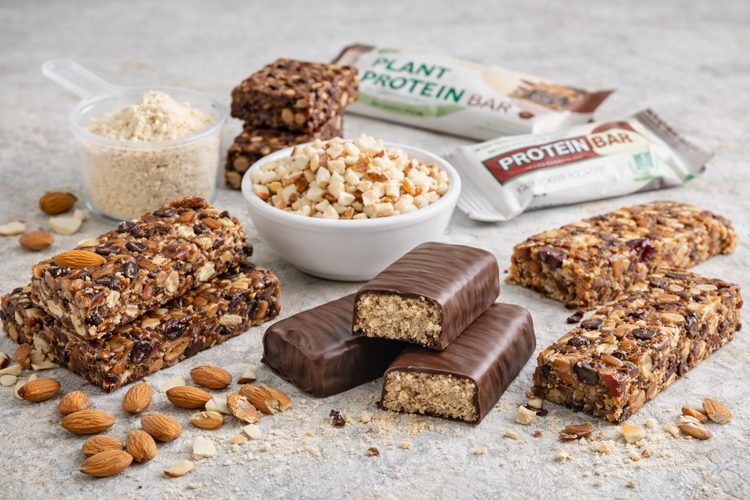
Almond usage in protein bars and functional snacks is rarely a simple commodity decision. In these categories, the almond ingredient is often expected to do more than one job at the same time. It may need to create visible inclusions, soften the texture perception of a dense protein system, contribute creamy nut flavor, support premium positioning, improve bite contrast or help the finished product feel more food-like and less powder-driven. That means the strongest commercial outcome usually comes from matching almond format, process route, packaging strategy and volume planning before the first order is placed.
Protein bars and functional snacks are particularly sensitive to specification mistakes because they combine multiple structural stresses: concentrated syrups or binders, protein systems that can harden over shelf life, inclusions that affect cut quality, coatings that interact with surface texture, and pack formats that must protect the product through distribution. A diced almond that looks fine in a lab batch may behave differently on a slab line. An almond butter that improves flavor in a prototype may change oil migration, bar set or wrapper cleanliness at scale. This is why buyers usually need more than a nominal almond price. They need a format decision that makes sense technically and commercially.
Why almonds are used in protein bars and functional snacks
In the better-for-you snack segment, almonds are often chosen because they support both sensory and brand objectives. They can add nut identity, crunch, texture contrast and perceived premium value. In softer bars, almonds may reduce the feeling that the product is purely paste-based. In crisped or layered snacks, they can provide visual differentiation and a more substantial eating experience. In coated or enrobed systems, they may appear inside the core, on the top surface or in composite inclusions depending on the desired appearance and cost structure.
Buyers also look at almonds because they can help bridge the gap between nutritional positioning and mainstream snack appeal. A bar with strong protein claims still has to taste familiar and eat cleanly. Almond inclusions or almond-based ingredients can help soften that functional impression. The exact benefit depends on whether the product needs visible pieces, a flour or meal for distribution, or a butter phase for binding and nut flavor carry.
Commercial takeaway: for protein bars and functional snacks, the almond format should be chosen around the final eating experience and the production line. The correct quote usually depends on particle size, roast style, visual target, process route, wrapper format and product stage, not only on cost per pound.
How this topic shows up in real buying decisions
In practice, buyers may compare raw almonds, pasteurized almonds, dry roasted almonds, oil roasted almonds and processed formats such as diced cuts, slivers, meal, flour, almond butter or almond paste-style systems. The right option depends on what the almond needs to do inside the product. Some programs need visible kernel identity. Others need distributed particulates that do not disrupt bar forming. Some need a creamy binder note. Others want roasted flavor without large inclusions that complicate cutting and wrapping.
A bar developer may want a coarse diced almond to create a more substantial bite in a layered protein bar. A functional snack cluster may need roasted slivers for visual lift and crunch. A soft, high-protein mass may benefit more from fine almond meal or flour if the goal is distribution and nut character without sharp particulates. In a nut-butter-based snack, almond butter may act as both flavor system and part of the binding phase. Each of those routes leads to a different commercial conversation.
Core almond formats used in this category
Whole or split kernels are less common in compact protein bars but can be relevant in larger-format functional snacks, clusters or premium snack pieces where bold almond visibility is part of the concept.
Diced almonds are one of the most common choices for bars because they can create inclusion identity, bite contrast and premium visual appeal while still fitting into slabbed or deposited systems. The cut size should be chosen carefully because oversize pieces can interfere with sheet consistency, cutting accuracy and edge integrity.
Slivers and sliced almonds are usually more relevant for surface application, decorative layers or specialized textures. They can also be used inside some snack systems, but the geometry changes how they orient during forming and cutting.
Almond meal and flour are more useful when the objective is distribution throughout the mass rather than distinct piece identity. They can help support nut flavor, solids contribution and a more even texture profile in the bar base or binder phase.
Almond butter is especially relevant where the bar or snack uses nut paste systems for binding, creaminess or nut-forward taste. In this role, it may affect processing viscosity, oil release, smear characteristics and finished bite more than visible inclusion formats do.
Texture management in protein bars
Texture is one of the biggest reasons buyers review almond options carefully. Protein bars can harden over time, especially in high-protein or reduced-sugar systems. Functional snacks can also drift during shelf life as moisture redistributes between syrups, proteins, crisp inclusions and nut particles. Almond format selection therefore has a direct effect on how the product eats both at pack-out and later in shelf life.
Diced and chopped almonds typically create more crunch and stronger bite contrast. That can be positive when the bar mass is soft or chewy, but it can become negative if the base is already dense or if the target consumer expects a smoother, more confectionery-like bite. Finer almond materials tend to influence texture more quietly, contributing body and nut perception without strong fracture points. Almond butter pushes the system in another direction again, often increasing richness and blend cohesiveness while also affecting oil balance and chew.
For procurement teams, the key point is that texture should be defined in the quote request. Descriptions such as chewy, crunchy, soft-baked, layered, dense, crisp or indulgent are not only marketing language. They help the supplier understand whether the correct almond route is an inclusion, a distributed particulate or a butter-based system.
Particle size and cut selection
Particle size is one of the most practical technical variables in bar manufacturing. It affects line flow, slab uniformity, cut quality, edge appearance and the number of fragments that appear after processing. A large cut may give impressive inclusion visibility but still create unwanted break lines or uneven bar edges. A small cut may run better on line but disappear visually and reduce the premium cue the brand wanted.
Buyers therefore usually benefit from defining the target cut in commercial language linked to the application, not just asking for “diced almonds.” A more specification-minded inquiry might describe whether the goal is medium visible inclusion, small distribution cut, fine meal support or top-decoration format. This helps align technical fit with commercial expectations and makes quotes more comparable.
Roast style and flavor positioning
Roast style changes more than flavor intensity. It also affects color, aroma release, perceived sweetness, visual warmth and how the almonds interact with chocolate, cocoa, vanilla, coffee, caramel, fruit or savory-adjacent flavors. A lightly roasted or natural almond ingredient may work better in clean-label, lighter-profile or fruit-forward bars. A stronger roasted note may be more appropriate in indulgent protein bars, brownie-like snacks, nut-butter products or premium functional bites where depth matters.
Dry roasted almonds are commonly considered when a cleaner surface and more direct toasted flavor are desired. Oil roasted material may be relevant where richer flavor impact or seasoning pickup matters, though it also changes the oil and label conversation. Almond butter can be selected in raw, natural or roasted styles depending on the final bar personality. The commercial implication is simple: roast style should be specified rather than left open if flavor repeatability matters.
Flavor planning point: an almond inclusion that works in a chocolate protein bar may not be the best choice for a fruit-and-cereal functional snack. The quote should reflect the real flavor family and the intended consumer experience.
Protein systems and almond compatibility
Protein bars often contain dairy proteins, plant proteins or mixed systems that influence firmness, stickiness and shelf-life drift. Almonds do not replace those proteins, but they can change how the overall system is perceived. In some products, almonds help make the bar feel less rubbery or less dense. In others, they add needed particulate contrast or reduce the impression of a compressed protein paste. That is one reason better-for-you brands often value almond inclusions even when the protein claim is driven mainly by other ingredients.
From a technical-commercial perspective, the team should note whether the almond is being used only as an inclusion or whether it is part of a broader nut-and-protein positioning strategy. This affects not just formulation but also label design, cost-in-use and pack communication.
Binding, oil release and bar cohesion
When almonds are used as butter, fine meal or flour, they can influence how the base binds and how oil behaves within the finished product. In some formulations that is helpful because it improves mouthfeel, richness or cohesive bite. In others it may need tighter control because oil release can affect wrapper appearance, coating adhesion or texture drift over time. This is especially relevant in high-fat snack systems, nut-butter bars and products that experience warm distribution conditions.
Even with particulate inclusions, the degree of oil expression and the interaction with the syrup or binder phase can matter. That is why the quote request should not only state “almonds for bars.” It should say whether the product is a dense cold-formed bar, a softer layered bar, an enrobed bar, a protein crisp system, a cluster, a baked snack or another defined format.
Process fit: extrusion, slab lines, depositing and cutting
Bar and functional snack manufacturing routes vary widely. Some products are extruded. Others are slabbed and cut. Some are deposited. Some are formed cold and others pass through baking or post-application stages. Almond selection should match that route. Larger particulates that are acceptable in a hand-built prototype may not survive extrusion well or may interfere with clean cuts on a high-speed slab line. Fine formats that run smoothly in deposited products may not deliver enough visible value in a premium retail bar.
Atlas typically encourages buyers to mention the actual process route before quotation. Knowing whether the product is cold formed, sheeted, layered, enrobed, topped or packed as a cluster helps determine whether whole kernels, diced cuts, meal, flour or butter are commercially realistic choices.
Functional snacks beyond bars
The same logic applies across broader functional snacks. Almonds may appear in bites, clusters, high-protein trail mix concepts, granola-style protein snacks, filled snack formats, cereal-and-protein squares or better-for-you confectionery hybrids. In each case the role of the almond changes. In a cluster, the almond may be a visual hero. In a bite, it may be a small textural accent. In a compressed functional square, it may need to support structure without creating fracture. The buying brief should reflect the true product architecture.
Packaging and pack architecture
Protein bars and functional snacks are sensitive to pack design because the wrapper or pouch has to protect texture and appearance while surviving freight, secondary packing and retail handling. When almonds are used as visible inclusions, the product often needs to arrive without excessive breakage or surface shedding. When almond butter or higher-oil systems are involved, buyers may also care about grease control, wrapper cleanliness and pack presentation after time in the supply chain.
For this reason, a useful quote request usually includes not only the almond format but also whether the final product is a single wrapped bar, a multipack, a pouch format, a display-ready carton or an export-oriented retail unit. That information can change how the supplier thinks about packaging, shipment timing and continuity planning.
Commercial planning points
Commercially, these programs usually evolve in stages: pilot work, validation run, launch volume and repeat replenishment. A trial quantity for a pilot line may justify a more flexible commercial discussion, while a repeat protein bar program usually depends on steady specification, predictable replenishment cadence and practical documentation. Atlas uses that staged logic to help buyers compare California partner options more realistically.
When relevant, the brief should also state whether the program is industrial bulk, contract-manufactured, retail-ready, private label or export-oriented. A domestic contract-manufactured protein bar and an export retail functional snack may use the same almond cut, but the packaging, lead-time and shipment assumptions will not be identical.
What Atlas would ask before quoting
For almonds projects in protein bars and functional snacks, Atlas generally recommends converting the concept into a quote request built around the variables that actually matter on line and at launch:
- Target product type: protein bar, layered bar, baked snack, cluster, bite, cereal-protein square or another defined format
- Required almond format: whole, chopped, diced, slivered, meal, flour, butter or mixed-format system
- Raw, pasteurized, dry roasted or oil roasted preference
- Texture target such as chewy, crunchy, soft, dense, layered or indulgent
- Visual goal including inclusion visibility, premium appearance or more distributed nut character
- Process route including extrusion, slab forming, depositing, baking, topping or enrobing
- Packaging route such as bulk ingredient supply, contract manufacturing, retail-ready or export retail
- Expected trial volume, launch volume and repeat cadence
- Destination market and timing
Typical mistakes buyers can avoid
One common mistake is choosing an almond piece size based only on prototype appearance without checking how it behaves in cutting and wrapping. Another is assuming that almond butter can be added for flavor without changing cohesion or oil behavior in the finished product. A third is using the same almond format across different functional snack platforms even though a layered bar, a baked cluster and a soft protein bite may each need a different solution.
It is also common for teams to ask for a generic almond price before deciding whether the product is visually inclusion-led, texture-led, flavor-led or label-led. That usually slows the process because suppliers are forced to guess at the intended route. A better inquiry reduces revisions by stating the real commercial objective from the start.
Buyer planning note: almonds in bar systems should be sourced around application reality, not only ingredient category. If you share the finished snack type, the target texture, the process route, the packaging model and the expected volume rhythm, the next quote discussion can be built around a practical commercial need.
Procurement summary
Almonds can add real value to protein bars and functional snacks, but only when the format matches the product architecture. Diced cuts, meals, flours and butters each bring different implications for bite, flow, visual identity, oil behavior, cutting performance and shelf-life perception. In better-for-you categories, those technical details translate directly into commercial outcomes because consumer acceptance depends on both nutrition positioning and eating quality.
Atlas Global Trading Co. uses topics like this to help buyers move from broad concept language into more specification-minded sourcing discussions. If your team is evaluating almonds for a protein bar or functional snack line, the most useful next step is to share the format you think you need, the texture target, the process route, the pack style, the destination market and the expected scale of the program.
Need help sourcing almonds for a protein bar or functional snack line?
Use the contact form to turn this topic into a practical quote request built around format, process fit, packaging route and commercial timing.
- State the exact almond format and roast preference
- Add process route, target texture and pack model
- Include trial quantity, repeat volume and destination market
Frequently Asked Questions
Which almond formats are most relevant for protein bars and functional snacks?
The most common options are diced almonds, chopped kernels, slivers, meal, flour and almond butter. The right format depends on whether the product needs visible inclusions, chew control, creamy nut flavor, better mass distribution or a more premium finished appearance.
Why does almond particle size matter in bar systems?
Particle size affects bite resistance, visual appearance, slab integrity, cut quality and inclusion distribution. A format that performs well in benchtop trials may not behave the same way in full-scale sheeting, cutting or wrapping.
What should buyers specify before requesting a quote?
Buyers should define the finished product type, almond format, roast style, target texture, process route, packaging format, destination market and expected trial or monthly volume. That gives suppliers a practical basis for quoting the right California supply option.
Can this topic apply to both domestic and export bar programs?
Yes. The same application logic applies to U.S. and export programs, although packaging, shipment timing, shelf-life exposure and documentation may change by destination and retail model.