Industrial application & trade note
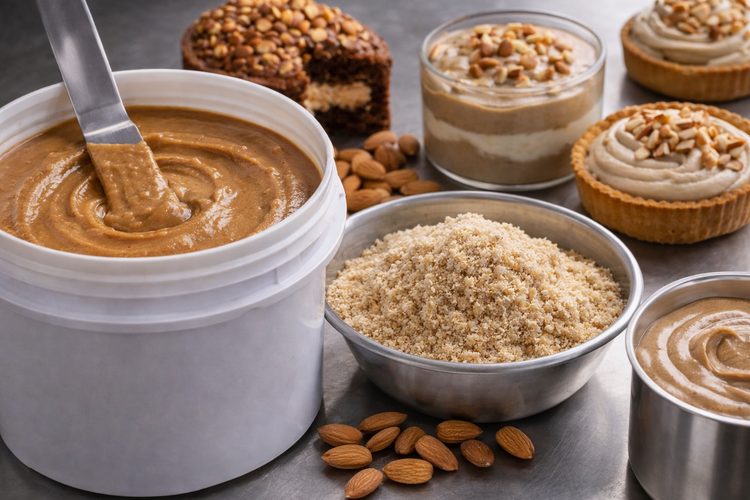
Almond butter and almond meal can both be relevant to fillings, creams and dessert systems, but they do not solve the same formulation problem. In practical buyer buying, the best outcome usually comes from defining what the ingredient must do on line and in the finished dessert: add smooth nut body, contribute solids, help control texture, support a premium visual, increase mouthfeel, deliver roasted flavor, reduce formulation variability or fit a particular ingredient declaration target.
Atlas generally treats dessert-oriented almond sourcing as a functionality-first discussion rather than a simple price comparison. In fillings, layered creams, spoonable desserts, bakery creams, dessert sauces and confectionery systems, small differences in grind, particle size, roast state, oil behavior and pack format can create very different processing results. A butter that works well in a spreadable retail nut butter jar may not be the right butter for a depositor-fed filling line. A meal that performs well in baked fillings may behave differently in a cold-processed cream or in a smooth layered dessert base.
That is why dessert projects usually work better when the product brief connects the almond ingredient to the real commercial application. Buyers who explain whether the ingredient is intended for cream filling, dessert center, layered cup, bakery cream, confectionery filling, frozen dessert swirl or another specific use tend to move faster toward a workable California supply discussion than buyers who only ask for “almond butter” or “almond meal” in general terms.
In dessert systems, ingredient choice is usually about behavior as much as flavor. The right almond format often depends on whether the goal is creamy body, particulate structure, solids contribution, visual identity, depositor performance or finished texture control.
How this topic shows up in real buying decisions
In practice, buyers typically compare raw, pasteurized, dry roasted, oil roasted and processed formats such as diced cuts, meal, flour, butter and oil. For dessert systems, the decision often narrows quickly to whether the application is better served by almond butter, almond meal, a combination of both, or a wider ingredient system that uses almonds in more than one form. The right choice depends on the balance between appearance, bite, blendability, oil release, flavor intensity, labeling goals and total delivered cost.
Almond butter is usually considered when the formulation needs a more integrated nut phase: creamy texture, fat contribution, smooth nut character, dispersion into a filling base or a softer dessert system. Almond meal is often considered when the buyer wants solids, body, particulate structure, controlled texture, a less fluid nut contribution or a more visibly almond-forward system. Neither is universally better. The practical question is which one aligns with the finished product and production route.
For almond buyers, the wider usable product menu still matters. Depending on the target system, the commercial conversation may involve raw almonds, pasteurized almonds, dry roasted almonds, oil roasted almonds, almond meal, almond flour, almond butter, almond paste-adjacent systems or almond oil. Which of those makes sense depends on the intended dessert architecture, whether the customer is manufacturing further, packing finished retail goods or planning domestic or export distribution.
What almond butter usually contributes in fillings and creams
From a formulation perspective, almond butter is generally selected when the buyer wants a more continuous nut texture through the system. In cream-style fillings, praline-style concepts, dessert centers, layered cups and premium spoonable systems, almond butter can contribute nut flavor, body, creaminess and a more homogeneous visual result than larger particulate ingredients. It may also help reduce the perception of dryness compared with solids-only almond systems, depending on the overall recipe architecture.
Commercially, almond butter can also support premium positioning. In many dessert categories, the ingredient story matters almost as much as the technical result. “Made with almond butter” may communicate something different from “contains almond meal,” especially in premium fillings, dessert spreads, bakery creams or indulgent snack systems. That does not automatically make almond butter the right option, but it often changes how the buyer frames the value of the ingredient inside the finished SKU.
At the same time, buyers usually need to review grind smoothness, roast direction, viscosity range, oil movement over time, pack handling and how the butter behaves during pumping, mixing, blending or depositing. A dessert processor typically wants the butter not just to taste good, but to be workable in plant conditions and commercially repeatable across validation run, launch and replenishment phases.
What almond meal usually contributes in dessert systems
Almond meal tends to be considered where the dessert system needs solids contribution, nut structure, particulate mouthfeel or a more defined almond presence without the same degree of continuous fat-phase behavior associated with nut butter. In fillings, creams and dessert bases, meal can affect body, density, texture development and final eating experience in ways that are quite different from almond butter, even when both ingredients come from the same source material family.
For some buyers, almond meal is also part of a cost and formulation balance. A dessert system may not need a full butter-style contribution if the main goal is body adjustment, particle presence or controlled nut solids. In other projects, meal is used together with almond butter so the formulation can achieve both creamy nut profile and more defined structural character. This kind of combination is common in real industrial decision-making, where the buyer is usually optimizing both texture and commercial efficiency rather than chasing a single ingredient ideal.
Technical review points often include grind range, particulate feel, blend behavior, visible speck or texture impact, moisture sensitivity within the broader system, and how the meal performs under cold, ambient or baked dessert conditions. The correct commercial brief usually starts with the process and finished texture target rather than with a broad ingredient category name.
Why the same dessert concept can lead to different almond formats
Two buyers may both describe their project as a “dessert filling,” yet require completely different almond ingredients. One may be developing a smooth enrobed bar filling with a creamy center and no visible particles. Another may be building a rustic-style bakery cream with visible nut structure. A third may need a stable layered dessert component that holds texture across refrigerated shelf life. A fourth may be designing a frozen dessert swirl where texture flow under chilled production conditions matters more than spoonable ambient viscosity.
That is why Atlas encourages buyers to go beyond the product label and describe the actual use case. Important practical details often include whether the filling is deposited, pumped, spread, layered, baked, frozen, whipped, cold-processed, hot-filled or mixed into another base. Once those details are clear, the conversation around almond butter versus almond meal becomes more commercial and less abstract.
Key technical questions buyers usually review
For dessert-oriented almond projects, the sourcing discussion often turns on a short group of technical questions. What texture is required in the finished product? How smooth or particulate should the system feel? Does the ingredient need to integrate fully, or remain more texturally distinct? What roast direction is wanted: mild, neutral, lightly developed or more aromatic? Does the system need help with creamy body, nut solids, visual texture or flavor lift? Will the ingredient be pumped, spread, deposited, blended or baked?
Buyers also often review oil behavior, solids loading implications, line performance, pack type, storage conditions and the difference between pilot-scale and commercial-scale behavior. The more clearly those points are defined, the easier it becomes to move from a general article topic to a realistic quote request.
Typical use cases for almonds on this website include bakery, confectionery, snack mixes, granola & cereal and plant-based dairy. In dessert-oriented projects, the product brief should still be tied to a concrete end use such as cream filling, layered dessert, bakery center, confectionery filling or frozen dessert system.
Specification thinking for almond butter in dessert programs
When the buyer is leaning toward almond butter, the commercial brief often needs more detail than simply “smooth” or “natural.” In many real programs, texture expectations may relate to grind fineness, spreadability, depositor behavior, degree of visible particulation, roast note, color and how the butter behaves over time in the final pack or intermediate ingredient container. If the butter is being used as a processing input rather than a finished retail spread, then viscosity handling, mixing compatibility and packaging practicality become central commercial issues.
Another common point is whether the project needs a plain butter concept or a broader butter-based commercial system. Some buyers are focused on keeping the ingredient story simple, while others are evaluating a formulation path that prioritizes smoother processing or a more controlled finished texture. That distinction should be clear in the quote request because it affects how buyers compare commercial options and what kind of processor fit they are really seeking.
Specification thinking for almond meal in dessert programs
When the buyer is leaning toward almond meal, the specification conversation usually becomes more particle-focused. The key questions often relate to grind coarseness, visual texture, blendability, how the meal behaves in cream bases or fillings, and whether the meal is expected to remain texturally noticeable or largely disappear into the matrix. In many dessert systems, the difference between finer and coarser meal is not cosmetic; it can influence mouthfeel, depositor consistency, layering clean-up, finished appearance and even perceived premium quality.
Meal-based systems may also need to consider how much body the solids contribution adds relative to the other fats, sugars, syrups or dairy or non-dairy components in the formula. This is not something a generic product list can answer on its own, which is why practical dessert buyers usually approach almond meal as part of an application decision rather than a standalone ingredient decision.
Commercial planning points
Commercially, these projects often develop in stages: trial quantity, validation run, launch volume and repeat replenishment. Atlas uses that logic to guide pack and shipment planning, especially when foodservice, retail packaging, export retail or private label is part of the conversation. A small pilot requirement may be packed and discussed very differently from a repeating industrial butter or meal program feeding a dessert line every month.
When relevant, the brief should also mention whether the program is industrial bulk, foodservice, retail-ready, private label or export-oriented. That single clarification often changes packaging, documentation and timing assumptions. An ingredient plant buying almond butter for a dessert filling line usually has different pack handling needs from a private label dessert spread program or a distributor importing almond meal for regional pastry manufacturers.
Buyers also strengthen the discussion when they clarify the volume rhythm. Is the project still in R&D? Is it moving toward first commercial launch? Is there a seasonal peak? Will the ingredient be ordered monthly, quarterly or on campaign? These points influence freight, stock planning and how practical a given California supply route really is.
Packaging and handling logic by channel
For dessert-system buyers, packaging is not only a logistics topic. It affects process flow. Bulk and semi-bulk formats may be more suitable for industrial use where the ingredient is fed into a mixing or depositor environment. Smaller packs may work better for foodservice, specialty production or controlled premium applications. Retail-facing programs, especially private label, introduce another layer of complexity because the finished package becomes part of the commercial proposition as well as the handling plan.
Almond butter typically raises more questions around transfer, scoopability, pumpability, temperature-conditioned handling and pack clean-out. Almond meal tends to shift the conversation toward bag or carton practicality, storage condition consistency, dust or fines expectations and how the material is introduced into the wider dessert formula. In either case, the best packaging choice usually depends on the actual processing route rather than on a generic preference.
Cost logic is not only about nominal ingredient price
One of the most common mistakes in dessert-system sourcing is comparing almond butter and almond meal only on nominal price per unit. In practical commercial use, the more relevant comparison often involves system performance: how much ingredient is needed to achieve the target texture, whether the ingredient simplifies or complicates processing, whether it supports the desired premium story and whether the chosen format helps reduce rework, variability or inefficient handling.
For example, a lower-priced material may not be commercially better if it requires more supporting formulation work, creates less predictable texture or complicates the line. Likewise, a more premium ingredient may justify itself if it helps deliver a clearer market position, stronger sensory result or easier process fit. That is why better dessert buyers frame the inquiry around application economics, not just headline ingredient pricing.
What Atlas would ask before quoting
For dessert-oriented almond projects, Atlas recommends translating the product idea into a quote request with five core points: target format, application, pack style, destination market and volume rhythm. In this category, it also helps to add several more operational points: whether the product is deposited, spread or blended; whether smoothness or visible texture is preferred; whether the system is chilled, ambient or baked; and whether the buyer is seeking an ingredient input or a consumer-facing finished product.
That makes it easier to discuss realistic California partner options instead of a generic price-only inquiry. In many dessert systems, the “right” almond ingredient is the one that fits the formulation and the line at the same time. The quote request needs to reflect both.
Buyer planning note
Atlas Global Trading Co. uses topics like this to move conversations from broad interest to a specification-minded inquiry. If you are evaluating almonds supply for fillings, creams, confectionery centers, dessert systems or similar applications, share the exact format, pack style, estimated volume and destination using the floating contact form so the next step can be grounded in a real commercial need.