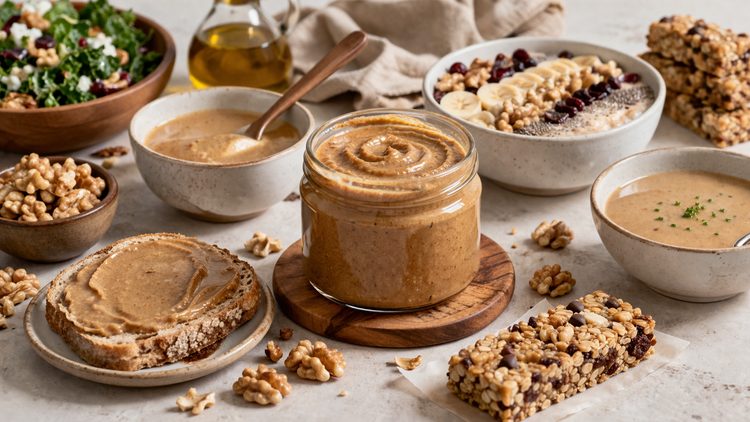
Walnut butter is not a single-use ingredient. It functions as a fat system, flavor carrier, texturizer and nutritional component across multiple product categories. The same walnut butter can behave very differently depending on whether it is used in a spread, emulsified into a sauce, or incorporated into a functional food system.
For industrial buyers, understanding these application differences is critical. A butter designed for retail jars may not work in a pumpable sauce system. A product optimized for confectionery filling may not perform well in high-protein functional blends. The commercial outcome improves when the walnut butter specification is aligned directly with the intended application.
Walnut butter in spreads
Spreads are the most direct application of walnut butter and often the most visible to end consumers. In this category, the butter must balance texture, stability, flavor and visual appeal.
Key formulation considerations
- Smoothness vs. texture (fine vs. rustic grind)
- Oil separation behavior over shelf life
- Spreadability at ambient temperature
- Flavor balance (mild vs. roasted walnut profile)
- Optional additions: salt, sweeteners, oils, stabilizers
Retail spreads often require tighter control over appearance and consistency. Industrial buyers supplying private label or retail channels should treat walnut butter as a finished product, not just an ingredient.
Walnut butter in sauces and dressings
In sauces, walnut butter acts as a base, emulsifier and fat carrier. It contributes body, richness and flavor complexity.
Typical applications include savory sauces, plant-based dressings, dips and fusion products. In these systems, the butter must integrate smoothly with water-based ingredients.
Functional role in sauces
- Provides viscosity and thickness
- Acts as a fat phase in emulsions
- Carries flavor and seasoning
- Enhances mouthfeel and richness
Buyers should focus on flow behavior and emulsification performance rather than just taste. A butter that is too thick may not blend properly, while one that releases too much oil can destabilize the system.
Walnut butter in functional foods
Walnut butter is increasingly used in functional food products due to its fat composition, nutrient density and natural positioning. Applications include energy bars, protein spreads, fortified snacks and meal replacements.
In this category, walnut butter is often part of a larger formulation where it contributes both nutrition and structure.
Typical functional uses
- Energy bars and nutrition bars
- Protein spreads and blends
- Meal replacement systems
- Plant-based formulations
Here, buyers should think in terms of interaction with other ingredients. Walnut butter must integrate with proteins, fibers, sweeteners and oils without breaking structure or causing instability.
Application-driven specification differences
The same walnut butter cannot be optimized for every use. Buyers should align specification with application:
- Spreads: focus on smoothness, visual consistency and consumer texture
- Sauces: focus on flow, emulsification and blendability
- Functional foods: focus on integration, stability and formulation compatibility
Key insight: walnut butter is not a commodity ingredient. It is a functional system whose value depends on how well it fits the application.
Commercial implications for buyers
From a sourcing perspective, application choice affects:
- Grind specification and processing route
- Packaging format (pails, drums, retail units)
- Shelf-life expectations and storage conditions
- Volume planning and replenishment cycles
- Pricing structure based on processing complexity
For example, a pumpable sauce ingredient may require a different grind and pack than a retail spread. A functional food ingredient may require tighter consistency across batches than a foodservice application.
What Atlas would ask before quoting
To move from concept to quotation, Atlas typically asks:
- What is the end application (spread, sauce, functional product)?
- What texture or grind is required?
- Is the butter part of a finished product or an ingredient?
- What packaging format is needed?
- What is the destination market?
- What is the expected volume and timeline?
These inputs help structure a more accurate and commercially relevant offer.
Buyer planning note
Atlas Global Trading Co. uses application-based thinking to help buyers define walnut butter programs more effectively. If you are sourcing walnut butter for spreads, sauces or functional foods, share your application, texture target, packaging needs and market destination so the next step can be aligned with real production requirements.
Need help sourcing walnut butter?
Use the contact form to turn your application into a structured quote request.
- Define your application (spread, sauce, functional)
- Specify texture and grind
- Include volume and destination
Frequently Asked Questions
Where is walnut butter most commonly used?
Walnut butter is widely used in spreads, sauces, bakery fillings, confectionery systems and functional foods where it provides texture, fat content and flavor.
How is walnut butter different from other nut butters?
Walnut butter has a more delicate and aromatic profile with higher unsaturated fat content, which affects stability, flavor pairing and formulation compared to peanut or almond butter.
What should buyers define before sourcing walnut butter?
Buyers should define application, grind, texture, packaging, volume and destination market to ensure the product matches both technical and commercial requirements.