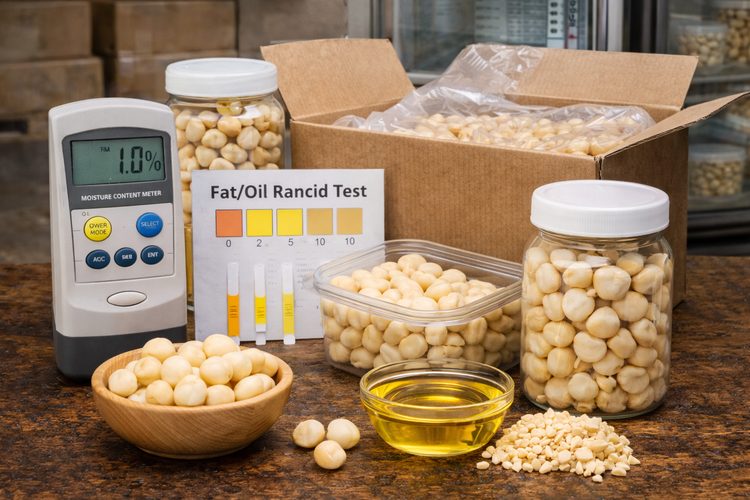
Macadamias are structurally different from many other nuts because of their high fat content and relatively low moisture levels. This combination creates a premium eating experience, but also introduces specific shelf-life management challenges. Buyers who treat macadamias like lower-fat nuts often encounter avoidable issues such as flavor drift, texture softening or reduced commercial usability over time.
Why moisture and fat profile matter together
Macadamias are naturally rich in oils, which define their creamy texture and premium flavor. However, this fat content also makes them more sensitive to oxidation and environmental conditions. At the same time, moisture levels influence texture, bite and microbial stability.
In practice, shelf-life is not a single fixed attribute. It is the result of how moisture, fat composition, oxygen exposure, temperature and packaging interact. Buyers who understand this relationship can structure better sourcing programs and avoid unnecessary losses.
Key concept: macadamia shelf-life is managed, not guaranteed. It depends on how well the product specification, packaging and logistics align with the intended use.
How this topic shows up in real buying decisions
In commercial buying, shelf-life concerns usually appear when:
- product flavor changes before expected use
- texture becomes softer or less crisp
- inventory sits longer than planned
- export transit times extend delivery windows
These issues are rarely caused by one factor alone. They are usually the result of misalignment between product format, packaging and storage conditions.
Moisture management in macadamias
Moisture affects both texture and stability. Too much moisture can lead to softness and reduced crunch. Too little moisture can make kernels brittle and increase breakage during handling.
For buyers, the practical focus is consistency. Incoming lots should match expected moisture behavior so that production and shelf performance remain predictable.
Where moisture matters most
- bakery inclusions (texture retention during baking)
- snack mixes (crunch stability over time)
- retail packs (consumer perception of freshness)
- export programs (longer storage cycles)
Fat profile and oxidation risk
The rich fat profile of macadamias is a commercial advantage, but it also introduces oxidation sensitivity. Over time, exposure to oxygen, light and heat can affect flavor quality.
from a buyer's perspective, oxidation is not just a quality issue—it is a commercial risk. It can reduce usable shelf-life, increase waste and impact customer acceptance.
Factors influencing oxidation
- oxygen exposure in packaging
- storage temperature
- light exposure
- processing method (raw vs roasted)
Product format impact on shelf-life
Different macadamia formats behave differently over time:
- Whole kernels: better structural protection but sensitive to handling
- Pieces or diced: more surface area, faster exposure
- Meal or flour: highest exposure, requires tighter control
- Butter or paste: requires careful storage and packaging alignment
This is why shelf-life expectations must be tied to product form, not just the ingredient name.
Packaging as a shelf-life tool
Packaging is one of the most important control points in macadamia programs. It influences oxygen exposure, moisture stability and product protection during transit.
Buyers typically work with three packaging categories:
- Industrial bulk: efficient but requires controlled storage
- Foodservice packs: balance between protection and usability
- Retail packaging: includes barrier and presentation considerations
For export programs, packaging becomes even more critical because transit time and handling conditions are less predictable.
Storage and logistics considerations
Shelf-life is heavily influenced by how the product moves after packing. Even well-packed macadamias can lose quality if storage conditions are not aligned.
Key commercial considerations include:
- warehouse temperature stability
- inventory turnover speed
- container transit duration
- handling during distribution
Buyers planning export programs should account for total time from packing to end-use, not just shipment time.
What Atlas would ask before quoting
To align shelf-life expectations, Atlas typically asks:
- What is the intended application?
- What product format is required?
- How long will the product be stored before use?
- Is the program domestic or export?
- What packaging format is preferred?
- What is the expected inventory cycle?
These inputs help ensure that the quoted product matches real usage conditions rather than theoretical shelf-life assumptions.
Commercial planning points
Strong macadamia programs are built around predictability. Shelf-life should support the full commercial cycle, from production to final use.
- align pack size with usage rate
- avoid overbuying beyond realistic turnover
- match packaging to storage conditions
- plan for transit and handling time
These factors often matter more than nominal shelf-life duration on paper.
Buyer planning note
Atlas Global Trading Co. uses shelf-life discussions to move buyers toward more specification-driven sourcing decisions. For macadamias, moisture balance, fat profile and packaging must be aligned with real commercial use.
If you are evaluating macadamia supply, sharing your storage conditions, usage cycle and destination market will help create a more accurate and commercially relevant quotation.
Need help sourcing around this macadamias topic?
Use the contact form to share your shelf-life, packaging and shipping requirements for a practical quotation.
- Define product format and usage cycle
- Include storage and packaging expectations
- Share destination and timing
Frequently Asked Questions
What is the main buyer takeaway?
Macadamia shelf-life depends on how moisture, fat profile, packaging and storage are aligned with the real application.
Why are macadamias sensitive to storage?
Their high oil content makes them sensitive to oxidation and environmental conditions such as heat, light and oxygen exposure.
What should buyers include in a shelf-life inquiry?
Buyers should specify product format, storage duration, packaging type, destination and usage cycle to ensure accurate quoting.