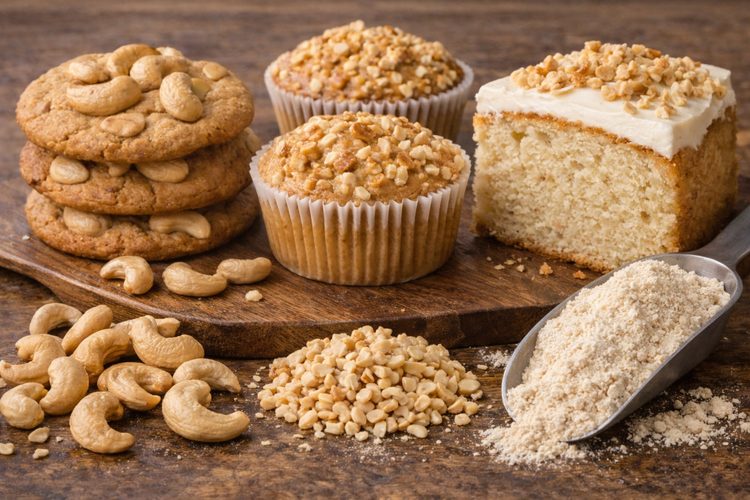
Cashews are widely used in bakery, but their commercial value depends on how well the format matches the production objective. Whole kernels, diced cuts and flour each behave differently in mixing, baking, freezing and finishing. Buyers who define format early typically achieve better yield control, consistent product appearance and smoother production flow.
Format selection: whole vs diced vs flour
Whole cashews
Whole cashews are typically used where visual impact matters. They are common in premium cookies, artisan breads, decorative toppings and retail-facing bakery products. Their role is not only flavor but also perception of quality and indulgence. However, whole kernels require consideration of placement, adhesion and breakage during mixing and baking.
Diced cashews
Diced formats provide better distribution throughout dough or batter. They are preferred for muffins, cakes, granola-style bakery items and snack bars. Cut size consistency directly affects portion control, bite experience and production efficiency. Smaller cuts integrate more easily, while larger dices create more pronounced texture.
Cashew meal and flour
Cashew flour or meal is used for blending into dough systems, gluten-free formulations and fat-rich bakery bases. It contributes richness, moisture retention and subtle nut flavor without visible inclusions. Flour formats are especially relevant for plant-based and gluten-free bakery segments.
Buyer note: the correct format is defined by function — visual inclusion, structural blending or flavor contribution — not by price alone.
Processing considerations in bakery production
Cashews behave differently depending on bake conditions, fat systems and moisture levels. Key factors include:
- Oil release: roasted cashews may release more oil during baking, affecting dough structure and surface appearance.
- Thermal stability: high bake temperatures can darken cashews or alter flavor.
- Mixing tolerance: whole kernels may break under high shear mixing, while diced formats offer better resilience.
- Water activity interaction: cashew flour can influence moisture retention and shelf life.
How this topic shows up in real buying decisions
In practice, bakery buyers compare multiple formats and processing routes: raw vs roasted, whole vs diced vs flour, and different cut sizes. The decision is rarely only about ingredient cost. It is about yield, appearance, processing efficiency and finished product consistency.
A diced cashew program may reduce waste and improve distribution compared to whole kernels. A flour-based system may simplify mixing and enable gluten-free positioning. Each format has a different cost-to-function relationship.
Specification checklist for bakery buyers
- Target format: whole, diced (define size) or flour
- Application: cookies, cakes, bars, fillings or gluten-free
- Roast style: raw, light roast or medium roast
- Inclusion rate: percentage in finished product
- Pack format: bulk, foodservice or retail-ready
- Volume: trial, monthly or container program
- Destination: domestic or export
Commercial planning points
Bakery ingredient programs typically move through stages: trial, validation, launch and repeat supply. Buyers should align format selection with these stages. For example, diced cashews may be tested first for distribution, then scaled to consistent cut specification for production.
Packaging also matters. Bulk formats suit industrial bakeries, while smaller packs may be required for foodservice or retail preparation. Export programs may require additional documentation and packaging protection.
Buyer planning note
Atlas Global Trading Co. supports bakery buyers by aligning cashew format, processing behavior and commercial structure. The goal is to move from a generic ingredient request to a specification-driven sourcing plan. Buyers are encouraged to share application details, format requirements and volume expectations so quotations reflect real production needs.
Need help sourcing cashews for bakery?
Turn this topic into a quote request with format, application and volume details.
- Define inclusion format and cut size
- Specify production use and bake conditions
- Include volume and destination